
.jpg)
Ben, you don’t have to fight to be a Maa warrior
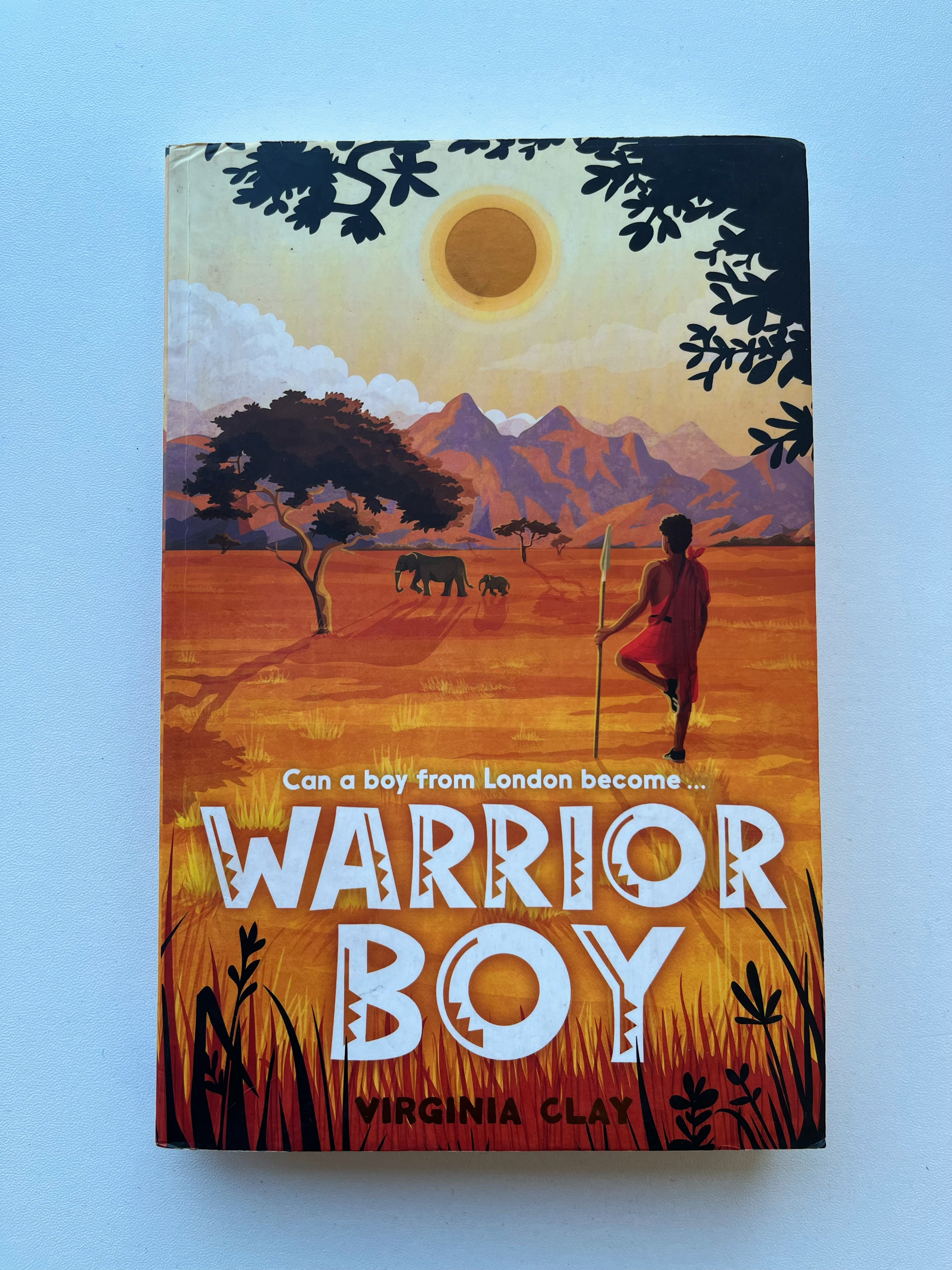
TITLE: Warrior Boy
AUTHOR: Virginia Clay
PUBLISHER: Maua Books
REVIEWER: Tracy M. Ochieng
AVAILABILITY: shop.eKitabu.com (Coming soon!)
PRICE: Ksh1,200
Warrior Boy is a coming-of-age story that understands courage not as conquest, but as clarity. From its opening chapters to its quietly assured ending, Virginia Clay offers a thoughtful meditation on identity, inheritance, and what it means to belong to more than one world at once. Rather than relying on spectacle or action alone, the novel places emotional intelligence at its centre, trusting young readers to sit with complexity, uncertainty, and self-doubt.
The novel introduces Ben Olmoran in a London classroom during an emergency first aid lesson on sucking chest wounds—an arresting and deliberately unsettling entry point for a middle-grade book. Ben’s discomfort is immediate. He harbours a deep phobia of blood, yet he listens attentively as his teacher explains how quick thinking and ordinary objects can save a life. This scene does more than establish character; it lays the groundwork of the novel. Bravery, Warrior Boy suggests from the outset, is not about fearlessness, but about presence and staying engaged when instinct tells you to look away.
Ben’s interior world is rendered with restraint and empathy. He dreams of becoming a doctor, of being competent and dependable, even as he navigates the familiar cruelty of schoolyard teasing, social hierarchies, and the subtle politics of belonging. Clay captures the texture of adolescence with precision: the sniggers, the bravado, the casual humiliations that lodge deeply in a child’s sense of self. Ben is observant, sensitive, and already negotiating the expectations placed upon him; expectations shaped as much by race and class as by gender.
As the narrative unfolds, Clay carefully layers Ben’s personal world with a larger, more complicated inheritance. Kenya enters the story not as a promised land of adventure, but as a site of unresolved grief and moral reckoning. Ben’s mother, a conservation filmmaker, is shaken by the killing of an elephant she once knew; this death collapses the distance between environmental destruction and personal loss. Through her work, the novel foregrounds conservation not as an abstract cause, but as a lived, emotional responsibility.
This thread is handled with notable care. Rather than instrumentalising wildlife for drama, Clay situates the elephant’s death within a broader ecosystem of violence, accountability, and memory. The impact of poaching is felt not only in the loss of an animal, but in the psychological toll it takes on those who bear witness. In doing so, the novel resists the simplification of environmental narratives and instead invites young readers to consider the ethical dimensions of human action.
Central to this ethical inquiry is Ben’s father, a Maasai warrior, who died protecting a film crew during a lion attack. Clay avoids mythologising him. His bravery is acknowledged, but so is its cost. He exists in the narrative as both presence and absence: a figure of pride, but also of unresolved expectation. In one of the novel’s most affecting moments, Ben studies a photograph of his father in traditional Maasai dress, framed in olive wood from his village. The image becomes a powerful symbol of inherited masculinity and imagined strength. For Ben, this photograph is both an anchor and a burden. It represents an ideal he feels unable to live up to; a warriorhood defined by physical courage and sacrifice. Clay excels here in illustrating how children internalise narratives long before they understand them. Ben’s fear of returning to Kenya is not framed as weakness, but as grief: a fear of exposure, of being measured against an identity he never chose yet feels bound to honour.
Importantly, the novel refuses to flatten masculinity into a single expression. Ben’s sensitivity, empathy, and hesitation are not positioned as deficiencies, but as qualities that demand re-evaluation. Even moments of humour such as Ben’s disappointment at receiving a cheap phone instead of the iPhone he hoped for serve a larger purpose. They ground him firmly in contemporary adolescence, reminding the reader that this is a modern child grappling with inherited expectations that often feel out of step with his lived reality.
As Ben’s journey progresses, Warrior Boy becomes increasingly attentive to the idea of “bothness”—the reality of living between cultures, histories, and identities. Reflections on race and belonging are woven into the narrative with care, particularly through Ben’s growing understanding that he does not need to choose between being Maasai or English, black or white. The novel resists the urge to resolve these questions neatly. Instead, it suggests that identity is not something to be solved, but to be held.
The final chapter brings this emotional architecture into quiet focus. Objects carried across continents: a stone from Kenya, a photograph, fragments of memory that are no longer symbols of pressure, but of connection. They become anchors rather than weights. Ben’s evolving empathy for his mother’s work, his reframed understanding of his father’s legacy, and his acceptance of his own vulnerabilities coalesce into a sense of wholeness that feels earned rather than imposed.
Home, the novel ultimately suggests, is not a fixed geography. It is a way of seeing oneself clearly and compassionately. In returning to the themes introduced in the opening chapter, fear, responsibility, and moral presence, the novel closes its circle with confidence and restraint.
Stylistically, Clay writes with clarity and emotional intelligence. The prose is accessible without being reductive and the pacing allows space for reflection without losing momentum. Young readers are trusted with difficult themes: death, poaching, racial identity, and moral responsibility are presented honestly without sensationalism or condescension. Kenya, in particular, is neither romanticised nor flattened; it is depicted as a living, demanding place shaped by beauty, danger, history, and obligation.
Warrior Boy is ultimately less interested in producing heroes than in examining how they are made and what they cost. It is a compassionate, culturally attentive middle-grade novel that will resonate deeply with readers navigating questions of identity, diaspora, and self-worth. Its greatest strength lies in its insistence that courage can look like empathy, reflection, and the willingness to hold more than one truth at the same time.
Tracy Ochieng is a staff writer with Books in Africa. Email: tracy.ochieng@ekitabu.com
Featured Book
%20(1).jpg)
Related Book
Get to know more about the mentioned books
Related Article
Ben, you don’t have to fight to be a Maa warrior
By
TITLE: Warrior Boy
AUTHOR: Virginia Clay
PUBLISHER: Maua Books
REVIEWER: Tracy M. Ochieng
AVAILABILITY: shop.eKitabu.com (Coming soon!)
PRICE: Ksh1,200
Warrior Boy is a coming-of-age story that understands courage not as conquest, but as clarity. From its opening chapters to its quietly assured ending, Virginia Clay offers a thoughtful meditation on identity, inheritance, and what it means to belong to more than one world at once. Rather than relying on spectacle or action alone, the novel places emotional intelligence at its centre, trusting young readers to sit with complexity, uncertainty, and self-doubt.
The novel introduces Ben Olmoran in a London classroom during an emergency first aid lesson on sucking chest wounds—an arresting and deliberately unsettling entry point for a middle-grade book. Ben’s discomfort is immediate. He harbours a deep phobia of blood, yet he listens attentively as his teacher explains how quick thinking and ordinary objects can save a life. This scene does more than establish character; it lays the groundwork of the novel. Bravery, Warrior Boy suggests from the outset, is not about fearlessness, but about presence and staying engaged when instinct tells you to look away.
Ben’s interior world is rendered with restraint and empathy. He dreams of becoming a doctor, of being competent and dependable, even as he navigates the familiar cruelty of schoolyard teasing, social hierarchies, and the subtle politics of belonging. Clay captures the texture of adolescence with precision: the sniggers, the bravado, the casual humiliations that lodge deeply in a child’s sense of self. Ben is observant, sensitive, and already negotiating the expectations placed upon him; expectations shaped as much by race and class as by gender.
As the narrative unfolds, Clay carefully layers Ben’s personal world with a larger, more complicated inheritance. Kenya enters the story not as a promised land of adventure, but as a site of unresolved grief and moral reckoning. Ben’s mother, a conservation filmmaker, is shaken by the killing of an elephant she once knew; this death collapses the distance between environmental destruction and personal loss. Through her work, the novel foregrounds conservation not as an abstract cause, but as a lived, emotional responsibility.
This thread is handled with notable care. Rather than instrumentalising wildlife for drama, Clay situates the elephant’s death within a broader ecosystem of violence, accountability, and memory. The impact of poaching is felt not only in the loss of an animal, but in the psychological toll it takes on those who bear witness. In doing so, the novel resists the simplification of environmental narratives and instead invites young readers to consider the ethical dimensions of human action.
Central to this ethical inquiry is Ben’s father, a Maasai warrior, who died protecting a film crew during a lion attack. Clay avoids mythologising him. His bravery is acknowledged, but so is its cost. He exists in the narrative as both presence and absence: a figure of pride, but also of unresolved expectation. In one of the novel’s most affecting moments, Ben studies a photograph of his father in traditional Maasai dress, framed in olive wood from his village. The image becomes a powerful symbol of inherited masculinity and imagined strength. For Ben, this photograph is both an anchor and a burden. It represents an ideal he feels unable to live up to; a warriorhood defined by physical courage and sacrifice. Clay excels here in illustrating how children internalise narratives long before they understand them. Ben’s fear of returning to Kenya is not framed as weakness, but as grief: a fear of exposure, of being measured against an identity he never chose yet feels bound to honour.
Importantly, the novel refuses to flatten masculinity into a single expression. Ben’s sensitivity, empathy, and hesitation are not positioned as deficiencies, but as qualities that demand re-evaluation. Even moments of humour such as Ben’s disappointment at receiving a cheap phone instead of the iPhone he hoped for serve a larger purpose. They ground him firmly in contemporary adolescence, reminding the reader that this is a modern child grappling with inherited expectations that often feel out of step with his lived reality.
As Ben’s journey progresses, Warrior Boy becomes increasingly attentive to the idea of “bothness”—the reality of living between cultures, histories, and identities. Reflections on race and belonging are woven into the narrative with care, particularly through Ben’s growing understanding that he does not need to choose between being Maasai or English, black or white. The novel resists the urge to resolve these questions neatly. Instead, it suggests that identity is not something to be solved, but to be held.
The final chapter brings this emotional architecture into quiet focus. Objects carried across continents: a stone from Kenya, a photograph, fragments of memory that are no longer symbols of pressure, but of connection. They become anchors rather than weights. Ben’s evolving empathy for his mother’s work, his reframed understanding of his father’s legacy, and his acceptance of his own vulnerabilities coalesce into a sense of wholeness that feels earned rather than imposed.
Home, the novel ultimately suggests, is not a fixed geography. It is a way of seeing oneself clearly and compassionately. In returning to the themes introduced in the opening chapter, fear, responsibility, and moral presence, the novel closes its circle with confidence and restraint.
Stylistically, Clay writes with clarity and emotional intelligence. The prose is accessible without being reductive and the pacing allows space for reflection without losing momentum. Young readers are trusted with difficult themes: death, poaching, racial identity, and moral responsibility are presented honestly without sensationalism or condescension. Kenya, in particular, is neither romanticised nor flattened; it is depicted as a living, demanding place shaped by beauty, danger, history, and obligation.
Warrior Boy is ultimately less interested in producing heroes than in examining how they are made and what they cost. It is a compassionate, culturally attentive middle-grade novel that will resonate deeply with readers navigating questions of identity, diaspora, and self-worth. Its greatest strength lies in its insistence that courage can look like empathy, reflection, and the willingness to hold more than one truth at the same time.
Tracy Ochieng is a staff writer with Books in Africa. Email: tracy.ochieng@ekitabu.com
Share :


Lorem ipsum dolor sit amet, consectetur adipiscing elit. Suspendisse varius enim in eros elementum tristique. Duis cursus, mi quis viverra ornare, eros dolor interdum nulla, ut commodo diam libero vitae erat. Aenean faucibus nibh et justo cursus id rutrum lorem imperdiet. Nunc ut sem vitae risus tristique posuere.
Lorem ipsum dolor sit amet, consectetur adipiscing elit. Suspendisse varius enim in eros elementum tristique. Duis cursus, mi quis viverra ornare, eros dolor interdum nulla, ut commodo diam libero vitae erat. Aenean faucibus nibh et justo cursus id rutrum lorem imperdiet. Nunc ut sem vitae risus tristique posuere.