
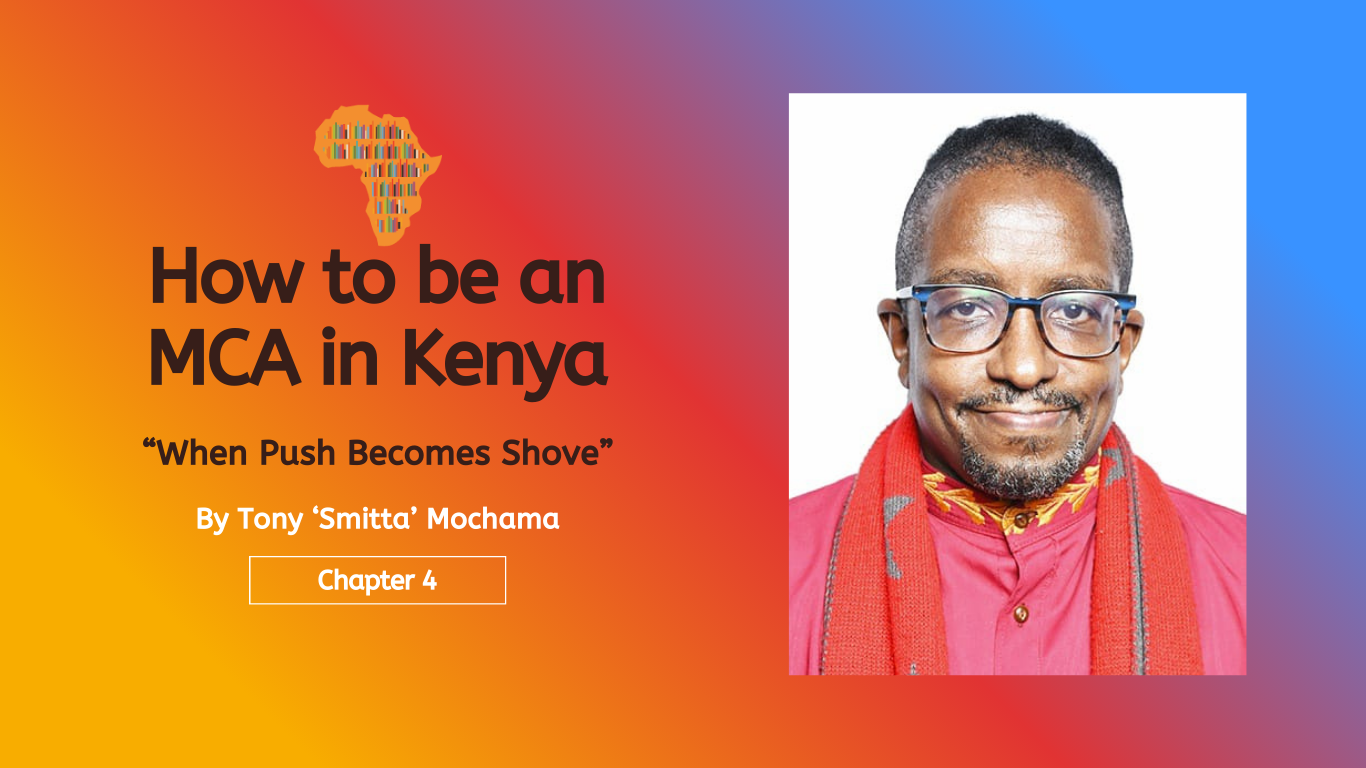

Campaign Strategies (As the Race Heats Up): “When Push Becomes Shove”
Campaign Strategies (As the Race Heats Up): “When Push Becomes Shove”
Part 4
On Wednesday, 6 July 2022, I walked out of the office of the Nation Media Group on Kimathi Street, floating on imported air like a chap from the song “Maria” by Blondie.
After a short conversation with an old friend from college, Michael Owuor—a former colleague from The Standard, and a true gentleman nicknamed “Washington (DC),” now a powerful weekend editor with The Nation—I had just been offered a dream contract by the two gentlemen.
The Nation had just clinched a deal to revive the legendary Weekly Review, a political magazine founded by the iconic journalist (and the only Kenyan with a degree in nuclear physics) Hillary Ngweno, and the Bill & Melinda Gates Foundation was ready to fund the production.
I had been offered a one-year contract as editor of the Weekly Review at Ksh400,000 a month, with the option to renew if the funding from the billionaire couple continued. In contrast, an MCA’s monthly salary was just Ksh150,000, which was two-thirds more than the Ksh90,000 monthly income I was receiving at that time in 2022 A.D.
It was a no-brainer.
And since the newspaper’s policy is that one cannot be an editor in its national stable while running for political office (conflict of interest manenos), there wasn’t any doubt that I’d have to drop out of the race for MCA of the Nairobi West Ward, pronto.
On Thursday, Saba Saba Day – when Kenyans unofficially remember the citizens killed during the struggle for multiparty politics on 7 July, 1990—I spent all day gathering my academic papers (fortunately all there, as I had to present them earlier to the IEBC for clearance) and polishing my CV to a fine shine. I had attended Catholic Parochial Primary School and Starehe Boys’ Centre, studied law at the University of Nairobi, and attended the Summer Literary Seminars (SLS) between 2003 and 2007, where I was tutored by George Saunders in fiction and Matt Zapruda in poetry. I had ten books published in the fifteen years between 2007 and 2022: namely, What if I’m a Literary Gangster? (poetry); The Road to Eldoret (short story collection); Princess Adhis and the Naija Coca Broda (crime noir); Meet the Omtitas (young adult); Nairobi: A Night Runner’s Guide (nocturnal essays); Run, Cheche, Run (YA); 2063 – Last Mile Bet (an Afrofuturistic novel); Modern Poetry for Secondary Schools; and Political Party After Political Party: 60 Years of the Nature of Power in Kenya. Along the way, I gathered three Burt Awards, a Sanaa Arts Trophy, a Leapfrog Press Prize mention, the Miles Morland Scholarship Award, and an Emily Harvey Foundation fellowship. I was even a finalist for the Kenya Film Commission in 2019 for a script titled Train Stops.
In the ten years prior to my running for political office, I had also managed to travel to Lisbon, Portugal (2012); Venice, Italy (2013); Munich, Bayreuth, and Dachau, Germany (2014); Jakarta, Sukabumi, Bandung, and Jayapura, Indonesia (2015); Ourense and Santiago de Compostela, Spain (2016); Barcelona (2017); Russia (2018); and Namibia, Italy, and Morocco (2019). After the year-long COVID-19 break, I traveled to Tanzania and then thrice to Casablanca, Fez, and Marrakesh—all for literary festivals, creative workshops, university lectures, journalistic assignments, or writer residencies.
The die was cast: Tony “Smitta” Mochama was dropping out of the race.
In September, I wouldn’t be going to City Hall as the new legislative councilor from Nairobi West, but to the “Twin Towers” of Kimathi Street as the new arts editor of the Weekly Review magazine.
On Sunday, I would pay Danny Boy and his crew to undo everything we had done over the past couple of months—take posters off the street walls, get the banners off the roads, and so on. In short, I would be doing “the Lord’s work” in the eyes of my rivals, some of whom had already been doing it for themselves (Satan also helps those who help themselves, as I have come to learn in this lifetime).
But first, I had one last commitment to keep.
I had given my word and signature to the Madaraka Residents’ Association that I would attend their candidates’ debate for Nairobi West that Saturday, 9 July 2022.
Because a Starehe Boy should always keep his word—come hell or high water, as the late, great Dr. Griffin taught us—I was not going to tell the good people of Madaraka Estate that I would not be participating. To be perfectly candid, I also wanted to go out with a bang! In a blaze of proverbial glory, so to speak, I wanted to present my agenda for Nairobi West in public and crush my rivals through eloquence on a shiny Saturday afternoon. Then, in the wee hours of Sunday morning, I would tear down my posters. On Monday noon, I would hand my withdrawal letter to the IEBC returning officer at Wilson Airport, leaving my potential constituents lamenting the “best Member of County Assembly we coulda had.” Meanwhile, I would save enough cheddar over the next five years to pay fees for both my kids and secure a proper political party and funding to afford billboards for a proper run for the municipality in 2027.
All of Friday, 8 July, I prepped thoroughly for my first debate since the moot courts we held back in university with classmates like Charles Kanjama (now SC), Nelson “the Duke” Havi, and the likes of Rhoda Igweta. My campaign manager, Gloriah Amondi, served as my solitary prepper and audience in the living room.
I familiarized myself with the Local Government Act (Cap 265 of the Laws of Kenya), acquainted myself with the Physical Planning Act (Cap 286), and became friends with the Urban Areas and Cities Act (No. 13 of 2011, Revised Edition 2016). I became BFFs with the County Government Act, even as I re-memorized the roles of a Member of the County Assembly.
The major role of an MCA, by the way, is legislation, representation, and oversight. MCAs are supposed to maintain close contact with their electorate and consult them on issues under decision in the County Assembly. I had planned to actualize this by turning my SQ block in Paa Crescent Estate into my office until I could afford space at the shopping centre. But now, I was electing to leave the race.
I had intended to hold regular field meetings across the ward to hear the wishes of Nairobi West residents and present them before the County Assembly. I planned to attend as many sessions as possible—both planning and committee—to vote on the issues of the day and be an active municipal legislator. I had a particular passion for stopping the brutal harassment of street entrepreneurs by kanjo askaris, as well as dismantling garbage collection, parking fee, and water cartels, exposing them through my media networks. I wished to be part of the budget process, develop excellent ward development fund ideas, and provide “triangulage” between the County Assembly and the electorate on public service delivery—with water, security, trash collection, drain culverts, and city council schools in Nairobi West being key priorities.
Mostly, I wished to apply my professional media know-how and specialized legal knowledge to any issue under discussion. It is a fact that because some MCAs’ education levels are limited to secondary school (some even hold only primary school certificates), many are unable to participate in debates or enact meaningful laws. Instead, they attend sessions for the lucrative “sitting allowance,” exchange blows when the occasion calls for it (e.g., governor impeachments) and concentrate on setting up urban stalls or grabbing public ward toilets.
It is important for an MCA to have a thorough understanding of local and national issues while keeping up with current affairs. I had these by the bucketful, without any false modesty, and wished to use this skillset to improve council legislation and implement changes that would have a real impact on the lives of Nairobi West residents. I believed the legal skills and media experience I had gained in the two decades prior to seeking public office, together with a sense of Starehian dedication, would translate into proper policy development for the Nairobi municipality.
This was the last instalment in this series. Tony Mochama’s book will be published by Mvua Press later this year.
Campaign Strategies (As the Race Heats Up): “When Push Becomes Shove”
By
Campaign Strategies (As the Race Heats Up): “When Push Becomes Shove”
Part 4
On Wednesday, 6 July 2022, I walked out of the office of the Nation Media Group on Kimathi Street, floating on imported air like a chap from the song “Maria” by Blondie.
After a short conversation with an old friend from college, Michael Owuor—a former colleague from The Standard, and a true gentleman nicknamed “Washington (DC),” now a powerful weekend editor with The Nation—I had just been offered a dream contract by the two gentlemen.
The Nation had just clinched a deal to revive the legendary Weekly Review, a political magazine founded by the iconic journalist (and the only Kenyan with a degree in nuclear physics) Hillary Ngweno, and the Bill & Melinda Gates Foundation was ready to fund the production.
I had been offered a one-year contract as editor of the Weekly Review at Ksh400,000 a month, with the option to renew if the funding from the billionaire couple continued. In contrast, an MCA’s monthly salary was just Ksh150,000, which was two-thirds more than the Ksh90,000 monthly income I was receiving at that time in 2022 A.D.
It was a no-brainer.
And since the newspaper’s policy is that one cannot be an editor in its national stable while running for political office (conflict of interest manenos), there wasn’t any doubt that I’d have to drop out of the race for MCA of the Nairobi West Ward, pronto.
On Thursday, Saba Saba Day – when Kenyans unofficially remember the citizens killed during the struggle for multiparty politics on 7 July, 1990—I spent all day gathering my academic papers (fortunately all there, as I had to present them earlier to the IEBC for clearance) and polishing my CV to a fine shine. I had attended Catholic Parochial Primary School and Starehe Boys’ Centre, studied law at the University of Nairobi, and attended the Summer Literary Seminars (SLS) between 2003 and 2007, where I was tutored by George Saunders in fiction and Matt Zapruda in poetry. I had ten books published in the fifteen years between 2007 and 2022: namely, What if I’m a Literary Gangster? (poetry); The Road to Eldoret (short story collection); Princess Adhis and the Naija Coca Broda (crime noir); Meet the Omtitas (young adult); Nairobi: A Night Runner’s Guide (nocturnal essays); Run, Cheche, Run (YA); 2063 – Last Mile Bet (an Afrofuturistic novel); Modern Poetry for Secondary Schools; and Political Party After Political Party: 60 Years of the Nature of Power in Kenya. Along the way, I gathered three Burt Awards, a Sanaa Arts Trophy, a Leapfrog Press Prize mention, the Miles Morland Scholarship Award, and an Emily Harvey Foundation fellowship. I was even a finalist for the Kenya Film Commission in 2019 for a script titled Train Stops.
In the ten years prior to my running for political office, I had also managed to travel to Lisbon, Portugal (2012); Venice, Italy (2013); Munich, Bayreuth, and Dachau, Germany (2014); Jakarta, Sukabumi, Bandung, and Jayapura, Indonesia (2015); Ourense and Santiago de Compostela, Spain (2016); Barcelona (2017); Russia (2018); and Namibia, Italy, and Morocco (2019). After the year-long COVID-19 break, I traveled to Tanzania and then thrice to Casablanca, Fez, and Marrakesh—all for literary festivals, creative workshops, university lectures, journalistic assignments, or writer residencies.
The die was cast: Tony “Smitta” Mochama was dropping out of the race.
In September, I wouldn’t be going to City Hall as the new legislative councilor from Nairobi West, but to the “Twin Towers” of Kimathi Street as the new arts editor of the Weekly Review magazine.
On Sunday, I would pay Danny Boy and his crew to undo everything we had done over the past couple of months—take posters off the street walls, get the banners off the roads, and so on. In short, I would be doing “the Lord’s work” in the eyes of my rivals, some of whom had already been doing it for themselves (Satan also helps those who help themselves, as I have come to learn in this lifetime).
But first, I had one last commitment to keep.
I had given my word and signature to the Madaraka Residents’ Association that I would attend their candidates’ debate for Nairobi West that Saturday, 9 July 2022.
Because a Starehe Boy should always keep his word—come hell or high water, as the late, great Dr. Griffin taught us—I was not going to tell the good people of Madaraka Estate that I would not be participating. To be perfectly candid, I also wanted to go out with a bang! In a blaze of proverbial glory, so to speak, I wanted to present my agenda for Nairobi West in public and crush my rivals through eloquence on a shiny Saturday afternoon. Then, in the wee hours of Sunday morning, I would tear down my posters. On Monday noon, I would hand my withdrawal letter to the IEBC returning officer at Wilson Airport, leaving my potential constituents lamenting the “best Member of County Assembly we coulda had.” Meanwhile, I would save enough cheddar over the next five years to pay fees for both my kids and secure a proper political party and funding to afford billboards for a proper run for the municipality in 2027.
All of Friday, 8 July, I prepped thoroughly for my first debate since the moot courts we held back in university with classmates like Charles Kanjama (now SC), Nelson “the Duke” Havi, and the likes of Rhoda Igweta. My campaign manager, Gloriah Amondi, served as my solitary prepper and audience in the living room.
I familiarized myself with the Local Government Act (Cap 265 of the Laws of Kenya), acquainted myself with the Physical Planning Act (Cap 286), and became friends with the Urban Areas and Cities Act (No. 13 of 2011, Revised Edition 2016). I became BFFs with the County Government Act, even as I re-memorized the roles of a Member of the County Assembly.
The major role of an MCA, by the way, is legislation, representation, and oversight. MCAs are supposed to maintain close contact with their electorate and consult them on issues under decision in the County Assembly. I had planned to actualize this by turning my SQ block in Paa Crescent Estate into my office until I could afford space at the shopping centre. But now, I was electing to leave the race.
I had intended to hold regular field meetings across the ward to hear the wishes of Nairobi West residents and present them before the County Assembly. I planned to attend as many sessions as possible—both planning and committee—to vote on the issues of the day and be an active municipal legislator. I had a particular passion for stopping the brutal harassment of street entrepreneurs by kanjo askaris, as well as dismantling garbage collection, parking fee, and water cartels, exposing them through my media networks. I wished to be part of the budget process, develop excellent ward development fund ideas, and provide “triangulage” between the County Assembly and the electorate on public service delivery—with water, security, trash collection, drain culverts, and city council schools in Nairobi West being key priorities.
Mostly, I wished to apply my professional media know-how and specialized legal knowledge to any issue under discussion. It is a fact that because some MCAs’ education levels are limited to secondary school (some even hold only primary school certificates), many are unable to participate in debates or enact meaningful laws. Instead, they attend sessions for the lucrative “sitting allowance,” exchange blows when the occasion calls for it (e.g., governor impeachments) and concentrate on setting up urban stalls or grabbing public ward toilets.
It is important for an MCA to have a thorough understanding of local and national issues while keeping up with current affairs. I had these by the bucketful, without any false modesty, and wished to use this skillset to improve council legislation and implement changes that would have a real impact on the lives of Nairobi West residents. I believed the legal skills and media experience I had gained in the two decades prior to seeking public office, together with a sense of Starehian dedication, would translate into proper policy development for the Nairobi municipality.
This was the last instalment in this series. Tony Mochama’s book will be published by Mvua Press later this year.
Share :


Lorem ipsum dolor sit amet, consectetur adipiscing elit. Suspendisse varius enim in eros elementum tristique. Duis cursus, mi quis viverra ornare, eros dolor interdum nulla, ut commodo diam libero vitae erat. Aenean faucibus nibh et justo cursus id rutrum lorem imperdiet. Nunc ut sem vitae risus tristique posuere.
Lorem ipsum dolor sit amet, consectetur adipiscing elit. Suspendisse varius enim in eros elementum tristique. Duis cursus, mi quis viverra ornare, eros dolor interdum nulla, ut commodo diam libero vitae erat. Aenean faucibus nibh et justo cursus id rutrum lorem imperdiet. Nunc ut sem vitae risus tristique posuere.