

Don’t get cremated: why deny us a good funeral feast?
I nodded when trade union boss Francis Atwoli recoiled in shock when it was announced that his daughter-in-law was getting cremated.
As a child, pictures of burials at sea would occasionally pop up in The East African Standard. They perturbed me, not least because I once almost drowned while paddling around the shallow ends of River Khalaba. The thought of being dunked like a chunk of bread into a dark, bottomless sea petrified me. Why were white people—who were supposedly clever—indulging in this madness?
More mind-boggling was that Attorney General Charles Mugane Njonjo was always present, immaculate in a Savile Row suit and white hat, as they dumped the dead into the sea for crawlies to gnaw. He was an African, for crying out loud. He ought to have known better.
Wasn’t it common knowledge that dying in a waterbody triggered generational curses—unless wrinkled elders fortified themselves with amulets and cleansed every living pore with a black sheep and other demon-scattering paraphernalia? Yet there they were, the white people, recklessly dunking their beloved into the salty, shark-infested waters of the Indian Ocean.
Buried on riverbanks
At the time, those who drowned in my village were buried right on the riverbanks, deep in the night when, I suspect, evil spirits were high as kites. Burying them at home would have dared the spirits to cause similar deaths to recur in the family. In fact, whoever discovered the drowning victim was gifted a cow, after wriggling their toes in sheep poop and getting smeared with herbal concoctions from head to toe by elderly men versed in the dark, shadowy world of ancestral spirits.
The burial at sea didn’t, however, shock me as much as reading Jules Verne’s Around the World in 80 Days. I discovered, to my horror, that Indians didn’t bury the dead. They lit them up. Having stolen guava, sugarcane and lied my way through countless tight corners, cremation brought alive the horrors that awaited me in hell. I didn’t sleep for weeks.
Then, Grandpa died. They locked him up in a coffin, stuffed him down a hole and covered him with a mountain of soil. The thought that I too would one day be encased in an acre of dump soil filled me with dread. All of that weight? And the earthworms? If God really loved us, why didn’t He let us fly—neat, clean and dry—to Him?
I had barely recovered when my father casually mentioned, in passing, that the Maasai and Agikuyu of old left hyenas to scavenge on the dead. I was stumped.
Fear of death
Barely ten, I found myself grappling with deep philosophical issues. Why did Mama give birth to me if she knew I would eventually get eaten by termites and worms? The fear of death frightened me, and I saw the light and immersed myself in the Bible.
So it was that I joined high school like a wretched soul walking through the valley of the shadow of death. This world not being my home, I tiptoed into the Christian Union and fearfully ghosted around the school for weeks, humming solemn hymns, until I discovered basketball—and a dark, Luo girl with the cutest scar you’ve ever seen on her right cheek.
To my disbelief, I came alive, totally forgot about death and her macabre rituals.
Hopelessly in love, the years flashed by in a haze, my mind fixated on that flat-chest and her dark, bewitching scar. I was firm in the belief that I would miraculously grow two feet taller, star in the NBA for the Los Angeles Lakers, earn a bucket of dollars and make her mine.
Instead, 1996—or the Year of the Fire Rat in the Chinese Lunar Calendar—caught me wheezing in chalk dust from a small, rural village in Kisii. As a young schoolmaster, I was gainfully engaged in expelling “idiocy” from teenagers, as a gin-soaked colleague disdainfully liked to say. My NBA dreams, and the Luo girl and her dizzying scar, had long caked in my mind.
Curses
Where was I? Yes, the Year of the Fire Rat! That is when Peter Habenga Okondo, former Cabinet minister, died.
He’d “cursed” an Anglican Bishop six years earlier who, as fate would have it, died days later in a horrific car crash. He wasn’t overly popular, but as is the custom, bewildered villagers gathered at his rural home in wailing multitudes within minutes.
The poor man had died of cancer, but knowing my people, there must have been a handful of souls in that crowd who were convinced someone bewitched him. A jealous neighbour with an evil eye, perhaps. Maybe a politician with whom they once feuded over a woman—or power. Maybe the Anglican Bishop’s sad spirit did him in. Who knows these things?
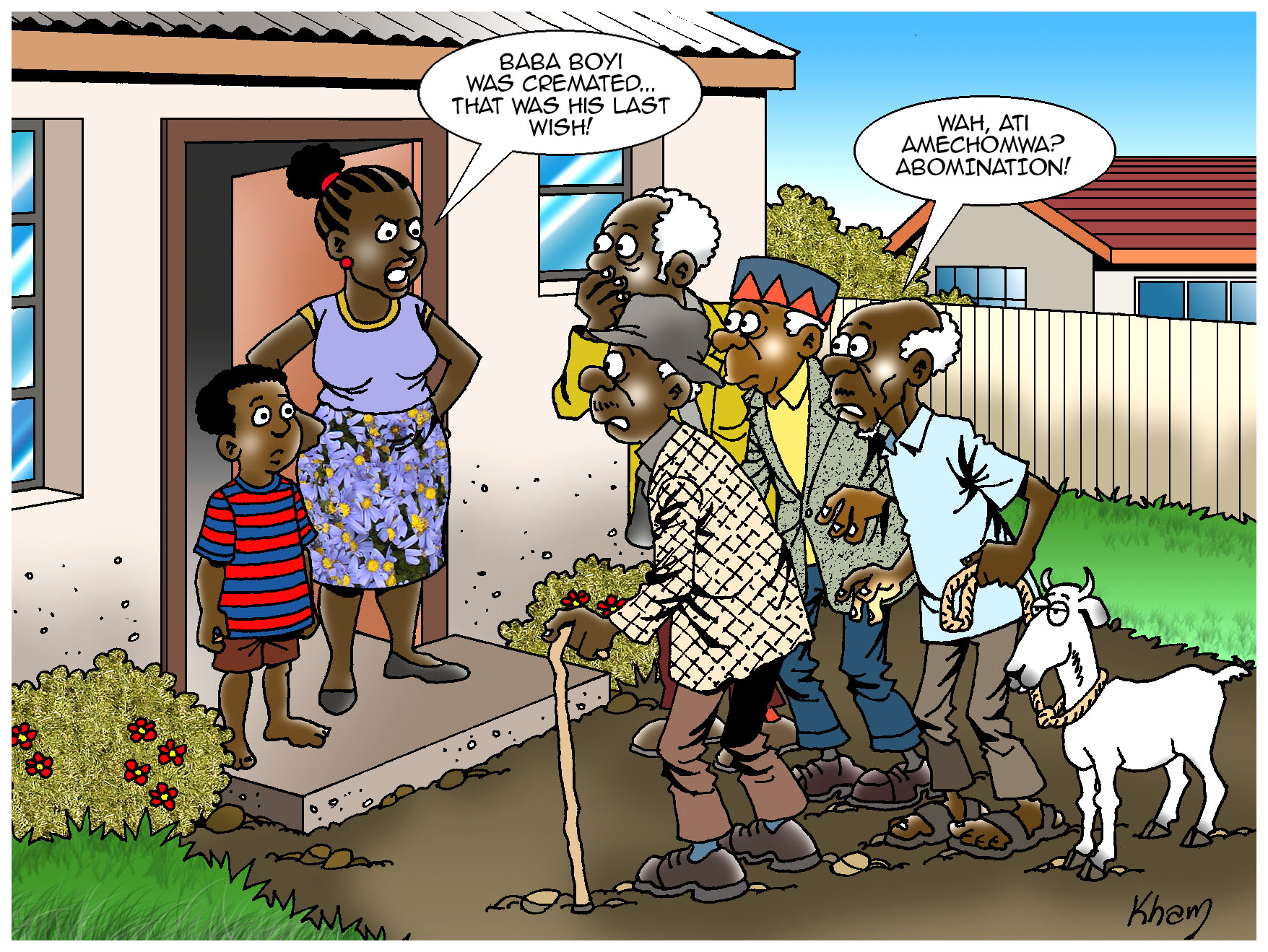
While elders were planning to visit Okondo’s palatial city home to discuss funeral arrangements—that is, how many chickens and heads of cattle to slaughter—his widow issued a terse statement: The father of her children, she announced, had returned to ashes—as per his last will and testament.
The entire nation recoiled in horror. Cremated? Was Okondo out of his mind? An old political rival addressed the press, his face contorted with disbelief: “What is this Okondo has done? I have been saying for years that Okondo is mad, but none of you believed me. Do you see what Okondo has done?”
Okondo’s cremation, we were to learn, was just the beginning.
Ten years later, retired Anglican Church Archbishop, the Most Reverend Manasses Kuria, was swiftly converted from dust to ashes when he went to be with the Lord. The Kenya African Anglican fraternity was stunned, nay, dumbfounded.
Hadn’t the cremators violently torched the archbishop’s spirit, barring him from transcending into a proper African ancestral spirit? Wasn’t his cremation “evil” and “paganistic”? How would he resurrect if the trumpet call found him burnt to cinder?
I am neither a good African nor a good Christian, so these matters defeat me.
But in the intervening years, many people I know have been cremated. Prof Wangari Maathai. Charles Mugane Njonjo. Jeremiah Kiereini. Allan Thigo. Tough people. Important people. Revered celebrities and public figures. The news no longer rattles me. I am old enough to know the dead give no damn.
Still, I can’t help thinking that by choosing cremation, those good men and women selfishly deny us a jolly good African funeral feast—to eat, drink, dance, fight, politick, listen to our own voices and have sex in the dark.
Unforgivable.
Ted Malanda is a consulting writer and editor, and former editor with The Standard in Nairobi.
Featured Book
%20(1).jpg)
Related Book
Get to know more about the mentioned books
Related Article
Don’t get cremated: why deny us a good funeral feast?
By
I nodded when trade union boss Francis Atwoli recoiled in shock when it was announced that his daughter-in-law was getting cremated.
As a child, pictures of burials at sea would occasionally pop up in The East African Standard. They perturbed me, not least because I once almost drowned while paddling around the shallow ends of River Khalaba. The thought of being dunked like a chunk of bread into a dark, bottomless sea petrified me. Why were white people—who were supposedly clever—indulging in this madness?
More mind-boggling was that Attorney General Charles Mugane Njonjo was always present, immaculate in a Savile Row suit and white hat, as they dumped the dead into the sea for crawlies to gnaw. He was an African, for crying out loud. He ought to have known better.
Wasn’t it common knowledge that dying in a waterbody triggered generational curses—unless wrinkled elders fortified themselves with amulets and cleansed every living pore with a black sheep and other demon-scattering paraphernalia? Yet there they were, the white people, recklessly dunking their beloved into the salty, shark-infested waters of the Indian Ocean.
Buried on riverbanks
At the time, those who drowned in my village were buried right on the riverbanks, deep in the night when, I suspect, evil spirits were high as kites. Burying them at home would have dared the spirits to cause similar deaths to recur in the family. In fact, whoever discovered the drowning victim was gifted a cow, after wriggling their toes in sheep poop and getting smeared with herbal concoctions from head to toe by elderly men versed in the dark, shadowy world of ancestral spirits.
The burial at sea didn’t, however, shock me as much as reading Jules Verne’s Around the World in 80 Days. I discovered, to my horror, that Indians didn’t bury the dead. They lit them up. Having stolen guava, sugarcane and lied my way through countless tight corners, cremation brought alive the horrors that awaited me in hell. I didn’t sleep for weeks.
Then, Grandpa died. They locked him up in a coffin, stuffed him down a hole and covered him with a mountain of soil. The thought that I too would one day be encased in an acre of dump soil filled me with dread. All of that weight? And the earthworms? If God really loved us, why didn’t He let us fly—neat, clean and dry—to Him?
I had barely recovered when my father casually mentioned, in passing, that the Maasai and Agikuyu of old left hyenas to scavenge on the dead. I was stumped.
Fear of death
Barely ten, I found myself grappling with deep philosophical issues. Why did Mama give birth to me if she knew I would eventually get eaten by termites and worms? The fear of death frightened me, and I saw the light and immersed myself in the Bible.
So it was that I joined high school like a wretched soul walking through the valley of the shadow of death. This world not being my home, I tiptoed into the Christian Union and fearfully ghosted around the school for weeks, humming solemn hymns, until I discovered basketball—and a dark, Luo girl with the cutest scar you’ve ever seen on her right cheek.
To my disbelief, I came alive, totally forgot about death and her macabre rituals.
Hopelessly in love, the years flashed by in a haze, my mind fixated on that flat-chest and her dark, bewitching scar. I was firm in the belief that I would miraculously grow two feet taller, star in the NBA for the Los Angeles Lakers, earn a bucket of dollars and make her mine.
Instead, 1996—or the Year of the Fire Rat in the Chinese Lunar Calendar—caught me wheezing in chalk dust from a small, rural village in Kisii. As a young schoolmaster, I was gainfully engaged in expelling “idiocy” from teenagers, as a gin-soaked colleague disdainfully liked to say. My NBA dreams, and the Luo girl and her dizzying scar, had long caked in my mind.
Curses
Where was I? Yes, the Year of the Fire Rat! That is when Peter Habenga Okondo, former Cabinet minister, died.
He’d “cursed” an Anglican Bishop six years earlier who, as fate would have it, died days later in a horrific car crash. He wasn’t overly popular, but as is the custom, bewildered villagers gathered at his rural home in wailing multitudes within minutes.
The poor man had died of cancer, but knowing my people, there must have been a handful of souls in that crowd who were convinced someone bewitched him. A jealous neighbour with an evil eye, perhaps. Maybe a politician with whom they once feuded over a woman—or power. Maybe the Anglican Bishop’s sad spirit did him in. Who knows these things?
While elders were planning to visit Okondo’s palatial city home to discuss funeral arrangements—that is, how many chickens and heads of cattle to slaughter—his widow issued a terse statement: The father of her children, she announced, had returned to ashes—as per his last will and testament.
The entire nation recoiled in horror. Cremated? Was Okondo out of his mind? An old political rival addressed the press, his face contorted with disbelief: “What is this Okondo has done? I have been saying for years that Okondo is mad, but none of you believed me. Do you see what Okondo has done?”
Okondo’s cremation, we were to learn, was just the beginning.
Ten years later, retired Anglican Church Archbishop, the Most Reverend Manasses Kuria, was swiftly converted from dust to ashes when he went to be with the Lord. The Kenya African Anglican fraternity was stunned, nay, dumbfounded.
Hadn’t the cremators violently torched the archbishop’s spirit, barring him from transcending into a proper African ancestral spirit? Wasn’t his cremation “evil” and “paganistic”? How would he resurrect if the trumpet call found him burnt to cinder?
I am neither a good African nor a good Christian, so these matters defeat me.
But in the intervening years, many people I know have been cremated. Prof Wangari Maathai. Charles Mugane Njonjo. Jeremiah Kiereini. Allan Thigo. Tough people. Important people. Revered celebrities and public figures. The news no longer rattles me. I am old enough to know the dead give no damn.
Still, I can’t help thinking that by choosing cremation, those good men and women selfishly deny us a jolly good African funeral feast—to eat, drink, dance, fight, politick, listen to our own voices and have sex in the dark.
Unforgivable.
Ted Malanda is a consulting writer and editor, and former editor with The Standard in Nairobi.
Share :


Lorem ipsum dolor sit amet, consectetur adipiscing elit. Suspendisse varius enim in eros elementum tristique. Duis cursus, mi quis viverra ornare, eros dolor interdum nulla, ut commodo diam libero vitae erat. Aenean faucibus nibh et justo cursus id rutrum lorem imperdiet. Nunc ut sem vitae risus tristique posuere.
Lorem ipsum dolor sit amet, consectetur adipiscing elit. Suspendisse varius enim in eros elementum tristique. Duis cursus, mi quis viverra ornare, eros dolor interdum nulla, ut commodo diam libero vitae erat. Aenean faucibus nibh et justo cursus id rutrum lorem imperdiet. Nunc ut sem vitae risus tristique posuere.