
Drugged or dumped? To keep the pregnancy or not, that is the question
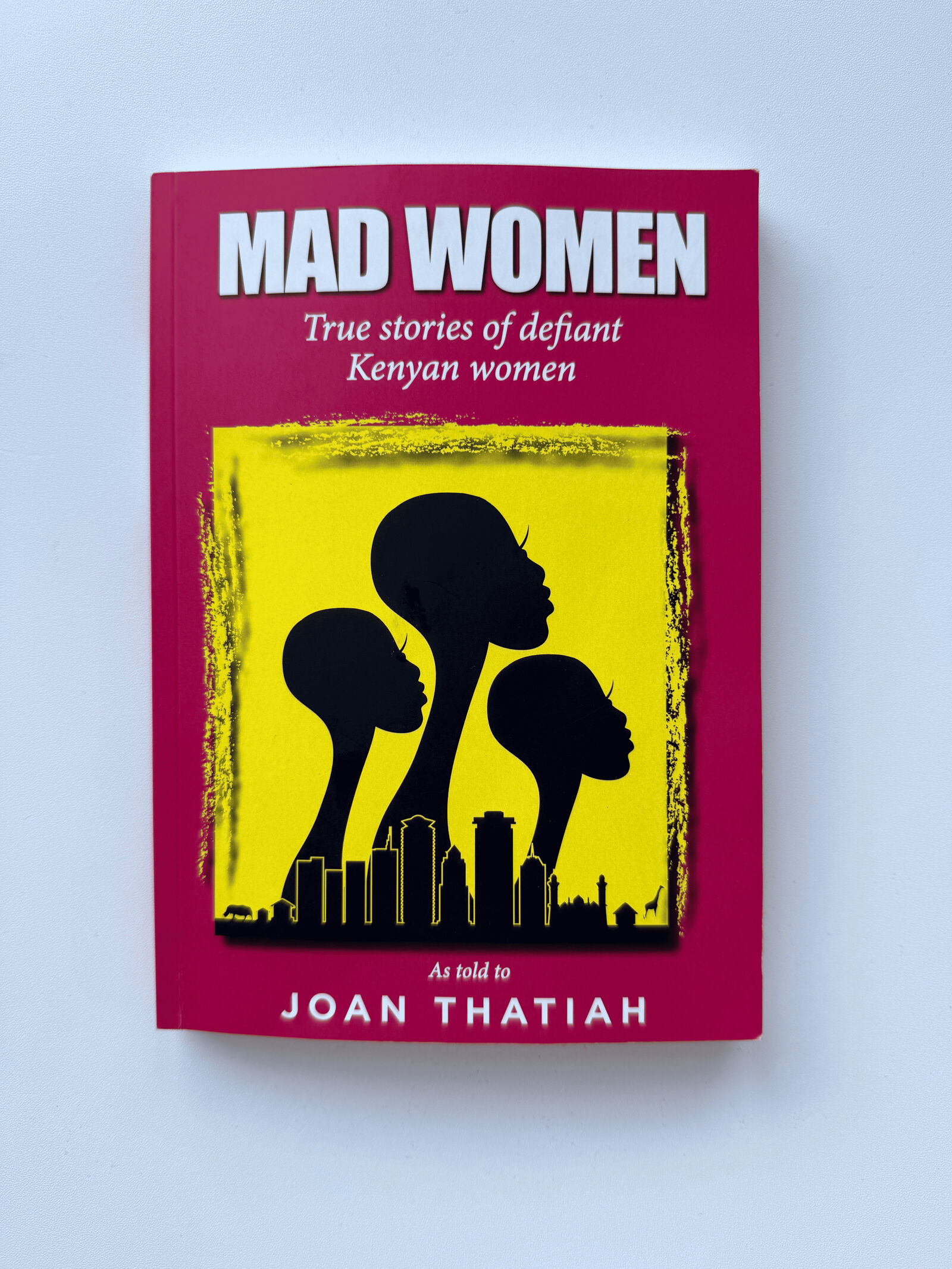
TITLE: Mad Women: True Stories of Defiant Kenyan Women
AUTHOR: Joan Thatiah
PUBLISHER: Self-published
REVIEWER: Tracy M. Ochieng
AVAILABILITY: Coming soon on shop.eKitabu.com
PRICE: Ksh1,250
Joan Thatiah has done it again, and now we have to talk about the big A: Abortion. Her new collection of true short stories in Mad Women: True Stories of Defiant Kenyan Women triggered a holy anger, profound sadness, anguish and an aching loss when I encountered Zawadi, who died on an “operating table” in a residential apartment in Kayole.
I had to fight back the tears welling in my eyes, as I braided my hair in the salon, unwilling to be seen as unravelling over a book. But that is precisely the point—these are not just stories, they are recognisable and lived realities. The topic of abortion remains a hushed one spoken in codes and euphemisms on platforms like TikTok, where creators, anonymous or not, refer to pregnancy as “the stranger in my womb”, quietly building communities of support for women navigating impossible choices. I have known a few women who have stood at this exact crossroads, whether to keep the pregnancy or not, and they survived. They walked out of those clinics alive. But stories like Zawadi’s insist on a harder truth: not everyone does.
These stories do not exist in a vacuum. In Kenya, abortion sits in a legal grey area where it is still illegal under the Penal Code but permissible under Article 26(4) of the 2010 Constitution when a trained health professional deems it necessary for emergency treatment, or to save the life or health of the mother. A major milestone for many women in 2022 happened when a High Court ruling affirmed abortion as a fundamental right and deemed the arrest of patients and providers illegal. Clinics like Marie Stopes Kenya have come under sharp scrutiny for providing this essential healthcare service and were temporarily banned in 2018 for advertising these services. It is within this grey area that Mad Women finds its urgency, begging the question: Is abortion healthcare?
When Zawadi falls pregnant after she was drugged at a birthday party and later raped by a young man she’d met in church, she turns to her sister Nicole, who always seemed to know what to do in difficult situations. Through Facebook, she finds the clinic and carefully explains the situation to the “qualified” nurse, who assures her that her sister would be safe. What follows is a tragedy I won’t retell but would invite you to read and sit with. Zawadi dies on that tabl,e with Nicole holding her hand, and her parents blame Nicolefor her death. A moment that was supposed to be interpreted as care and support leads to resentment that drives Nicole away from her home and her parents. Zawadi was reported to have died from malaria, an erasure of what actually happened and in so doing, censoring and diluting the seriousness of pregnancy and abortion.
This pattern of rewriting and erasure is what usually happens to the Zawadis of this world, because we all know one. Stories are softened and made more palatable because they are difficult to hold in the open. Outside the pages of this book, the conversations remain just as fraught with shame, ambiguity, and moral arguments that impede real conversations from happening. The debate often descends into a contest of whose life matters more, and the ability of a person, no, woman, to abstain. My favourite one, hauntingly , is the notorious, “why can’t you just use a condom to avoid being in such a situation?” again directed solely atthe woman. Thatiah, however, resists that framing by inviting us to sit with Zawadi, to stay with Nicole in that moment, and to fix our attention firmly to the cost of the question “to keep or not to keep?”, to the lives that are negotiated, hidden and lost in the process.
Far from demanding sympathy, Mad Women demands a discomfort that lingers long after the story ends. It is the discomfort of realising how easily care becomes risk, how silence becomes policy and how often women are forced to navigate both at the same time. The weight of abortion also lands on the women who offer support, and Nicole becomes this figure who isn’t acting on ideology but instead improvising care inside a constrained system. Support is rarely simple when religion and law are all circling the same decision, especially in religious countries where children are a gift from God and abortion is taking a life that is expected tolater be an important figure in history, as sang in “Nerea” by Amos and Josh. One thing is certain, however: if you haven’t lived the reality and come face-to-face with this issue, it is easy to reach such unempathetic dogma.
Unlike the familiar urge to end such stories with advice or resolution, Zawadi’s and Nicole’s stories insist on something more difficult: that we sit with discomfort, and refuse to look away from what it reveals about women’s healthcare. They ask us to confront not only what happened, but the conditions that made it possible, the silences, the uncertainties, and how women’s bodies are governed, debated, and decided upon in their absence.
And perhaps that is where Mad Women finds its power: not in offering answers, but in refusing to let us turn away.
Tracy Ochieng is a staff writer with Books in Africa. Email: tracy.ochieng@ekitabu.com
Featured Book
%20(1).jpg)
Related Book
Get to know more about the mentioned books
Related Article

Drugged or dumped? To keep the pregnancy or not, that is the question
By
TITLE: Mad Women: True Stories of Defiant Kenyan Women
AUTHOR: Joan Thatiah
PUBLISHER: Self-published
REVIEWER: Tracy M. Ochieng
AVAILABILITY: Coming soon on shop.eKitabu.com
PRICE: Ksh1,250
Joan Thatiah has done it again, and now we have to talk about the big A: Abortion. Her new collection of true short stories in Mad Women: True Stories of Defiant Kenyan Women triggered a holy anger, profound sadness, anguish and an aching loss when I encountered Zawadi, who died on an “operating table” in a residential apartment in Kayole.
I had to fight back the tears welling in my eyes, as I braided my hair in the salon, unwilling to be seen as unravelling over a book. But that is precisely the point—these are not just stories, they are recognisable and lived realities. The topic of abortion remains a hushed one spoken in codes and euphemisms on platforms like TikTok, where creators, anonymous or not, refer to pregnancy as “the stranger in my womb”, quietly building communities of support for women navigating impossible choices. I have known a few women who have stood at this exact crossroads, whether to keep the pregnancy or not, and they survived. They walked out of those clinics alive. But stories like Zawadi’s insist on a harder truth: not everyone does.
These stories do not exist in a vacuum. In Kenya, abortion sits in a legal grey area where it is still illegal under the Penal Code but permissible under Article 26(4) of the 2010 Constitution when a trained health professional deems it necessary for emergency treatment, or to save the life or health of the mother. A major milestone for many women in 2022 happened when a High Court ruling affirmed abortion as a fundamental right and deemed the arrest of patients and providers illegal. Clinics like Marie Stopes Kenya have come under sharp scrutiny for providing this essential healthcare service and were temporarily banned in 2018 for advertising these services. It is within this grey area that Mad Women finds its urgency, begging the question: Is abortion healthcare?
When Zawadi falls pregnant after she was drugged at a birthday party and later raped by a young man she’d met in church, she turns to her sister Nicole, who always seemed to know what to do in difficult situations. Through Facebook, she finds the clinic and carefully explains the situation to the “qualified” nurse, who assures her that her sister would be safe. What follows is a tragedy I won’t retell but would invite you to read and sit with. Zawadi dies on that tabl,e with Nicole holding her hand, and her parents blame Nicolefor her death. A moment that was supposed to be interpreted as care and support leads to resentment that drives Nicole away from her home and her parents. Zawadi was reported to have died from malaria, an erasure of what actually happened and in so doing, censoring and diluting the seriousness of pregnancy and abortion.
This pattern of rewriting and erasure is what usually happens to the Zawadis of this world, because we all know one. Stories are softened and made more palatable because they are difficult to hold in the open. Outside the pages of this book, the conversations remain just as fraught with shame, ambiguity, and moral arguments that impede real conversations from happening. The debate often descends into a contest of whose life matters more, and the ability of a person, no, woman, to abstain. My favourite one, hauntingly , is the notorious, “why can’t you just use a condom to avoid being in such a situation?” again directed solely atthe woman. Thatiah, however, resists that framing by inviting us to sit with Zawadi, to stay with Nicole in that moment, and to fix our attention firmly to the cost of the question “to keep or not to keep?”, to the lives that are negotiated, hidden and lost in the process.
Far from demanding sympathy, Mad Women demands a discomfort that lingers long after the story ends. It is the discomfort of realising how easily care becomes risk, how silence becomes policy and how often women are forced to navigate both at the same time. The weight of abortion also lands on the women who offer support, and Nicole becomes this figure who isn’t acting on ideology but instead improvising care inside a constrained system. Support is rarely simple when religion and law are all circling the same decision, especially in religious countries where children are a gift from God and abortion is taking a life that is expected tolater be an important figure in history, as sang in “Nerea” by Amos and Josh. One thing is certain, however: if you haven’t lived the reality and come face-to-face with this issue, it is easy to reach such unempathetic dogma.
Unlike the familiar urge to end such stories with advice or resolution, Zawadi’s and Nicole’s stories insist on something more difficult: that we sit with discomfort, and refuse to look away from what it reveals about women’s healthcare. They ask us to confront not only what happened, but the conditions that made it possible, the silences, the uncertainties, and how women’s bodies are governed, debated, and decided upon in their absence.
And perhaps that is where Mad Women finds its power: not in offering answers, but in refusing to let us turn away.
Tracy Ochieng is a staff writer with Books in Africa. Email: tracy.ochieng@ekitabu.com
Share :


Lorem ipsum dolor sit amet, consectetur adipiscing elit. Suspendisse varius enim in eros elementum tristique. Duis cursus, mi quis viverra ornare, eros dolor interdum nulla, ut commodo diam libero vitae erat. Aenean faucibus nibh et justo cursus id rutrum lorem imperdiet. Nunc ut sem vitae risus tristique posuere.
Lorem ipsum dolor sit amet, consectetur adipiscing elit. Suspendisse varius enim in eros elementum tristique. Duis cursus, mi quis viverra ornare, eros dolor interdum nulla, ut commodo diam libero vitae erat. Aenean faucibus nibh et justo cursus id rutrum lorem imperdiet. Nunc ut sem vitae risus tristique posuere.