

How migrant artists made Nairobi the city of refuge and Kenya a cultural capital
From Tanzanian rumba bands to Ghanaian and British-born cartoonists, Nairobi’s cultural identity was forged by arrivals from across Africa and beyond. A 2026 crackdown on foreign small-scale traders was a great test on whether the city remembers its own making.
In September 2026, President William Ruto ordered a crackdown on foreign nationals operating small-scale businesses in Kenya without required permits or documentation, arguing that such work should be reserved for Kenyans.
The directive provoked an immediate public reckoning. Kenyans, civil-society organisations, and regional voices pushed back against the suggestion that outsiders were taking work from citizens, warning that the language and enforcement risked stoking xenophobia and undermining the East African Community’s promise of free movement and shared belonging. The unfortunate situation in South Africa was still fresh in people’s minds.
The human cost was immediate. Speaking to the BBC in Nairobi that week, Ndaikech Ali, a Burundian tuk tuk driver who had spent nine years building a life in the city, captured the sudden shift from neighbourly welcome to fear.
"It's like a dog has been set loose upon us," he told the BBC in Nairobi.
Yet many ordinary Kenyans pushed back against the rhetoric. As Robert Kiberenge, a trader in Nairobi’s central business district, said at the height of the tension: "We have no problem with foreigners doing small businesses in Kenya."
Nairobi’s Cultural History
It hasn’t always been like this. As these events unfolded, I couldn’t help thinking about the city and by extension the whole country but through the arts and culture prism. For anyone familiar with Nairobi’s cultural history, the moment felt painfully familiar—and deeply ironic.
This is a city whose newspapers, nightclubs, recording studios, schools, and informal economies have long been shaped by people who arrived from Tanzania, Uganda, the Democratic Republic of Congo, Ghana, Britain, and beyond. Nairobi has not merely hosted African and international creators; it has often given them the room, audiences, and institutions through which their work became part of Kenyan life.
Nairobi has been, in a real sense, a city of refuge—not only for those fleeing war or political persecution, but for artists seeking a stage, a market, a mentor, a printing press, a recording studio, or simply the freedom to imagine a different future. And it is quite gratifying that Nairobians, and Kenyans in general, stood up to reject and ask that the directive be interrogated and if possible, be rescinded.
From Exclusion to Art
The Burundians who queued outside their embassy were not asking Nairobi to become something it had never been. They were asking it to remain what it has often been: A city where people from across the region could arrive, work, build a life, and contribute to a shared public culture.
This history is easiest to see using the arts, and especially cartoons, literature and music. Nairobi’s attraction was not accidental. As East Africa’s major commercial and media hub, it offered publishing houses, newspapers, record labels, performance venues, audiences, transport links, and professional networks that were often more accessible—or more lucrative—than those in artists’ home countries.
In the 1970s, the movement of Tanzanian musicians to Kenya occurred amid economic pressures at home and easier regional mobility prior to the collapse of the first East African Community in 1977. Nairobi offered musicians an eager audience, a commercial market, and an infrastructure through which their music could be recorded, circulated, and remembered.
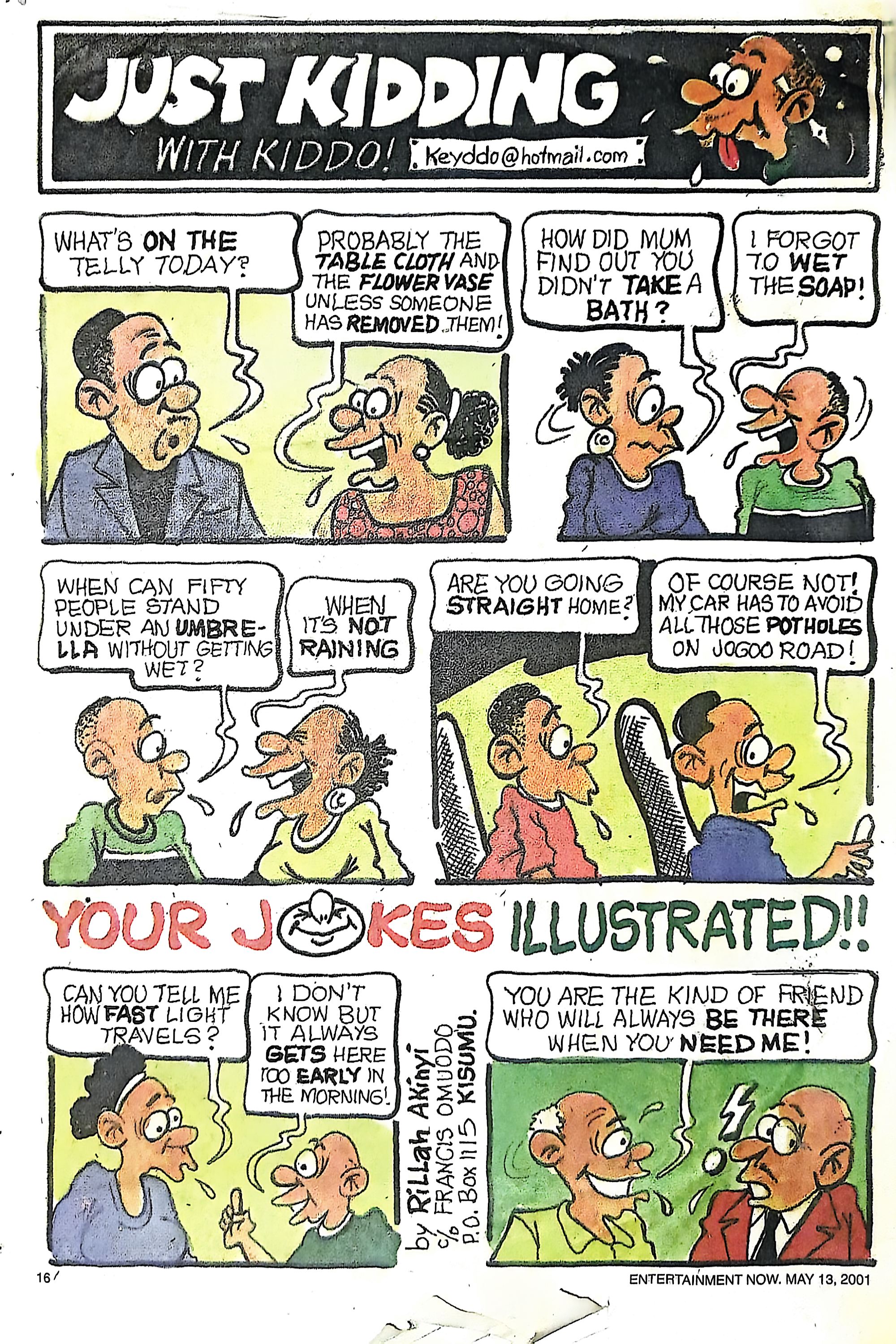
The same was true for visual storytellers. Major newspapers like the Daily Nation and Kenya Times, alongside satirical magazines like Joe, gave illustrators and commentators a daily relationship with readers. In a region where cultural institutions could be fragile or heavily policed, Nairobi’s media ecosystem became a rare, vibrant platform for African visual storytelling.
The Literary Sanctuary: Nairobi’s 1970s Intellectual Renaissance
The media played a significant role, but the city's cultural and artistic significance was driven by many facets working together. At the University of Nairobi, things were abuzz. This was the time of the famous “manifesto” by the likes of Prof Ngũgĩ wa Thiong’o, Taban lo Liyong, and Henry Owuor-Anyumba, demanding “the abolition of the English Department" and the newly minted Literature Department at UoN became the beating heart of an intellectual renaissance. Rather than treating Nairobi as a passive consumer of imported colonial canons, this movement placed African oral traditions, regional languages, and anti-imperial critique at the centre of East African letters.
This literary flowering was powered by Nairobi’s role as an intellectual sanctuary for writers fleeing authoritarian regimes across the region. As Idi Amin’s dictatorship tightened its grip on Uganda and Hastings Banda’s rule stifled dissent in Malawi, Nairobi’s campuses, theatres, and publishing houses became a vital refuge.
During this time, Ugandan poet and scholar Okot p’Bitek— author of the seminal Song of Lawino & Song of Ocol — found a home and platform in Nairobi, infusing the city’s cultural life with Acholi poetic forms and fierce cultural nationalism. Besides Okot, Malawian poet and diplomat David Rubadiri, living in exile, whose teaching and mentorship shaped an entire generation of Kenyan writers.
Theatre, too, became a shared regional border crossing. Ugandan playwright John Ruganda, also in exile during the 1970s, joined the University of Nairobi’s Literature Department and energised the University of Nairobi’s Free Travelling Theatre. Staging intense works like The Burdens and Black Mamba, Ruganda— alongside the South Sudanese sage Taban lo Liyong and Ugandan scholar Prof Austin Bukenya— helped turn Nairobi into the undisputed dramatic capital of East Africa. Plays rehearsed in university halls travelled to rural community centres and urban auditoriums, proving that exiled voices could speak directly and intimately to Kenyan audiences.
Years later, I benefitted a lot from these experts as a student of Prof Bukenya who had moved to Kenyatta University’s Literature department. His seminal course Contemporary Literature, where he said we should study books as they left the printing press, was instrumental in shaping my interest in arts journalism.
This literary ferment did not exist in isolation from the city’s print and cartooning ecosystems; it fed directly into them. Local publishing houses—most notably Heinemann’s African Writers Series (the precursor to East African Educational Publishers) under the late Henry Chakava—gave these migrant and Kenyan authors a continental distribution network.
The Cartoonists’ Refuge
In the mid-50 and early 60s, the late Edward G. Gitau had started a local comic strip when he created the character Juha Kalulu and when Taifa Leo was launched, it found a home there. However, the newspapers were still reliant on the syndicated comic strips from the West.
There were few African cartoonists and comic artists and the opportunities to publish were also limited. This was the scene that the late Terry Hirst, a Brighton-born cartoonist and comic artist found when he arrived in Kenya.
However, with the UON renaissance happening, many other key players like Elimo Njau were involved in rejuvenating the visual arts scene, and the time was ripe for a publication like Joe magazine that would contribute immensely in shaping the country’s post-independence visual culture.
Through Joe and his foundational newspaper work, Terry Hirst helped create a space where humour, satire, illustration, and sharp social commentary could meet—a platform that quickly drew artistic migrants from across the continent. Joe served as a bold testing ground where emerging fiction writers such as Sam Kahiga and Leonard Kibera rubbed shoulders with Terry Hirst’s illustrators. Together, these overlapping circles demonstrated what happens when a city opens its doors: Nairobi did not lose its identity to its regional guests—it discovered its voice through them.
It is this appeal that attracted talented artists such as the late Frank Odoi to shift based from his home country Ghana to Kenya. Odoi arrived from Accra in the late 1970s after reading a copy of Joe back home. As Hirst recalled in conversations documenting those early editorial days, Odoi simply "turned up in Nairobi" looking to join the magazine. Odoi became a pillar of Kenyan visual arts, creating enduring strips like Golgoti and Akokhan.
Reflecting on his journey in an interview on the intersection of African sequential art, Odoi emphasised how Nairobi’s press culture provided an expansive stage that bridged West and East African aesthetics, embedding Ghanaian folklore and urban satire directly into Kenyan newspapers.
Cartoonists and comic artists did not just come from far off countries. Artists from the region soon followed and they created some of the most iconic and memorable comic strips in Kenya. The late Philip Ndunguru from Tanzania joined the Kenya Times in 1983 and created Kazi Bure, a social comic strip that became wildly popular with Kenyan readers. James Tumusiime, from Uganda, on the other hand, created Bogi Benda, expanding the range of characters and comic idioms available to Nairobi’s daily commuters. Kazi Bure and Bogi Benda are not just regional classics, they somehow transcended the newspaper pages and into real life, where characters were nicknamed after them.
Then there is Gado — Godfrey Mwampembwa — born in Dar es Salaam, who joined the Daily Nation in 1992 and became one of East and Central Africa’s most widely syndicated editorial cartoonists. Besides his work as an editorial/political cartoonist, his television show XYZ has helped uplift satire in the region and the continent. His work made Nairobi not simply a place where African cartoonists could find employment, but a continental centre from which political satire could travel across borders.
Together, these artists reveal a clear pattern: Nairobi did not merely receive talent. It created a chain of mentorship, publication, and influence under which foreign-born creators—from Brighton to Accra and Dar es Salaam—helped define Kenyan satire and political commentary.
The Dance Floor as a Border Crossing
If cartoons show how Nairobi shaped public debate, music shows how it shaped public feeling. In the 1970s, the Tanzanian Kinyonga—Wilson, George, and William—moved to Kenya and formed Simba Wanyika, a band whose guitar-driven rumba would become one of East Africa’s most influential sounds.
Simba Wanyika was never merely a Tanzanian band working in Kenya; it became woven into Kenya’s musical fabric through timeless social commentaries and love ballads such as Shilingi Yaua, oh, Tena Maua, Mwana Sikia, and Pamela. Its offshoots, including Les Wanyika—born out of the rivalries and shifting alliances of Nairobi’s competitive music economy—carried that influence into later decades with evergreen numbers such as Sina Makosa, Afro, Paulina and Safari Sio Kifo. Their songs boomed at weddings, neighbourhood bars, radio stations, and family memories across the region. My all-time favourites are Pamela, Afro and Paulina.
Nairobi’s sound was transformed just as profoundly by musicians from the Democratic Republic of Congo. Groups like Orchestre Les Mangelepa—who arrived in Nairobi in 1976 after splitting from Baba Gaston’s Orchestra Baba National—recorded classics such as Embakasi and Kasongo, a 1977 hit about a vanishing lover. Alongside them came Samba Mapangala’s Orchestre Virunga, whose tracks Vunja Mifupa, was a disco banger. There were also outstanding individuals like vocalists like Moreno Batamba, who arrived in Nairobi with Orchestra Moja One before fronting Band Shika-Shika. Ugandan musicians, including Sammy Kasule, further enriched a scene whose pulse was never narrowly national.
Crucially, this tradition of musical migration did not stop in the analogue era; it evolved. Decades later, Nairobi remains the vital crucible where East African stardom is forged. In the early 2000s, Ugandan icons such as Jose Chameleone and Bebe Cool lived, hustled, and recorded their breakthrough tracks in Nairobi’s Sheng-soaked studios—with Chameleone, in his song Dootia, famously blending Luganda, Kiswahili and English on Kenyan soil to launch the cross-border sound that conquered the continent. In the years since, Tanzanian Bongo Flava heavyweights like Diamond Platnumz have continually turned to Nairobi as an essential media and recording hub, treating the city not as a foreign market, but as a home away from home where hits are validated and amplified.
Every Kenyan has heard his name and danced to his music. Mention Kidum and every Kenyan will nod in recognition. No artist embodies this shared destiny quite like Kidum—Jean Pierre Nimubona. Arriving in Nairobi as a refugee fleeing civil conflict in Burundi, Kidum built his life, his band (Boda Boda), and an extraordinary multi-decade career on Kenyan soil. Singing in soulful Kiswahili and Kirundi, he transformed his pain of displacement into some of East Africa’s most beloved anthems of love, peace, and resilience. For millions of Kenyans who belt out his choruses on radio and at live concerts, Kidum is not a "foreigner"—he is a defining voice of the Kenyan radio landscape.
His journey stands as the ultimate rebuttal to the politics of exclusion: proof that someone who arrives seeking shelter can end up writing the soundtrack of the nation.
The Nairobi dance floor, and by extension the airwaves, (radio and TV) have always been a border crossing. Here, Tanzanian jazz and rhythms met Congolese guitar and rumba, Ugandan voices met Kenyan recording booths and Kiswahili became a language of shared pleasure, argument and belonging.
When Refuge Becomes Conditional
Yet refuge in Nairobi, as the presidential directive indicated, has never been unconditional. The city’s welcome has always been shaped by immigration hurdles, economic precarity, competition, censorship, and periodic political attempts to define who truly belongs. Even celebrated creators have felt those limits—as when Gado’s 2015 cartoon about former Tanzanian president Jakaya Kikwete led to The EastAfrican, the regional newspaper published by the Nation Media Group, being banned in Tanzania, proving that artistic refuge in Nairobi is never fully immune to regional political pressure.
The September 2026 directive arrived in a city whose prosperity and cultural influence have long depended on regional mobility, yet whose sense of belonging remains politically contested. While the directive targeted small-scale businesses operating without permits, its enforcement produced fear and uncertainty far beyond its formal legal scope.
The contrast is uncomfortable. Nairobi has celebrated the Tanzanian cartoonist who skewered Kenyan power, the Ghanaian illustrator who entertained its newspaper readers with a memorable comic strip, Akokhan, and the Tanzanian band that scored in weddings and bars. Yet it can still make a Burundian shopkeeper feel that their right to remain is fragile, conditional, and permanently provisional.
What Nairobi Owes Its Makers
The Burundians who queued outside their embassy in Nairobi were not asking for a favour. They were asking to continue lives already woven into the city: to keep a shop, support a family, pay rent, serve customers, and belong to a place they had helped build in small, ordinary ways.
Nairobi’s cultural history should make that request difficult to dismiss. The city’s greatest songs, cartoons, bands, and public conversations were often made by people who arrived from somewhere else and stayed long enough to change what Nairobi sounded like, looked like, and imagined itself to be.
If Nairobi is to remain a city of refuge, it cannot mean refuge only for the celebrated artist whose work can be framed, streamed, or archived. It must also mean refuge for the trader, the tailor, hairstylists, the young men selling peanuts, the flask-carrying young men selling coffee and KDF in the ever-busy construction sites and to the night “soldiers” guarding our gated communities, the musician, the cartoonist, and the worker whose presence may be less visible—but no less essential to the city’s vibrant life.
Perhaps the sharpest reminder of that truth sits in the very vocabulary of Kenyan politics today. Decades after Congolese migrants stepped into a Nairobi recording studio to lay down Kasongo, the evergreen song, Kenyans repurposed the chorus of that 1977 rumba classic into the ubiquitous street nickname now used to tease no less than the President himself.
Hilarious, isn’t it? Or is it poetic justice that even the language used to hold the head of state to account was forged by the city’s migrant makers—proof that in Nairobi, those who arrive from elsewhere never merely pass through; they become part of how the nation speaks?
Msanii Kimani wa Wanjiru is a seasoned art journalist and a contributor to Books in Africa. kymsnetmedianetwork@gmail.com.
Featured Book

Related Book
Get to know more about the mentioned books
Related Article

How migrant artists made Nairobi the city of refuge and Kenya a cultural capital
By
From Tanzanian rumba bands to Ghanaian and British-born cartoonists, Nairobi’s cultural identity was forged by arrivals from across Africa and beyond. A 2026 crackdown on foreign small-scale traders was a great test on whether the city remembers its own making.
In September 2026, President William Ruto ordered a crackdown on foreign nationals operating small-scale businesses in Kenya without required permits or documentation, arguing that such work should be reserved for Kenyans.
The directive provoked an immediate public reckoning. Kenyans, civil-society organisations, and regional voices pushed back against the suggestion that outsiders were taking work from citizens, warning that the language and enforcement risked stoking xenophobia and undermining the East African Community’s promise of free movement and shared belonging. The unfortunate situation in South Africa was still fresh in people’s minds.
The human cost was immediate. Speaking to the BBC in Nairobi that week, Ndaikech Ali, a Burundian tuk tuk driver who had spent nine years building a life in the city, captured the sudden shift from neighbourly welcome to fear.
"It's like a dog has been set loose upon us," he told the BBC in Nairobi.
Yet many ordinary Kenyans pushed back against the rhetoric. As Robert Kiberenge, a trader in Nairobi’s central business district, said at the height of the tension: "We have no problem with foreigners doing small businesses in Kenya."
Nairobi’s Cultural History
It hasn’t always been like this. As these events unfolded, I couldn’t help thinking about the city and by extension the whole country but through the arts and culture prism. For anyone familiar with Nairobi’s cultural history, the moment felt painfully familiar—and deeply ironic.
This is a city whose newspapers, nightclubs, recording studios, schools, and informal economies have long been shaped by people who arrived from Tanzania, Uganda, the Democratic Republic of Congo, Ghana, Britain, and beyond. Nairobi has not merely hosted African and international creators; it has often given them the room, audiences, and institutions through which their work became part of Kenyan life.
Nairobi has been, in a real sense, a city of refuge—not only for those fleeing war or political persecution, but for artists seeking a stage, a market, a mentor, a printing press, a recording studio, or simply the freedom to imagine a different future. And it is quite gratifying that Nairobians, and Kenyans in general, stood up to reject and ask that the directive be interrogated and if possible, be rescinded.
From Exclusion to Art
The Burundians who queued outside their embassy were not asking Nairobi to become something it had never been. They were asking it to remain what it has often been: A city where people from across the region could arrive, work, build a life, and contribute to a shared public culture.
This history is easiest to see using the arts, and especially cartoons, literature and music. Nairobi’s attraction was not accidental. As East Africa’s major commercial and media hub, it offered publishing houses, newspapers, record labels, performance venues, audiences, transport links, and professional networks that were often more accessible—or more lucrative—than those in artists’ home countries.
In the 1970s, the movement of Tanzanian musicians to Kenya occurred amid economic pressures at home and easier regional mobility prior to the collapse of the first East African Community in 1977. Nairobi offered musicians an eager audience, a commercial market, and an infrastructure through which their music could be recorded, circulated, and remembered.
The same was true for visual storytellers. Major newspapers like the Daily Nation and Kenya Times, alongside satirical magazines like Joe, gave illustrators and commentators a daily relationship with readers. In a region where cultural institutions could be fragile or heavily policed, Nairobi’s media ecosystem became a rare, vibrant platform for African visual storytelling.
The Literary Sanctuary: Nairobi’s 1970s Intellectual Renaissance
The media played a significant role, but the city's cultural and artistic significance was driven by many facets working together. At the University of Nairobi, things were abuzz. This was the time of the famous “manifesto” by the likes of Prof Ngũgĩ wa Thiong’o, Taban lo Liyong, and Henry Owuor-Anyumba, demanding “the abolition of the English Department" and the newly minted Literature Department at UoN became the beating heart of an intellectual renaissance. Rather than treating Nairobi as a passive consumer of imported colonial canons, this movement placed African oral traditions, regional languages, and anti-imperial critique at the centre of East African letters.
This literary flowering was powered by Nairobi’s role as an intellectual sanctuary for writers fleeing authoritarian regimes across the region. As Idi Amin’s dictatorship tightened its grip on Uganda and Hastings Banda’s rule stifled dissent in Malawi, Nairobi’s campuses, theatres, and publishing houses became a vital refuge.
During this time, Ugandan poet and scholar Okot p’Bitek— author of the seminal Song of Lawino & Song of Ocol — found a home and platform in Nairobi, infusing the city’s cultural life with Acholi poetic forms and fierce cultural nationalism. Besides Okot, Malawian poet and diplomat David Rubadiri, living in exile, whose teaching and mentorship shaped an entire generation of Kenyan writers.
Theatre, too, became a shared regional border crossing. Ugandan playwright John Ruganda, also in exile during the 1970s, joined the University of Nairobi’s Literature Department and energised the University of Nairobi’s Free Travelling Theatre. Staging intense works like The Burdens and Black Mamba, Ruganda— alongside the South Sudanese sage Taban lo Liyong and Ugandan scholar Prof Austin Bukenya— helped turn Nairobi into the undisputed dramatic capital of East Africa. Plays rehearsed in university halls travelled to rural community centres and urban auditoriums, proving that exiled voices could speak directly and intimately to Kenyan audiences.
Years later, I benefitted a lot from these experts as a student of Prof Bukenya who had moved to Kenyatta University’s Literature department. His seminal course Contemporary Literature, where he said we should study books as they left the printing press, was instrumental in shaping my interest in arts journalism.
This literary ferment did not exist in isolation from the city’s print and cartooning ecosystems; it fed directly into them. Local publishing houses—most notably Heinemann’s African Writers Series (the precursor to East African Educational Publishers) under the late Henry Chakava—gave these migrant and Kenyan authors a continental distribution network.
The Cartoonists’ Refuge
In the mid-50 and early 60s, the late Edward G. Gitau had started a local comic strip when he created the character Juha Kalulu and when Taifa Leo was launched, it found a home there. However, the newspapers were still reliant on the syndicated comic strips from the West.
There were few African cartoonists and comic artists and the opportunities to publish were also limited. This was the scene that the late Terry Hirst, a Brighton-born cartoonist and comic artist found when he arrived in Kenya.
However, with the UON renaissance happening, many other key players like Elimo Njau were involved in rejuvenating the visual arts scene, and the time was ripe for a publication like Joe magazine that would contribute immensely in shaping the country’s post-independence visual culture.
Through Joe and his foundational newspaper work, Terry Hirst helped create a space where humour, satire, illustration, and sharp social commentary could meet—a platform that quickly drew artistic migrants from across the continent. Joe served as a bold testing ground where emerging fiction writers such as Sam Kahiga and Leonard Kibera rubbed shoulders with Terry Hirst’s illustrators. Together, these overlapping circles demonstrated what happens when a city opens its doors: Nairobi did not lose its identity to its regional guests—it discovered its voice through them.
It is this appeal that attracted talented artists such as the late Frank Odoi to shift based from his home country Ghana to Kenya. Odoi arrived from Accra in the late 1970s after reading a copy of Joe back home. As Hirst recalled in conversations documenting those early editorial days, Odoi simply "turned up in Nairobi" looking to join the magazine. Odoi became a pillar of Kenyan visual arts, creating enduring strips like Golgoti and Akokhan.
Reflecting on his journey in an interview on the intersection of African sequential art, Odoi emphasised how Nairobi’s press culture provided an expansive stage that bridged West and East African aesthetics, embedding Ghanaian folklore and urban satire directly into Kenyan newspapers.
Cartoonists and comic artists did not just come from far off countries. Artists from the region soon followed and they created some of the most iconic and memorable comic strips in Kenya. The late Philip Ndunguru from Tanzania joined the Kenya Times in 1983 and created Kazi Bure, a social comic strip that became wildly popular with Kenyan readers. James Tumusiime, from Uganda, on the other hand, created Bogi Benda, expanding the range of characters and comic idioms available to Nairobi’s daily commuters. Kazi Bure and Bogi Benda are not just regional classics, they somehow transcended the newspaper pages and into real life, where characters were nicknamed after them.
Then there is Gado — Godfrey Mwampembwa — born in Dar es Salaam, who joined the Daily Nation in 1992 and became one of East and Central Africa’s most widely syndicated editorial cartoonists. Besides his work as an editorial/political cartoonist, his television show XYZ has helped uplift satire in the region and the continent. His work made Nairobi not simply a place where African cartoonists could find employment, but a continental centre from which political satire could travel across borders.
Together, these artists reveal a clear pattern: Nairobi did not merely receive talent. It created a chain of mentorship, publication, and influence under which foreign-born creators—from Brighton to Accra and Dar es Salaam—helped define Kenyan satire and political commentary.
The Dance Floor as a Border Crossing
If cartoons show how Nairobi shaped public debate, music shows how it shaped public feeling. In the 1970s, the Tanzanian Kinyonga—Wilson, George, and William—moved to Kenya and formed Simba Wanyika, a band whose guitar-driven rumba would become one of East Africa’s most influential sounds.
Simba Wanyika was never merely a Tanzanian band working in Kenya; it became woven into Kenya’s musical fabric through timeless social commentaries and love ballads such as Shilingi Yaua, oh, Tena Maua, Mwana Sikia, and Pamela. Its offshoots, including Les Wanyika—born out of the rivalries and shifting alliances of Nairobi’s competitive music economy—carried that influence into later decades with evergreen numbers such as Sina Makosa, Afro, Paulina and Safari Sio Kifo. Their songs boomed at weddings, neighbourhood bars, radio stations, and family memories across the region. My all-time favourites are Pamela, Afro and Paulina.
Nairobi’s sound was transformed just as profoundly by musicians from the Democratic Republic of Congo. Groups like Orchestre Les Mangelepa—who arrived in Nairobi in 1976 after splitting from Baba Gaston’s Orchestra Baba National—recorded classics such as Embakasi and Kasongo, a 1977 hit about a vanishing lover. Alongside them came Samba Mapangala’s Orchestre Virunga, whose tracks Vunja Mifupa, was a disco banger. There were also outstanding individuals like vocalists like Moreno Batamba, who arrived in Nairobi with Orchestra Moja One before fronting Band Shika-Shika. Ugandan musicians, including Sammy Kasule, further enriched a scene whose pulse was never narrowly national.
Crucially, this tradition of musical migration did not stop in the analogue era; it evolved. Decades later, Nairobi remains the vital crucible where East African stardom is forged. In the early 2000s, Ugandan icons such as Jose Chameleone and Bebe Cool lived, hustled, and recorded their breakthrough tracks in Nairobi’s Sheng-soaked studios—with Chameleone, in his song Dootia, famously blending Luganda, Kiswahili and English on Kenyan soil to launch the cross-border sound that conquered the continent. In the years since, Tanzanian Bongo Flava heavyweights like Diamond Platnumz have continually turned to Nairobi as an essential media and recording hub, treating the city not as a foreign market, but as a home away from home where hits are validated and amplified.
Every Kenyan has heard his name and danced to his music. Mention Kidum and every Kenyan will nod in recognition. No artist embodies this shared destiny quite like Kidum—Jean Pierre Nimubona. Arriving in Nairobi as a refugee fleeing civil conflict in Burundi, Kidum built his life, his band (Boda Boda), and an extraordinary multi-decade career on Kenyan soil. Singing in soulful Kiswahili and Kirundi, he transformed his pain of displacement into some of East Africa’s most beloved anthems of love, peace, and resilience. For millions of Kenyans who belt out his choruses on radio and at live concerts, Kidum is not a "foreigner"—he is a defining voice of the Kenyan radio landscape.
His journey stands as the ultimate rebuttal to the politics of exclusion: proof that someone who arrives seeking shelter can end up writing the soundtrack of the nation.
The Nairobi dance floor, and by extension the airwaves, (radio and TV) have always been a border crossing. Here, Tanzanian jazz and rhythms met Congolese guitar and rumba, Ugandan voices met Kenyan recording booths and Kiswahili became a language of shared pleasure, argument and belonging.
When Refuge Becomes Conditional
Yet refuge in Nairobi, as the presidential directive indicated, has never been unconditional. The city’s welcome has always been shaped by immigration hurdles, economic precarity, competition, censorship, and periodic political attempts to define who truly belongs. Even celebrated creators have felt those limits—as when Gado’s 2015 cartoon about former Tanzanian president Jakaya Kikwete led to The EastAfrican, the regional newspaper published by the Nation Media Group, being banned in Tanzania, proving that artistic refuge in Nairobi is never fully immune to regional political pressure.
The September 2026 directive arrived in a city whose prosperity and cultural influence have long depended on regional mobility, yet whose sense of belonging remains politically contested. While the directive targeted small-scale businesses operating without permits, its enforcement produced fear and uncertainty far beyond its formal legal scope.
The contrast is uncomfortable. Nairobi has celebrated the Tanzanian cartoonist who skewered Kenyan power, the Ghanaian illustrator who entertained its newspaper readers with a memorable comic strip, Akokhan, and the Tanzanian band that scored in weddings and bars. Yet it can still make a Burundian shopkeeper feel that their right to remain is fragile, conditional, and permanently provisional.
What Nairobi Owes Its Makers
The Burundians who queued outside their embassy in Nairobi were not asking for a favour. They were asking to continue lives already woven into the city: to keep a shop, support a family, pay rent, serve customers, and belong to a place they had helped build in small, ordinary ways.
Nairobi’s cultural history should make that request difficult to dismiss. The city’s greatest songs, cartoons, bands, and public conversations were often made by people who arrived from somewhere else and stayed long enough to change what Nairobi sounded like, looked like, and imagined itself to be.
If Nairobi is to remain a city of refuge, it cannot mean refuge only for the celebrated artist whose work can be framed, streamed, or archived. It must also mean refuge for the trader, the tailor, hairstylists, the young men selling peanuts, the flask-carrying young men selling coffee and KDF in the ever-busy construction sites and to the night “soldiers” guarding our gated communities, the musician, the cartoonist, and the worker whose presence may be less visible—but no less essential to the city’s vibrant life.
Perhaps the sharpest reminder of that truth sits in the very vocabulary of Kenyan politics today. Decades after Congolese migrants stepped into a Nairobi recording studio to lay down Kasongo, the evergreen song, Kenyans repurposed the chorus of that 1977 rumba classic into the ubiquitous street nickname now used to tease no less than the President himself.
Hilarious, isn’t it? Or is it poetic justice that even the language used to hold the head of state to account was forged by the city’s migrant makers—proof that in Nairobi, those who arrive from elsewhere never merely pass through; they become part of how the nation speaks?
Msanii Kimani wa Wanjiru is a seasoned art journalist and a contributor to Books in Africa. kymsnetmedianetwork@gmail.com.
Share :


Lorem ipsum dolor sit amet, consectetur adipiscing elit. Suspendisse varius enim in eros elementum tristique. Duis cursus, mi quis viverra ornare, eros dolor interdum nulla, ut commodo diam libero vitae erat. Aenean faucibus nibh et justo cursus id rutrum lorem imperdiet. Nunc ut sem vitae risus tristique posuere.
Lorem ipsum dolor sit amet, consectetur adipiscing elit. Suspendisse varius enim in eros elementum tristique. Duis cursus, mi quis viverra ornare, eros dolor interdum nulla, ut commodo diam libero vitae erat. Aenean faucibus nibh et justo cursus id rutrum lorem imperdiet. Nunc ut sem vitae risus tristique posuere.