

How popular books ‘dull our minds’ instead of building resistance
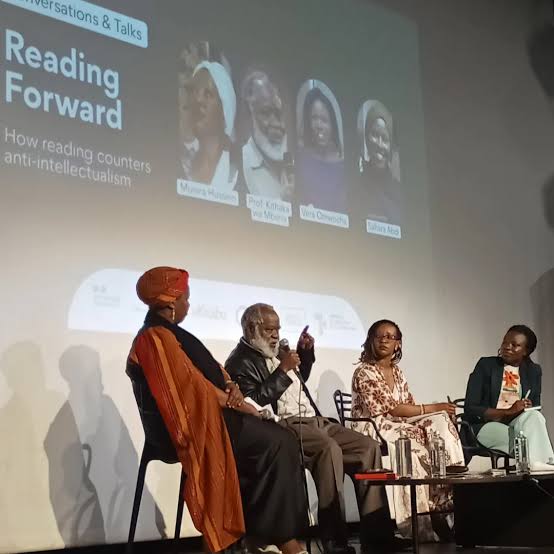
What information do people have, and how useful is it? What exactly is anti-intellectualism? An interesting panel discussion about anti-intellectualism and the books we read as a nation occurred during the Africa Forward Fest held at the Alliance Francaise in Nairobi. The session brought together three great Kenyan authors, namely: Professor Kithaka wa Mberia, Munira Hussein and Verah Omwocha.
According to Munira, “Anti-intellectualism requires us to know where to find the right information because there is a lot of misleading information. It is a question of what exactly you are seeking as an individual and accepting that what you know might not be the ultimate truth.” According to her, in order to get the right information, we need a lot of patience and determination to look for it, and we must be ready to make room for the new truths that might emerge.
“The information that we seem to have is not useful. It is easier for people nowadays to know football teams and their players than to know what actually happened to the African prodigies,” ProfKithaka said. “The information that would have been useful to people, we don’t have, but whatever points us outside the continent and outside our identity is what we have. Much of the information that we seem to have is to make us less African.”
Verah added that, as a nation, we seem to have an illusion of access to information. “Is all this information we are accessing leading us more into enlightenment or drawing us farther from who we are? And are we just becoming consumers of this information by tech pros who control what we consume?”
The discussion then focused on how reading can be considered resistance,. The panellists shared how social media has made us have “brain rot”. It has shaped our perceptions and ideologies and made us rely on small talk and conversations that don’t build but rather take away our knowledge. Verah talked about how the internet is filled with “celebrity couples arguing” or “men versus women” videos that people are consuming and having opinions about, instead of focusing on important matters that affect them. “Reading is the only thing that can save us from ourselves,” she said.
Munira was quick to add that social media has brought about a lot of doom scrolling, and staying away from our phones to pick up a book to read is rendered impossible. She insisted that when people who read books come together to discuss something, they challenge each other and have original thoughts rather than mimicking what others on the internet say. She added that people find it odd to walk around with books, and everyone imagines that you are a student who is reading for exams, when in reality, the reading culture should be adopted in matatus and anywhere when one is free.
“What books are you reading, that nothing good ever comes from Africa?” Prof\ Kithaka asked. “Do we spend time looking for green cards because we believe foreign countries are better than Africa, instead of changing our country? He said that most information that is in our books is not enough, and most of what we should know is hidden. When we visit bookshops, the books that are termed popular are the ones that dull our minds instead of building resistance. “Even the little that we know is being compromised.”
“When you read good books, you start asking questions you’ve never asked before, and this can be quite revealing,” Professor Kithaka commented. He went on to add that the media has a lot of things, some useful and others not. It is what we feed it. If used well, it is a tool that can help us. Verah advised that individuals should build algorithms on social media to give the information needed because if people rely on the internet, it takes away the ability to think for themselves. “Consumerism without taking the time to use your brain is harmful,” Munira added. According to her, it is easy to just go to ChatGPT and ask it to text someone while our brains remained dormant.
At the end of the session, one thing was clear: that unless we read, we can never counter anti-intellectualism. How can we change a nation without being able to have access to the right information? The audience also had their take in the discussion, and according to Scola Akinyi, a writer and an editor, “Even junk is food, but is it healthy for your body? So in that sense, is what we are reading healthy for the brain, is it inspired thinking, and does it inspire original thought? She advised readers to influence other people to read books. “If you're a reader, it should show in the way you think, in the way you handle matters, in the way you argue politics and in every aspect of life.”
So, the question still remains: What kind of information are we consuming?
Edith Temba is a correspondent with Books in Africa. Email: editemba5@gmail.com
Featured Book
%20(1).jpg)
Related Book
Get to know more about the mentioned books
Related Article

How popular books ‘dull our minds’ instead of building resistance
By
What information do people have, and how useful is it? What exactly is anti-intellectualism? An interesting panel discussion about anti-intellectualism and the books we read as a nation occurred during the Africa Forward Fest held at the Alliance Francaise in Nairobi. The session brought together three great Kenyan authors, namely: Professor Kithaka wa Mberia, Munira Hussein and Verah Omwocha.
According to Munira, “Anti-intellectualism requires us to know where to find the right information because there is a lot of misleading information. It is a question of what exactly you are seeking as an individual and accepting that what you know might not be the ultimate truth.” According to her, in order to get the right information, we need a lot of patience and determination to look for it, and we must be ready to make room for the new truths that might emerge.
“The information that we seem to have is not useful. It is easier for people nowadays to know football teams and their players than to know what actually happened to the African prodigies,” ProfKithaka said. “The information that would have been useful to people, we don’t have, but whatever points us outside the continent and outside our identity is what we have. Much of the information that we seem to have is to make us less African.”
Verah added that, as a nation, we seem to have an illusion of access to information. “Is all this information we are accessing leading us more into enlightenment or drawing us farther from who we are? And are we just becoming consumers of this information by tech pros who control what we consume?”
The discussion then focused on how reading can be considered resistance,. The panellists shared how social media has made us have “brain rot”. It has shaped our perceptions and ideologies and made us rely on small talk and conversations that don’t build but rather take away our knowledge. Verah talked about how the internet is filled with “celebrity couples arguing” or “men versus women” videos that people are consuming and having opinions about, instead of focusing on important matters that affect them. “Reading is the only thing that can save us from ourselves,” she said.
Munira was quick to add that social media has brought about a lot of doom scrolling, and staying away from our phones to pick up a book to read is rendered impossible. She insisted that when people who read books come together to discuss something, they challenge each other and have original thoughts rather than mimicking what others on the internet say. She added that people find it odd to walk around with books, and everyone imagines that you are a student who is reading for exams, when in reality, the reading culture should be adopted in matatus and anywhere when one is free.
“What books are you reading, that nothing good ever comes from Africa?” Prof\ Kithaka asked. “Do we spend time looking for green cards because we believe foreign countries are better than Africa, instead of changing our country? He said that most information that is in our books is not enough, and most of what we should know is hidden. When we visit bookshops, the books that are termed popular are the ones that dull our minds instead of building resistance. “Even the little that we know is being compromised.”
“When you read good books, you start asking questions you’ve never asked before, and this can be quite revealing,” Professor Kithaka commented. He went on to add that the media has a lot of things, some useful and others not. It is what we feed it. If used well, it is a tool that can help us. Verah advised that individuals should build algorithms on social media to give the information needed because if people rely on the internet, it takes away the ability to think for themselves. “Consumerism without taking the time to use your brain is harmful,” Munira added. According to her, it is easy to just go to ChatGPT and ask it to text someone while our brains remained dormant.
At the end of the session, one thing was clear: that unless we read, we can never counter anti-intellectualism. How can we change a nation without being able to have access to the right information? The audience also had their take in the discussion, and according to Scola Akinyi, a writer and an editor, “Even junk is food, but is it healthy for your body? So in that sense, is what we are reading healthy for the brain, is it inspired thinking, and does it inspire original thought? She advised readers to influence other people to read books. “If you're a reader, it should show in the way you think, in the way you handle matters, in the way you argue politics and in every aspect of life.”
So, the question still remains: What kind of information are we consuming?
Edith Temba is a correspondent with Books in Africa. Email: editemba5@gmail.com
Share :


Lorem ipsum dolor sit amet, consectetur adipiscing elit. Suspendisse varius enim in eros elementum tristique. Duis cursus, mi quis viverra ornare, eros dolor interdum nulla, ut commodo diam libero vitae erat. Aenean faucibus nibh et justo cursus id rutrum lorem imperdiet. Nunc ut sem vitae risus tristique posuere.
Lorem ipsum dolor sit amet, consectetur adipiscing elit. Suspendisse varius enim in eros elementum tristique. Duis cursus, mi quis viverra ornare, eros dolor interdum nulla, ut commodo diam libero vitae erat. Aenean faucibus nibh et justo cursus id rutrum lorem imperdiet. Nunc ut sem vitae risus tristique posuere.