
'Rough Silk' launch turns out more of a cultural than literary extravaganza
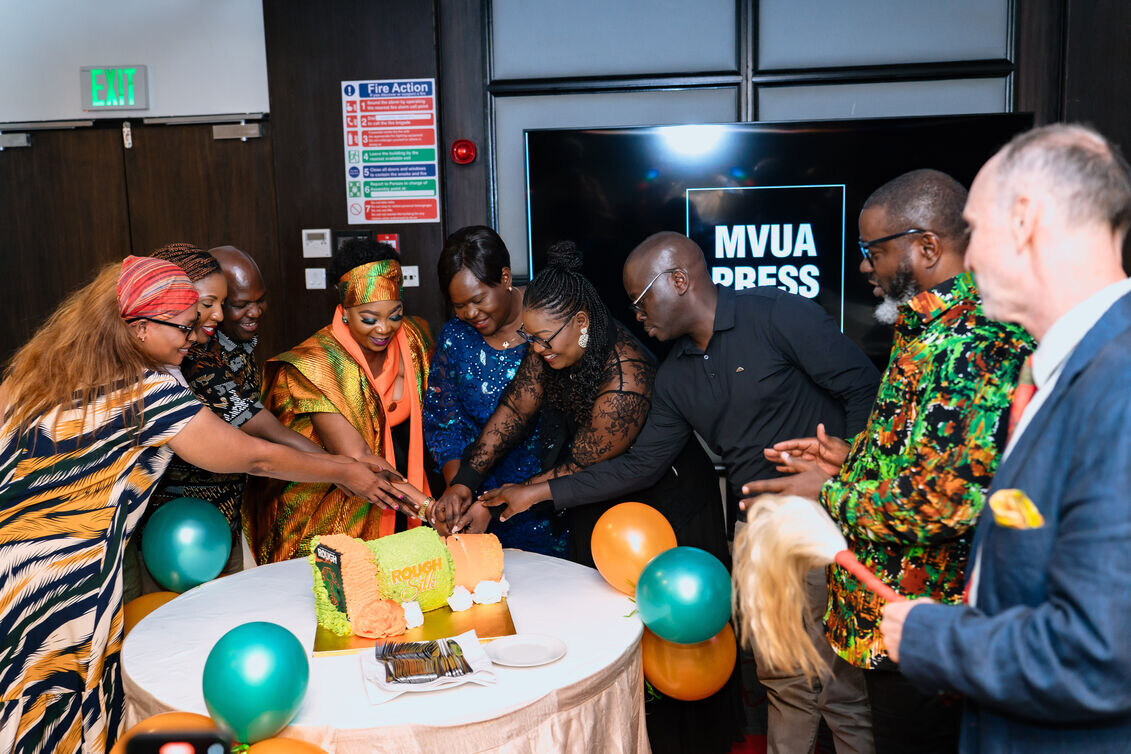
The second edition of Rough Silk by Deborah Tendo Auko was launched in Kisumu in pomp and colour at the Acacia Premier Hotel on 4 April 2026. What might have been a routine reissue unfolded instead as a cultural gathering; part literary celebration and part civic moment, drawing together readers, educators, corporate leaders, and political figures in a room that clearly understood the weight of literature.
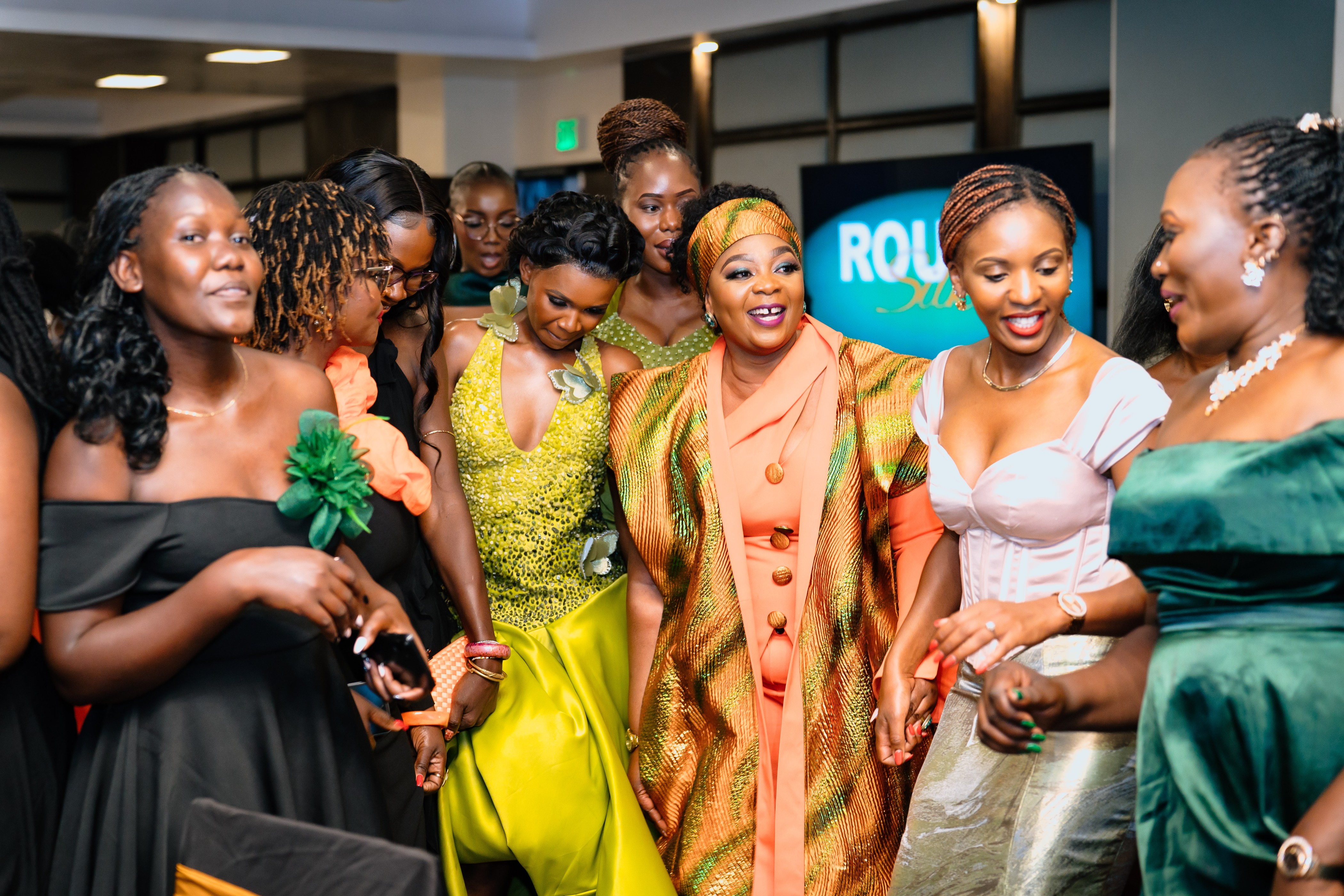
Ardent Rough Silkers had already started streaming in by 3 pm to secure seats that would allow them to witness the full action, and by early evening, the lobby was abuzz with guests arriving in deliberate style—tailored suits, flowing fabrics, bold prints that held their own conversation before a single word was spoken on stage. The theme colours, green, orange, and black, appeared not as instruction but as interpretation, worn with a confidence that felt distinctly Kisumu: elegant, expressive, and unafraid of attention.
It was clear from the outset that this was not going to be a quiet affair.
“Eighty per cent of the people in this room have read Rough Silk. In Nairobi, we had two launches, and each time it felt like we were doing it for the first time,” Tendo observed in her opening remarks. “So the question really is, 'Why are you here?’ ” Her answer was both simple and expansive. “This book touched something in you, and all of you want it to do well. This is your story as much as it is mine.”
It is this sense of shared ownership that frames the journey of Rough Silk in its second edition. Following its success as a self-published work since its release in 2023, the new edition by Mvua Press marks a significant transition from an independently circulated story to one that now claims a wider, more deliberate place within Kenya’s literary landscape.
The book, which has already toured several schools across the country, including Moi Girls Eldoret and Kapsabet Boys High School, now extends its reach to new audiences, deepening its engagement with young readers and academic spaces. With alumni from different schools present at the launch, the drive to identify sponsors began to take shape, setting in motion an effort that will see Rough Silk distributed to schools through alumni-led initiatives. In doing so, the book’s role expands beyond readership, positioning it firmly within educational and community spaces.
Beyond its central narrative, Rough Silk gestures towards a quieter, yet equally significant truth: the enduring influence of teachers in the making of a life. Tendo’s recollections of her teenage years are unflinching: a period marked by boldness, resistance, and moments of disruption, including leading strikes while in school. And yet, in a system that often responds to such defiance with exclusion, her teachers chose otherwise.
They did not abandon her. Instead, they recognised in her a possibility worth nurturing, offering a kind of support that would prove formative far beyond the classroom.
“I retired as a Chief Principal, and I was able to learn a great deal from Rough Silk. I particularly appreciated how your principal understood you and ensured you stayed in school. It reminded me to embrace young girls and not be too quick to expel students,” remarked Madam Joyce Abuya, former principal of Sigoti Girls Complex in Nyabondo.
The presence of educators on the panel—Jackline Mioma (Kisumu Girls), Reagan Okoth (Migingo High School), Jackline Juma (Maseno School), and Emmaculate Auma (Maranda High School)—further underscored the importance of thoughtful book selection in curriculum curation. Their reflections, alongside those of alumni such as Madam Mary Ombok of Ogande Girls, pointed to a shared concern: that the texts placed before students must not only educate, but resonate.
Homabay Governor Gladys Wanga also emphasised the urgency of placing Rough Silk in schools, describing it as “a profound story of resilience and courage” that young people, particularly young women, need to encounter early. She reflected on her own defiance as a student, recalling how a former principal at Kisumu Girls once sent her home after she organised a student protest, only to allow her to later return and complete her studies. Such stories, she noted, are often left untold, creating the illusion that strength is innate rather than forged through difficulty. It is precisely this silence that Rough Silk disrupts.
“Thank you for the courage of writing,” she said, adding that in telling one story, others find the courage to tell their own.
Luoland has borne a disproportionate burden of the HIV/AIDS pandemic since the 1990s, a period marked by widespread loss and a stigma that, in many ways, continues to linger. Entire communities were reshaped by the epidemic, leaving behind not only grief but also silences—stories that were rarely told, or only spoken of in hushed tones. It is within this historical and social context that Governor Gladys Wanga’s remarks found deeper resonance, situating Rough Silk within a reality that extends far beyond the individual.
In acknowledging the profound impact of HIV/AIDS on communities around Lake Victoria, Wanga underscored the importance of narratives that confront, rather than conceal, lived experience. In a region where loss, resilience, and survival are tightly interwoven, stories such as Rough Silk carry a particular weight. They speak not only to personal journeys, but to collective histories shaped by adversity. By foregrounding endurance and truth-telling, the book offers younger generations a language through which to understand and navigate the complexities of their environment.
“We are proud of you as women from the lake,” Wanga concluded, framing the work not simply as a personal milestone, but as part of a broader, ongoing narrative of community, memory, and resilience.
The final remarks of the night came from Mvua Press CEO Will Clurman, who reflected on the cultural weight of storytelling within the Luo community, drawing from Governor Wanga’s earlier observation that courage in telling one’s story invites others to do the same. He connected this ethos to the journey of Rough Silk, describing it as part of a broader tradition of voice and continuity. Echoing Tendo’s assertion that “a child can only aspire to be a person they can see,” Clurman turned to the audience with a direct challenge: “Whether it’s in Mathare, Kibera or Homa Bay, you are the people those girls want to be. Will you go with Tendo to your schools?” In that moment, the responsibility for the book’s next chapter shifted from author to community, an invitation to carry its message into spaces where it might shape the imaginations of future leaders.
As the evening drew to a close, it became evident that the launch of Rough Silk was not merely about the reintroduction of a book, but about the reaffirmation of storytelling as a communal act. From the presence of political leaders and educators to the reflections of readers and alumni, the event revealed a shared understanding: that stories, when told with honesty, have the power to shift perspectives, preserve memory, and inspire change.
In Kisumu that night, Rough Silk was not only celebrated, but it was entrusted to a community, one that now carries it forward as both a mirror and a map for generations to come.
Tracy Ochieng is a staff writer with Books in Africa. Email: tracy.ochieng@ekitabu.com
Featured Book
.jpg)
Related Book
Get to know more about the mentioned books

'Rough Silk' launch turns out more of a cultural than literary extravaganza
By
The second edition of Rough Silk by Deborah Tendo Auko was launched in Kisumu in pomp and colour at the Acacia Premier Hotel on 4 April 2026. What might have been a routine reissue unfolded instead as a cultural gathering; part literary celebration and part civic moment, drawing together readers, educators, corporate leaders, and political figures in a room that clearly understood the weight of literature.
Ardent Rough Silkers had already started streaming in by 3 pm to secure seats that would allow them to witness the full action, and by early evening, the lobby was abuzz with guests arriving in deliberate style—tailored suits, flowing fabrics, bold prints that held their own conversation before a single word was spoken on stage. The theme colours, green, orange, and black, appeared not as instruction but as interpretation, worn with a confidence that felt distinctly Kisumu: elegant, expressive, and unafraid of attention.
It was clear from the outset that this was not going to be a quiet affair.
“Eighty per cent of the people in this room have read Rough Silk. In Nairobi, we had two launches, and each time it felt like we were doing it for the first time,” Tendo observed in her opening remarks. “So the question really is, 'Why are you here?’ ” Her answer was both simple and expansive. “This book touched something in you, and all of you want it to do well. This is your story as much as it is mine.”
It is this sense of shared ownership that frames the journey of Rough Silk in its second edition. Following its success as a self-published work since its release in 2023, the new edition by Mvua Press marks a significant transition from an independently circulated story to one that now claims a wider, more deliberate place within Kenya’s literary landscape.
The book, which has already toured several schools across the country, including Moi Girls Eldoret and Kapsabet Boys High School, now extends its reach to new audiences, deepening its engagement with young readers and academic spaces. With alumni from different schools present at the launch, the drive to identify sponsors began to take shape, setting in motion an effort that will see Rough Silk distributed to schools through alumni-led initiatives. In doing so, the book’s role expands beyond readership, positioning it firmly within educational and community spaces.
Beyond its central narrative, Rough Silk gestures towards a quieter, yet equally significant truth: the enduring influence of teachers in the making of a life. Tendo’s recollections of her teenage years are unflinching: a period marked by boldness, resistance, and moments of disruption, including leading strikes while in school. And yet, in a system that often responds to such defiance with exclusion, her teachers chose otherwise.
They did not abandon her. Instead, they recognised in her a possibility worth nurturing, offering a kind of support that would prove formative far beyond the classroom.
“I retired as a Chief Principal, and I was able to learn a great deal from Rough Silk. I particularly appreciated how your principal understood you and ensured you stayed in school. It reminded me to embrace young girls and not be too quick to expel students,” remarked Madam Joyce Abuya, former principal of Sigoti Girls Complex in Nyabondo.
The presence of educators on the panel—Jackline Mioma (Kisumu Girls), Reagan Okoth (Migingo High School), Jackline Juma (Maseno School), and Emmaculate Auma (Maranda High School)—further underscored the importance of thoughtful book selection in curriculum curation. Their reflections, alongside those of alumni such as Madam Mary Ombok of Ogande Girls, pointed to a shared concern: that the texts placed before students must not only educate, but resonate.
Homabay Governor Gladys Wanga also emphasised the urgency of placing Rough Silk in schools, describing it as “a profound story of resilience and courage” that young people, particularly young women, need to encounter early. She reflected on her own defiance as a student, recalling how a former principal at Kisumu Girls once sent her home after she organised a student protest, only to allow her to later return and complete her studies. Such stories, she noted, are often left untold, creating the illusion that strength is innate rather than forged through difficulty. It is precisely this silence that Rough Silk disrupts.
“Thank you for the courage of writing,” she said, adding that in telling one story, others find the courage to tell their own.
Luoland has borne a disproportionate burden of the HIV/AIDS pandemic since the 1990s, a period marked by widespread loss and a stigma that, in many ways, continues to linger. Entire communities were reshaped by the epidemic, leaving behind not only grief but also silences—stories that were rarely told, or only spoken of in hushed tones. It is within this historical and social context that Governor Gladys Wanga’s remarks found deeper resonance, situating Rough Silk within a reality that extends far beyond the individual.
In acknowledging the profound impact of HIV/AIDS on communities around Lake Victoria, Wanga underscored the importance of narratives that confront, rather than conceal, lived experience. In a region where loss, resilience, and survival are tightly interwoven, stories such as Rough Silk carry a particular weight. They speak not only to personal journeys, but to collective histories shaped by adversity. By foregrounding endurance and truth-telling, the book offers younger generations a language through which to understand and navigate the complexities of their environment.
“We are proud of you as women from the lake,” Wanga concluded, framing the work not simply as a personal milestone, but as part of a broader, ongoing narrative of community, memory, and resilience.
The final remarks of the night came from Mvua Press CEO Will Clurman, who reflected on the cultural weight of storytelling within the Luo community, drawing from Governor Wanga’s earlier observation that courage in telling one’s story invites others to do the same. He connected this ethos to the journey of Rough Silk, describing it as part of a broader tradition of voice and continuity. Echoing Tendo’s assertion that “a child can only aspire to be a person they can see,” Clurman turned to the audience with a direct challenge: “Whether it’s in Mathare, Kibera or Homa Bay, you are the people those girls want to be. Will you go with Tendo to your schools?” In that moment, the responsibility for the book’s next chapter shifted from author to community, an invitation to carry its message into spaces where it might shape the imaginations of future leaders.
As the evening drew to a close, it became evident that the launch of Rough Silk was not merely about the reintroduction of a book, but about the reaffirmation of storytelling as a communal act. From the presence of political leaders and educators to the reflections of readers and alumni, the event revealed a shared understanding: that stories, when told with honesty, have the power to shift perspectives, preserve memory, and inspire change.
In Kisumu that night, Rough Silk was not only celebrated, but it was entrusted to a community, one that now carries it forward as both a mirror and a map for generations to come.
Tracy Ochieng is a staff writer with Books in Africa. Email: tracy.ochieng@ekitabu.com
Share :


Lorem ipsum dolor sit amet, consectetur adipiscing elit. Suspendisse varius enim in eros elementum tristique. Duis cursus, mi quis viverra ornare, eros dolor interdum nulla, ut commodo diam libero vitae erat. Aenean faucibus nibh et justo cursus id rutrum lorem imperdiet. Nunc ut sem vitae risus tristique posuere.
Lorem ipsum dolor sit amet, consectetur adipiscing elit. Suspendisse varius enim in eros elementum tristique. Duis cursus, mi quis viverra ornare, eros dolor interdum nulla, ut commodo diam libero vitae erat. Aenean faucibus nibh et justo cursus id rutrum lorem imperdiet. Nunc ut sem vitae risus tristique posuere.