
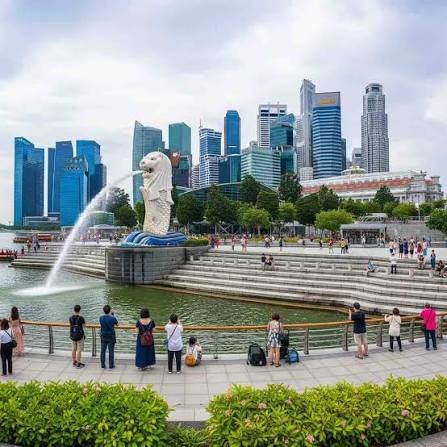

Ruto desires Kenya to be the next Singapore: At 'Books in Africa', we may have accidentally beaten him to it
President William Ruto has often held up Singapore as the model Kenya should aspire to become. There is something almost amusing about that ambition when you look at the audience for Books in Africa.
Singapore is currently leading the traffic to our website. Meanwhile, a number of African countries are performing rather dismally. So, perhaps, President Ruto's Singapore dream is already a reality. Just not quite in the way he intended.
We may not have Singapore's infrastructure, public transport or GDP per capita. But apparently, Singaporeans are already reading Books in Africa. The trend had us puzzled when we first noticed and then it made us curious. Why is a platform dedicated to African books and African literary conversations attracting such significant interest from a country thousands of kilometres away, while some African countries barely register?
More importantly, what does this say about the way African literature is being discovered, discussed and consumed?
Before we congratulate Singapore on becoming the new home of African literature, there is an important caveat. Website traffic does not tell us who is actually sitting down with a novel by an African writer and reading it cover to cover. It tells us where our website visitors are coming from. Traffic can be influenced by search engines, social media, academic institutions, diaspora communities, referrals and any number of other factors.
But even with that caveat, the pattern is interesting enough to ask the question.
Why are people outside Africa finding their way to African literary conversations?
Perhaps the answer is not that Africans do not care about African literature. Perhaps we have been asking the wrong question.
For someone in Singapore who wants to discover contemporary African writing, a platform such as Books in Africa can serve a very obvious purpose. African literature is not necessarily part of their everyday cultural environment. They may not know which Kenyan writer has just published a novel, which Nigerian poet is worth paying attention to, or which new Ghanaian book is generating conversation.
They need someone to point them in the right direction. For an African reader, however, the situation can be very different.
A Kenyan reader might encounter a new book through Instagram or TikTok. They might hear about it from a friend, see the author at a literary festival, find it at a local bookshop or come across the writer on X. A Nigerian reader might discover an author through the country's enormous online literary community. A reader in Ghana or South Africa might have their own networks for finding books and writers.
The conversation may be happening. It simply may not be happening on websites.
And that matters because perhaps one of the biggest misconceptions about the African literary ecosystem is that visibility and readership are the same thing. They are not. African writers are increasingly visible internationally. Their books are acquired by major publishers, translated into other languages, shortlisted for international prizes and taught in universities outside the continent. African literature has become a significant part of global conversations about publishing and storytelling.
But where is the African reader in all of this? Who is making sure that a young Kenyan knows what a young Nigerian writer is publishing? Who is introducing a reader in Uganda to a novelist from Senegal? Who is helping a Ghanaian reader discover a poet from Malawi? And, perhaps most importantly, are we building enough platforms for Africans to discover one another?
This is where the Singapore statistic becomes more than a funny little piece of website trivia because it raises an uncomfortable possibility: that African literature can sometimes be easier to discover from outside the continent than from within it. The problem is not necessarily a lack of interest; it may be access.
Books remain expensive for many African readers, and distribution across countries is difficult. Publishing markets are fragmented, and many books published in one African country never make it to another. Physical bookstores are unevenly distributed and even when a book is available, readers have to know that it exists.
The internet should have solved some of this and in many ways, it has. But African literary conversations online are still fragmented across platforms, countries and communities. There is no single digital town square where a reader can reliably go to find out what is happening across the continent's literary landscape.
Perhaps that is part of the work platforms such as Books in Africa are trying to do. And perhaps our Singaporean visitors are telling us something useful. People outside Africa are looking for a way into these stories and maybe we need to make sure Africans have one too.
There is also something deliciously ironic about this happening while Kenya is being encouraged to look towards Singapore as the benchmark for development. Ruto's Singapore is supposed to represent efficiency, prosperity and modernity. At Books in Africa, however, Singapore currently represents something much simpler: Someone over there is reading us and the real question is why.
And perhaps an even more important question is whether we should be asking why Singapore is reading us, or why more of Africa isn't. Because the answer may not be that Singapore cares more about African stories. It may be that Singapore has simply found them. Have we made it easy enough for Africans to find each other?
Tracy Ochieng is a staff writer with Books in Africa. Email: tracy.ochieng@ekitabu.com
Featured Book
.jpg)
Related Book
Get to know more about the mentioned books
Related Article
.jpg)
Ruto desires Kenya to be the next Singapore: At 'Books in Africa', we may have accidentally beaten him to it
By
President William Ruto has often held up Singapore as the model Kenya should aspire to become. There is something almost amusing about that ambition when you look at the audience for Books in Africa.
Singapore is currently leading the traffic to our website. Meanwhile, a number of African countries are performing rather dismally. So, perhaps, President Ruto's Singapore dream is already a reality. Just not quite in the way he intended.
We may not have Singapore's infrastructure, public transport or GDP per capita. But apparently, Singaporeans are already reading Books in Africa. The trend had us puzzled when we first noticed and then it made us curious. Why is a platform dedicated to African books and African literary conversations attracting such significant interest from a country thousands of kilometres away, while some African countries barely register?
More importantly, what does this say about the way African literature is being discovered, discussed and consumed?
Before we congratulate Singapore on becoming the new home of African literature, there is an important caveat. Website traffic does not tell us who is actually sitting down with a novel by an African writer and reading it cover to cover. It tells us where our website visitors are coming from. Traffic can be influenced by search engines, social media, academic institutions, diaspora communities, referrals and any number of other factors.
But even with that caveat, the pattern is interesting enough to ask the question.
Why are people outside Africa finding their way to African literary conversations?
Perhaps the answer is not that Africans do not care about African literature. Perhaps we have been asking the wrong question.
For someone in Singapore who wants to discover contemporary African writing, a platform such as Books in Africa can serve a very obvious purpose. African literature is not necessarily part of their everyday cultural environment. They may not know which Kenyan writer has just published a novel, which Nigerian poet is worth paying attention to, or which new Ghanaian book is generating conversation.
They need someone to point them in the right direction. For an African reader, however, the situation can be very different.
A Kenyan reader might encounter a new book through Instagram or TikTok. They might hear about it from a friend, see the author at a literary festival, find it at a local bookshop or come across the writer on X. A Nigerian reader might discover an author through the country's enormous online literary community. A reader in Ghana or South Africa might have their own networks for finding books and writers.
The conversation may be happening. It simply may not be happening on websites.
And that matters because perhaps one of the biggest misconceptions about the African literary ecosystem is that visibility and readership are the same thing. They are not. African writers are increasingly visible internationally. Their books are acquired by major publishers, translated into other languages, shortlisted for international prizes and taught in universities outside the continent. African literature has become a significant part of global conversations about publishing and storytelling.
But where is the African reader in all of this? Who is making sure that a young Kenyan knows what a young Nigerian writer is publishing? Who is introducing a reader in Uganda to a novelist from Senegal? Who is helping a Ghanaian reader discover a poet from Malawi? And, perhaps most importantly, are we building enough platforms for Africans to discover one another?
This is where the Singapore statistic becomes more than a funny little piece of website trivia because it raises an uncomfortable possibility: that African literature can sometimes be easier to discover from outside the continent than from within it. The problem is not necessarily a lack of interest; it may be access.
Books remain expensive for many African readers, and distribution across countries is difficult. Publishing markets are fragmented, and many books published in one African country never make it to another. Physical bookstores are unevenly distributed and even when a book is available, readers have to know that it exists.
The internet should have solved some of this and in many ways, it has. But African literary conversations online are still fragmented across platforms, countries and communities. There is no single digital town square where a reader can reliably go to find out what is happening across the continent's literary landscape.
Perhaps that is part of the work platforms such as Books in Africa are trying to do. And perhaps our Singaporean visitors are telling us something useful. People outside Africa are looking for a way into these stories and maybe we need to make sure Africans have one too.
There is also something deliciously ironic about this happening while Kenya is being encouraged to look towards Singapore as the benchmark for development. Ruto's Singapore is supposed to represent efficiency, prosperity and modernity. At Books in Africa, however, Singapore currently represents something much simpler: Someone over there is reading us and the real question is why.
And perhaps an even more important question is whether we should be asking why Singapore is reading us, or why more of Africa isn't. Because the answer may not be that Singapore cares more about African stories. It may be that Singapore has simply found them. Have we made it easy enough for Africans to find each other?
Tracy Ochieng is a staff writer with Books in Africa. Email: tracy.ochieng@ekitabu.com
Share :


Lorem ipsum dolor sit amet, consectetur adipiscing elit. Suspendisse varius enim in eros elementum tristique. Duis cursus, mi quis viverra ornare, eros dolor interdum nulla, ut commodo diam libero vitae erat. Aenean faucibus nibh et justo cursus id rutrum lorem imperdiet. Nunc ut sem vitae risus tristique posuere.
Lorem ipsum dolor sit amet, consectetur adipiscing elit. Suspendisse varius enim in eros elementum tristique. Duis cursus, mi quis viverra ornare, eros dolor interdum nulla, ut commodo diam libero vitae erat. Aenean faucibus nibh et justo cursus id rutrum lorem imperdiet. Nunc ut sem vitae risus tristique posuere.