
.png)

Six-year-old tends to children while schooling as Hope discovers both father and son have extra needs
1. FREE LABOUR
“Betty, your aunt is a strict woman; you know that. Be a good girl. Help her and study hard so you can make something of yourself. You are incredibly lucky to have been chosen, but only because you are hardworking. Do not be lazy when you get to Mombasa.”
These are the words my grandmother said to me on the day I left our small village in Ikoo, Kitui, to go live with my aunt Brenda in Mombasa. I was five, and my mother had just died a few months earlier. Kyalo, Kasyo, Kakunu, and I moved to Grandma’s compound, where we girls slept huddled in the small room adjacent to their bedroom that had been the storage area, and Kyalo slept on top of the sooty dining table in the living room. There were too many of us, the house was too small, and Grandma was too old. Like every other villager, she was a farmer. She had two farms, one that connected to the compound and another down by River Ikoo, where a big mango tree grew right in the middle.
For money, she sold kaluvu in the evening to a rowdy crowd of revellers who trickled into our compound as soon as the sun kissed the tips of Kanzau and did not leave until a bunch of them started ndona and caused a fight that would leave a tooth on my grandmother’s compound for us to sweep off in the morning. Many are the nights when the chief, a staunch Christian who had zero tolerance for the ways of Satan, like debauchery, raided our home with his boys and beat the hell out of drunks, breaking my grandmother’s pots and scaring the chicken out of the barely standing shed where they slept. In a panic, they would fly out into the dark, where they would encounter wamuvevi, a formidable ogre that chopped their heads right off their necks and sucked the blood out of them till they were ghost white.
We would wake up in the morning, sweep the bloody soil chunks and a tooth or two, then go hunting through the bushes for what might have been left of our chicken. Most times, we would find one or two chicks, jumpy and crouched under a mukukuma, and two or three headless carcasses abandoned on the grass. We would herd the live chicken home and carry the carcasses. Most people did not eat chicken that wild animals had killed, but we could not waste any food. Grandma would take them, send us off to school while she stayed home collecting her broken pots to brew more kaluvu, and later cook the chicken. It was the only time we got to eat chicken, for she mostly sold them to pay our school fees or buy food.
It did not take long for us to eat the last chicken after another raid. That day, she took the coins she had made, went to the market, and bought a kilo of wheat flour. She started making puffs to sell. She was done with brewing or even selling alcohol. A woman can only repair broken pots for so long. It did not take her long to realize that puff puffs were not as addictive as alcohol was. She would walk forty-five minutes to Mikuyuni with her bucket of puff puffs and come back with barely enough to buy salt. That was when she found a phone and called her children. It was too much.
Kyalo, who was in the upper primary at the time, was promised he would go to Nairobi, where our uncle, Mutuku, lived. He only had a year before his departure. Aunt Brenda, who had a small child, wanted one of us girls. Kakunu, ten years then and in class six, would have been the obvious choice were it not for the fact that she was rebellious and lazy, according to Grandma. Kasyo was only two and set to go live with my mom’s sister, who had just left me.
With Grandma’s words in my heart, I arrived in Mombasa full of trepidation but determined to do my best to prove that both Grandma and Brenda had made the right decision in choosing me. Her house was a decent single room with terrazzo floors, the first time I had seen such immaculate floors, and whitewashed walls decorated with blue lace curtains. There were pictures. She was light-skinned and golden, smiling brightly as her husband, as dark as a man can be and bald, kissed her cheek. There was another of him holding her waist as she stood on dark coral reefs wearing an angelic white dress that fluttered in the wind. The last one was a picture of Ken, their son, dressed in a blue T-shirt, dark navy shorts, and white socks, sitting on their sofa, his eyes wild, staring straight ahead as if he understood everything, even though he seemed only months old in the picture.
Ken was three when I started living with them. Aunty thought he was ready for preschool. When I entered St. Judy Academy, Class One, he also joined Kindergarten One. Every morning, we got ready, Aunty strapping him into his diapers before dressing him in the little uniform that made him look like a tiny CEO. She packed extra diapers and some snacks in his bag before sending him off to school. During break periods, when other kids ran off to buy viazi karai and play, I went to Kindergarten One to change Ken’s diaper on top of the teacher’s table and give him his snacks. In the evening, I washed him. During weekends, I did my laundry first. Then Aunty’s blouses. Then she taught me how to scrub Uncle’s jeans. When I was six, there was nothing about laundry I did not know.
One time, Ken pooped on his shorts, and I carried the soiled clothes pinched between my thumb and index finger, nose scrunched in disgust, and threw them into a bucket of water, then went to call Aunty to handle the situation.
“What do you expect me to do?” she snapped. “You don’t know how to wash clothes?”
“I know.”
“So go wash them!”
I carried the bucket to the washing area and stood there for over ten minutes, staring at the stinky brown poop floating in the water. I closed my eyes, dipped my hand in, and the minute I made contact with the water, I retched, vomiting all over the veranda and into the bucket. Aunty heard me and came outside, glaring at me. That was the first time she beat me. She sent me again to wash clothes. I barely saw them as I squeezed and wrung them, poop squishing between my fingers, my eyes blurred with tears.
“It is mud,” I told myself over and over until the shorts hung clean and fresh on the clothesline and the veranda was swept spotless. I did not eat that night or the morning after. When Aunty cooked matoke, I would puke and puke till she stopped forcing me to eat it. The same happened when she cooked nduma or mashed potatoes. I still do not eat soft foods without gagging.
I lived with them till I was eleven. Aunty gave birth to another boy, Brian, when I was eight. By then, there was nothing about taking care of a home or children that I did not know how to do. I would wake up, make her porridge, and warm her water for a shower before I prepared Ken and me for school. In the evenings, I came home to do dishes, clean the house, and cook before taking care of the baby as Aunty ate and showered. Sometimes, I would wash him and dress him up, making sure to massage his little limbs and head in circular motions so he would not grow up with a weird head. Brian, unlike Ken, was a happy baby. It was not hard to fall in love with him. During weekends, I would babysit, carrying him on my back as I cleaned until he fell asleep. Aunty, who had opened a tailoring shop at the front of the house, got back to work pretty fast. She often joked that I was Brian’s mom, which made me feel important and indispensable.
One day in school during Social Studies, we learned about children’s rights and responsibilities. Our teacher, Madam Caroh, defined rights as obligations that parents had and as entitlements that children held under the law. I sat in bewilderment as she listed what were supposed to be my rights. Rights I did not know I ever held. Some of these were rights to life, education, and healthcare—to basic needs like food, water, shelter, and clothing. For the first time in my young life, I woke up to the realization that I was a human being, one with rights nevertheless. I followed Teacher Caroh to the office after class and, for the first time, opened up to another human being about my aunt and our arrangement.
“Betty, you deserve to be outside playing with other children, not raising your aunt’s children or working to earn your education,” she said gently.
I broke down in self-pity, shoulders crumbling onto my lap, and she let me cry. After what felt like an eternity, I left the office raw but lighter. When I got home, I found the stack of dirty dishes waiting for me, the cold jiko waiting for me to light it for supper, Ken’s untouched homework, the jerricans that needed me to fetch water, and Brian’s full diapers. I went through my chores silently, Teacher Caroh’s words replaying in my head like a stuck record. My aunt was mistreating me, I concluded. I had been a victim[.
As I washed dishes, I thought of myself as Cinderella and her as the cruel stepmother. Suddenly, all the times she had beaten me for mistakes I had made and many I had not, or the times she yelled because I went out to play instead of doing a chore she had assigned, or the times I worked so hard my limbs felt like they would fall off, were vindicated by the realization that she was mistreating me and I was a victim. I was a victim. I was happy to be a victim because being a victim meant I had been stripped of my rights. I was happy to have the right to begin with. It meant I was someone.
The following day, without my knowledge, Teacher Caroh called my aunt to the school to discuss my situation with her. I was in class when Aunty stormed in and pulled me right off my chair in front of everyone and marched me home. I did not need to be told what had happened.
2. PARTNERS IN CRIME
I have not been home in fifteen years, and unless my dad dies, I am never going back.
I was in Form Three when mum brought in a housegirl. She could have been twenty-something, very dark, and Ugandan. She spoke very little. Most of the time, she floated around our home like a phantom, doing her work and minding her business. No matter how many times Mom told her that it was okay to join us at the table during supper, she would set the table, then stealthily disappear into the kitchen till we were all done eating. We had had househelps since I could remember.
Mom had a general shop in the market, where she spent most of her time, and Dad owned an electronics shop. That left Achieng’ and me to tend the house, and since Achieng’ was the youngest and I was a boy who played soccer, it meant there was no one to tend it. Mom stayed with the househelps for a while. Before the Ugandan, we had Kamene, who had stayed with us since I was in class eight and only left because she was ready to get married. We were all shocked when she announced it. At forty-five, no one would have even accused her of having libido, let alone dreaming of marriage. She gave Mom two weeks to find a replacement, but left before serving her notice. Mom was too bitter, and Kamene’s spirit had clearly walked down the aisle and couldn’t care less about our bratty, spoiled selves, as she put it while she was packing her bags.
Mom had to close the shop for two days. On the third day, Hope arrived, timid and as humble as the rumours. Mom introduced her to us that evening as Hope stood in the middle of the room with what was Kamene’s Unga wa Taifa apron, hands clasped before her, and head bowed. She was plump, with a coarse face and sad, meanish eyes. Honestly, she scared me. Her hair was cut and combed. When she looked up as Mom told her our names as if we were unable to talk, her eyes met mine briefly before she glanced to the floor again. That act, her shyness, made me want to chuckle. She was not beautiful, not even close, but she was interesting, like a dragon fruit. I quickly hid my grin and glanced at Dad to see if he had noticed our interaction, but he was buried in a copy of the Daily Nation, as if the world around him were a mere suggestion.
I had never been interested in the domestic affairs of our house, no matter how much Mom tried to make it so, let alone a house help. But again, none were Ugandan. I watched her, the silent way she went about her duties, devoid of distraction, as if her life had been nothing before she started working for us. She did not make any calls or send any texts. Her phone stayed in her room most of the time, if not above our fridge in the kitchen when she was cooking. Her work was flawless. Her cooking was domestic but delicious. She did not use too many spices like Kamene, who could not cook a meal without adding masala, any masala. All her fried foods had pilau masala, all her drinks had tea masala, and all her meats had garam masala. Mom had tried to get her to stop in vain. We all had to adjust to her plan.
But Hope cooked as politely as she lived. In fact, her politeness spilled into everything she did. It was there in how she gently ironed and folded the laundry, giving care to every single sock and shoelace, how she swept, collecting the trash smoothly into a pan before lowering it into the can, and even in the way she walked, as if she were rolling, her bosom dancing in her modest skirts and dresses in quiet seduction. She was beautiful from the back. She was beautiful to watch. She was beautiful in everything except her face. It was too dark, like damp charcoal; her cheeks and lips were too thick, and her skin broke out in furious acne that later left little wounds and even darker spots. Her eyes were too sad, like a pauper's. It was uncomfortable to look into them. They made me feel guilty, like we were enslavers and not very good ones.
It is why I started greeting her each morning and evening, to ease my guilt at the privileges.
“Good morning, sir,” she always responded, eyes to her toes, bowing a little. I would nod and walk away feeling like a Prince in an Afrosinema. It was hard not to feel slightly elated at her humility, especially not with a sister like Achieng, who was born first. At seventeen and in Form Four, I was a man by every right, but my family seemed to have missed the memo. It was why I spent most of my time outside the house with people who respected me or playing football at the stadium.
I would come home only when I was sure everyone was either asleep or about to be, but none of my efforts guaranteed me a peaceful evening. There was always something. A hoodie Achieng’ took from my room without my permission, a lecture from Dad over something I allegedly did, or even worse, Mom, because I missed dinner. It made me want to turn around and go back to the streets, come what may. Anything seemed better than home.
Hope, however, treated me like a young master. If I asked her for water, she would bow and say, “Yes, please.” Before retreating, eyes permanently on the floor, to the kitchen to get me my order. We did not talk much, even though when no one was around, I tried to engage her beyond a greeting.
“How are you finding the day?” I would ask her if I found her in the kitchen during lunch.
“Good, sir,” she would respond, wiping her hands on her apron.
“You do not have to call me sir,” I would lie. I liked being called sir. I liked her bows, her shy eyes, and the nervous way her hands clasped when addressed.
“Yes, sir.”
I don’t remember the first time I googled “Ugandan porn,” but for almost a week, I would lie in the dark after I was done wiping and hate myself a little for the thoughts that were creeping into my mind. She slept in the adjacent bedroom with Achieng. Down the corridor, where the shoe rack stood, was the main bedroom. There was no way I could wake her without waking everyone in the house. I was not even sure I wanted to. In fact, sometimes, I was certain I did not. She was old, ugly, and a house help.
One day, I came home past midnight. Everyone was asleep, and the house was locked. We all had our own copies of the house key. I let myself in, cursing under my breath as the door creaked open. I tiptoed to my room, undressed, and went outside to shower. As I was leaving, I saw a figure approaching. My heart started pounding as I held the towel around my waist. I braced myself for the lecture I was about to receive, but as it got closer, it morphed into Hope in nothing but a khanga. When she saw me, she squeaked like a rat before composing herself.
“Good evening.” I greeted him in relief
“Good evening, sir.”
“I thought it was Mom,” I sighed.
“No, sir”
“Are they asleep?” I whispered
“Your mom did not come home, sir”
“And Dad?” I leaned closer, hopefully. She shuffled back, her eyes darting up for a millisecond.
“He came, sir.”
“Good.” I stepped closer. “Where is he?”
“In his bedroom, sir.” She backed up again.
“You will fall.” I moved again.
“No, sir.”
“Where were you going?”
“To the toilet, sir.”
“The bulb is not working.” I don’t know where the lie came from, or why my heart sounded like a faulty tractor, or why my hard-on was pushing against my towel till I thought I would burst.
“I will wait for you,” I said when she did not answer. She skirted around me and got into the toilet without turning on the lights. I waited to hear the click of the door locking, but there was nothing. I stood staring at it for a minute, then, as if I were lucid dreaming, touched the knob, turned it, and pushed. I could not see her, but there wasn’t much room for her to disappear. She was facing the wall. I closed the door behind us, dropped my towel, and hiked up her leso.
I avoided her for three days. But then, on the fourth, I left my room, and she came. We did not talk. We never talked. We never kissed either. I learned to listen to the creak of her door. I would go and find her waiting for me in the toilet, bent over the closed toilet bowl. Our illicit affair became like a drug. During the day, time wafted like the stench of a dead rat. It wasn't until midnight that I would come alive between Hope’s thighs. I was discovering that they told lies about Ugandan women, and I had never been happier over a rumour.
On the night I left home, it was raining, so I pressed my ear against my door, waiting to hear the creak of Hope’s bedroom or even the patter of her feet. After what felt like forever, disappointment started to build in me. Was she not coming? There had been some nights when she did not go out, but it was not often. She had seemed to enjoy our nocturnal activities just as much as I did before. Was she done with us? Sick? On her period? I was still lying in bed, thinking and rethinking all the ways I could be nicer to her during the day so we could keep our night visits frequent, when I heard the front door squeak open.
Everything happened so fast! First, there Hope’s mouth on mine, her tongue shoved deep into my mouth. But…I almost gagged from the heavy cigarette stench that met me. Then there was her body pressed against mine, hairy flat chest, her rough hands grabbing my balls as something hard poked my navel. Before I could blink, I was flying out of the bathroom onto the mud, grass, and rain. I collected myself from the ground and locked eyes with Dad, who stood at the door, pantless.
Featured Book
.jpg)
Related Book
Get to know more about the mentioned books
Related Article
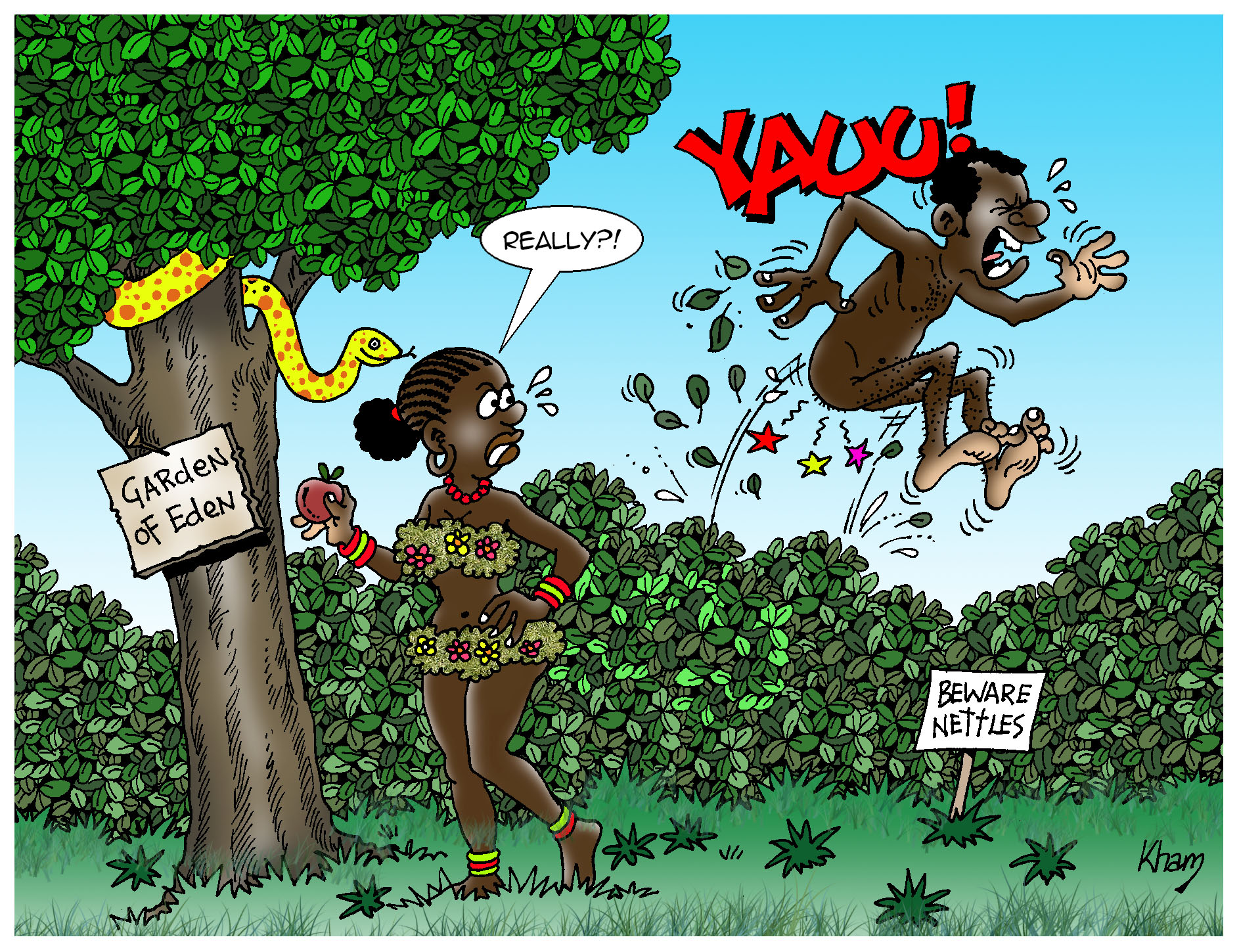
Six-year-old tends to children while schooling as Hope discovers both father and son have extra needs
By
1. FREE LABOUR
“Betty, your aunt is a strict woman; you know that. Be a good girl. Help her and study hard so you can make something of yourself. You are incredibly lucky to have been chosen, but only because you are hardworking. Do not be lazy when you get to Mombasa.”
These are the words my grandmother said to me on the day I left our small village in Ikoo, Kitui, to go live with my aunt Brenda in Mombasa. I was five, and my mother had just died a few months earlier. Kyalo, Kasyo, Kakunu, and I moved to Grandma’s compound, where we girls slept huddled in the small room adjacent to their bedroom that had been the storage area, and Kyalo slept on top of the sooty dining table in the living room. There were too many of us, the house was too small, and Grandma was too old. Like every other villager, she was a farmer. She had two farms, one that connected to the compound and another down by River Ikoo, where a big mango tree grew right in the middle.
For money, she sold kaluvu in the evening to a rowdy crowd of revellers who trickled into our compound as soon as the sun kissed the tips of Kanzau and did not leave until a bunch of them started ndona and caused a fight that would leave a tooth on my grandmother’s compound for us to sweep off in the morning. Many are the nights when the chief, a staunch Christian who had zero tolerance for the ways of Satan, like debauchery, raided our home with his boys and beat the hell out of drunks, breaking my grandmother’s pots and scaring the chicken out of the barely standing shed where they slept. In a panic, they would fly out into the dark, where they would encounter wamuvevi, a formidable ogre that chopped their heads right off their necks and sucked the blood out of them till they were ghost white.
We would wake up in the morning, sweep the bloody soil chunks and a tooth or two, then go hunting through the bushes for what might have been left of our chicken. Most times, we would find one or two chicks, jumpy and crouched under a mukukuma, and two or three headless carcasses abandoned on the grass. We would herd the live chicken home and carry the carcasses. Most people did not eat chicken that wild animals had killed, but we could not waste any food. Grandma would take them, send us off to school while she stayed home collecting her broken pots to brew more kaluvu, and later cook the chicken. It was the only time we got to eat chicken, for she mostly sold them to pay our school fees or buy food.
It did not take long for us to eat the last chicken after another raid. That day, she took the coins she had made, went to the market, and bought a kilo of wheat flour. She started making puffs to sell. She was done with brewing or even selling alcohol. A woman can only repair broken pots for so long. It did not take her long to realize that puff puffs were not as addictive as alcohol was. She would walk forty-five minutes to Mikuyuni with her bucket of puff puffs and come back with barely enough to buy salt. That was when she found a phone and called her children. It was too much.
Kyalo, who was in the upper primary at the time, was promised he would go to Nairobi, where our uncle, Mutuku, lived. He only had a year before his departure. Aunt Brenda, who had a small child, wanted one of us girls. Kakunu, ten years then and in class six, would have been the obvious choice were it not for the fact that she was rebellious and lazy, according to Grandma. Kasyo was only two and set to go live with my mom’s sister, who had just left me.
With Grandma’s words in my heart, I arrived in Mombasa full of trepidation but determined to do my best to prove that both Grandma and Brenda had made the right decision in choosing me. Her house was a decent single room with terrazzo floors, the first time I had seen such immaculate floors, and whitewashed walls decorated with blue lace curtains. There were pictures. She was light-skinned and golden, smiling brightly as her husband, as dark as a man can be and bald, kissed her cheek. There was another of him holding her waist as she stood on dark coral reefs wearing an angelic white dress that fluttered in the wind. The last one was a picture of Ken, their son, dressed in a blue T-shirt, dark navy shorts, and white socks, sitting on their sofa, his eyes wild, staring straight ahead as if he understood everything, even though he seemed only months old in the picture.
Ken was three when I started living with them. Aunty thought he was ready for preschool. When I entered St. Judy Academy, Class One, he also joined Kindergarten One. Every morning, we got ready, Aunty strapping him into his diapers before dressing him in the little uniform that made him look like a tiny CEO. She packed extra diapers and some snacks in his bag before sending him off to school. During break periods, when other kids ran off to buy viazi karai and play, I went to Kindergarten One to change Ken’s diaper on top of the teacher’s table and give him his snacks. In the evening, I washed him. During weekends, I did my laundry first. Then Aunty’s blouses. Then she taught me how to scrub Uncle’s jeans. When I was six, there was nothing about laundry I did not know.
One time, Ken pooped on his shorts, and I carried the soiled clothes pinched between my thumb and index finger, nose scrunched in disgust, and threw them into a bucket of water, then went to call Aunty to handle the situation.
“What do you expect me to do?” she snapped. “You don’t know how to wash clothes?”
“I know.”
“So go wash them!”
I carried the bucket to the washing area and stood there for over ten minutes, staring at the stinky brown poop floating in the water. I closed my eyes, dipped my hand in, and the minute I made contact with the water, I retched, vomiting all over the veranda and into the bucket. Aunty heard me and came outside, glaring at me. That was the first time she beat me. She sent me again to wash clothes. I barely saw them as I squeezed and wrung them, poop squishing between my fingers, my eyes blurred with tears.
“It is mud,” I told myself over and over until the shorts hung clean and fresh on the clothesline and the veranda was swept spotless. I did not eat that night or the morning after. When Aunty cooked matoke, I would puke and puke till she stopped forcing me to eat it. The same happened when she cooked nduma or mashed potatoes. I still do not eat soft foods without gagging.
I lived with them till I was eleven. Aunty gave birth to another boy, Brian, when I was eight. By then, there was nothing about taking care of a home or children that I did not know how to do. I would wake up, make her porridge, and warm her water for a shower before I prepared Ken and me for school. In the evenings, I came home to do dishes, clean the house, and cook before taking care of the baby as Aunty ate and showered. Sometimes, I would wash him and dress him up, making sure to massage his little limbs and head in circular motions so he would not grow up with a weird head. Brian, unlike Ken, was a happy baby. It was not hard to fall in love with him. During weekends, I would babysit, carrying him on my back as I cleaned until he fell asleep. Aunty, who had opened a tailoring shop at the front of the house, got back to work pretty fast. She often joked that I was Brian’s mom, which made me feel important and indispensable.
One day in school during Social Studies, we learned about children’s rights and responsibilities. Our teacher, Madam Caroh, defined rights as obligations that parents had and as entitlements that children held under the law. I sat in bewilderment as she listed what were supposed to be my rights. Rights I did not know I ever held. Some of these were rights to life, education, and healthcare—to basic needs like food, water, shelter, and clothing. For the first time in my young life, I woke up to the realization that I was a human being, one with rights nevertheless. I followed Teacher Caroh to the office after class and, for the first time, opened up to another human being about my aunt and our arrangement.
“Betty, you deserve to be outside playing with other children, not raising your aunt’s children or working to earn your education,” she said gently.
I broke down in self-pity, shoulders crumbling onto my lap, and she let me cry. After what felt like an eternity, I left the office raw but lighter. When I got home, I found the stack of dirty dishes waiting for me, the cold jiko waiting for me to light it for supper, Ken’s untouched homework, the jerricans that needed me to fetch water, and Brian’s full diapers. I went through my chores silently, Teacher Caroh’s words replaying in my head like a stuck record. My aunt was mistreating me, I concluded. I had been a victim[.
As I washed dishes, I thought of myself as Cinderella and her as the cruel stepmother. Suddenly, all the times she had beaten me for mistakes I had made and many I had not, or the times she yelled because I went out to play instead of doing a chore she had assigned, or the times I worked so hard my limbs felt like they would fall off, were vindicated by the realization that she was mistreating me and I was a victim. I was a victim. I was happy to be a victim because being a victim meant I had been stripped of my rights. I was happy to have the right to begin with. It meant I was someone.
The following day, without my knowledge, Teacher Caroh called my aunt to the school to discuss my situation with her. I was in class when Aunty stormed in and pulled me right off my chair in front of everyone and marched me home. I did not need to be told what had happened.
2. PARTNERS IN CRIME
I have not been home in fifteen years, and unless my dad dies, I am never going back.
I was in Form Three when mum brought in a housegirl. She could have been twenty-something, very dark, and Ugandan. She spoke very little. Most of the time, she floated around our home like a phantom, doing her work and minding her business. No matter how many times Mom told her that it was okay to join us at the table during supper, she would set the table, then stealthily disappear into the kitchen till we were all done eating. We had had househelps since I could remember.
Mom had a general shop in the market, where she spent most of her time, and Dad owned an electronics shop. That left Achieng’ and me to tend the house, and since Achieng’ was the youngest and I was a boy who played soccer, it meant there was no one to tend it. Mom stayed with the househelps for a while. Before the Ugandan, we had Kamene, who had stayed with us since I was in class eight and only left because she was ready to get married. We were all shocked when she announced it. At forty-five, no one would have even accused her of having libido, let alone dreaming of marriage. She gave Mom two weeks to find a replacement, but left before serving her notice. Mom was too bitter, and Kamene’s spirit had clearly walked down the aisle and couldn’t care less about our bratty, spoiled selves, as she put it while she was packing her bags.
Mom had to close the shop for two days. On the third day, Hope arrived, timid and as humble as the rumours. Mom introduced her to us that evening as Hope stood in the middle of the room with what was Kamene’s Unga wa Taifa apron, hands clasped before her, and head bowed. She was plump, with a coarse face and sad, meanish eyes. Honestly, she scared me. Her hair was cut and combed. When she looked up as Mom told her our names as if we were unable to talk, her eyes met mine briefly before she glanced to the floor again. That act, her shyness, made me want to chuckle. She was not beautiful, not even close, but she was interesting, like a dragon fruit. I quickly hid my grin and glanced at Dad to see if he had noticed our interaction, but he was buried in a copy of the Daily Nation, as if the world around him were a mere suggestion.
I had never been interested in the domestic affairs of our house, no matter how much Mom tried to make it so, let alone a house help. But again, none were Ugandan. I watched her, the silent way she went about her duties, devoid of distraction, as if her life had been nothing before she started working for us. She did not make any calls or send any texts. Her phone stayed in her room most of the time, if not above our fridge in the kitchen when she was cooking. Her work was flawless. Her cooking was domestic but delicious. She did not use too many spices like Kamene, who could not cook a meal without adding masala, any masala. All her fried foods had pilau masala, all her drinks had tea masala, and all her meats had garam masala. Mom had tried to get her to stop in vain. We all had to adjust to her plan.
But Hope cooked as politely as she lived. In fact, her politeness spilled into everything she did. It was there in how she gently ironed and folded the laundry, giving care to every single sock and shoelace, how she swept, collecting the trash smoothly into a pan before lowering it into the can, and even in the way she walked, as if she were rolling, her bosom dancing in her modest skirts and dresses in quiet seduction. She was beautiful from the back. She was beautiful to watch. She was beautiful in everything except her face. It was too dark, like damp charcoal; her cheeks and lips were too thick, and her skin broke out in furious acne that later left little wounds and even darker spots. Her eyes were too sad, like a pauper's. It was uncomfortable to look into them. They made me feel guilty, like we were enslavers and not very good ones.
It is why I started greeting her each morning and evening, to ease my guilt at the privileges.
“Good morning, sir,” she always responded, eyes to her toes, bowing a little. I would nod and walk away feeling like a Prince in an Afrosinema. It was hard not to feel slightly elated at her humility, especially not with a sister like Achieng, who was born first. At seventeen and in Form Four, I was a man by every right, but my family seemed to have missed the memo. It was why I spent most of my time outside the house with people who respected me or playing football at the stadium.
I would come home only when I was sure everyone was either asleep or about to be, but none of my efforts guaranteed me a peaceful evening. There was always something. A hoodie Achieng’ took from my room without my permission, a lecture from Dad over something I allegedly did, or even worse, Mom, because I missed dinner. It made me want to turn around and go back to the streets, come what may. Anything seemed better than home.
Hope, however, treated me like a young master. If I asked her for water, she would bow and say, “Yes, please.” Before retreating, eyes permanently on the floor, to the kitchen to get me my order. We did not talk much, even though when no one was around, I tried to engage her beyond a greeting.
“How are you finding the day?” I would ask her if I found her in the kitchen during lunch.
“Good, sir,” she would respond, wiping her hands on her apron.
“You do not have to call me sir,” I would lie. I liked being called sir. I liked her bows, her shy eyes, and the nervous way her hands clasped when addressed.
“Yes, sir.”
I don’t remember the first time I googled “Ugandan porn,” but for almost a week, I would lie in the dark after I was done wiping and hate myself a little for the thoughts that were creeping into my mind. She slept in the adjacent bedroom with Achieng. Down the corridor, where the shoe rack stood, was the main bedroom. There was no way I could wake her without waking everyone in the house. I was not even sure I wanted to. In fact, sometimes, I was certain I did not. She was old, ugly, and a house help.
One day, I came home past midnight. Everyone was asleep, and the house was locked. We all had our own copies of the house key. I let myself in, cursing under my breath as the door creaked open. I tiptoed to my room, undressed, and went outside to shower. As I was leaving, I saw a figure approaching. My heart started pounding as I held the towel around my waist. I braced myself for the lecture I was about to receive, but as it got closer, it morphed into Hope in nothing but a khanga. When she saw me, she squeaked like a rat before composing herself.
“Good evening.” I greeted him in relief
“Good evening, sir.”
“I thought it was Mom,” I sighed.
“No, sir”
“Are they asleep?” I whispered
“Your mom did not come home, sir”
“And Dad?” I leaned closer, hopefully. She shuffled back, her eyes darting up for a millisecond.
“He came, sir.”
“Good.” I stepped closer. “Where is he?”
“In his bedroom, sir.” She backed up again.
“You will fall.” I moved again.
“No, sir.”
“Where were you going?”
“To the toilet, sir.”
“The bulb is not working.” I don’t know where the lie came from, or why my heart sounded like a faulty tractor, or why my hard-on was pushing against my towel till I thought I would burst.
“I will wait for you,” I said when she did not answer. She skirted around me and got into the toilet without turning on the lights. I waited to hear the click of the door locking, but there was nothing. I stood staring at it for a minute, then, as if I were lucid dreaming, touched the knob, turned it, and pushed. I could not see her, but there wasn’t much room for her to disappear. She was facing the wall. I closed the door behind us, dropped my towel, and hiked up her leso.
I avoided her for three days. But then, on the fourth, I left my room, and she came. We did not talk. We never talked. We never kissed either. I learned to listen to the creak of her door. I would go and find her waiting for me in the toilet, bent over the closed toilet bowl. Our illicit affair became like a drug. During the day, time wafted like the stench of a dead rat. It wasn't until midnight that I would come alive between Hope’s thighs. I was discovering that they told lies about Ugandan women, and I had never been happier over a rumour.
On the night I left home, it was raining, so I pressed my ear against my door, waiting to hear the creak of Hope’s bedroom or even the patter of her feet. After what felt like forever, disappointment started to build in me. Was she not coming? There had been some nights when she did not go out, but it was not often. She had seemed to enjoy our nocturnal activities just as much as I did before. Was she done with us? Sick? On her period? I was still lying in bed, thinking and rethinking all the ways I could be nicer to her during the day so we could keep our night visits frequent, when I heard the front door squeak open.
Everything happened so fast! First, there Hope’s mouth on mine, her tongue shoved deep into my mouth. But…I almost gagged from the heavy cigarette stench that met me. Then there was her body pressed against mine, hairy flat chest, her rough hands grabbing my balls as something hard poked my navel. Before I could blink, I was flying out of the bathroom onto the mud, grass, and rain. I collected myself from the ground and locked eyes with Dad, who stood at the door, pantless.
Share :


Lorem ipsum dolor sit amet, consectetur adipiscing elit. Suspendisse varius enim in eros elementum tristique. Duis cursus, mi quis viverra ornare, eros dolor interdum nulla, ut commodo diam libero vitae erat. Aenean faucibus nibh et justo cursus id rutrum lorem imperdiet. Nunc ut sem vitae risus tristique posuere.
Lorem ipsum dolor sit amet, consectetur adipiscing elit. Suspendisse varius enim in eros elementum tristique. Duis cursus, mi quis viverra ornare, eros dolor interdum nulla, ut commodo diam libero vitae erat. Aenean faucibus nibh et justo cursus id rutrum lorem imperdiet. Nunc ut sem vitae risus tristique posuere.