

'The Polygamist' and the shame of being seen loving
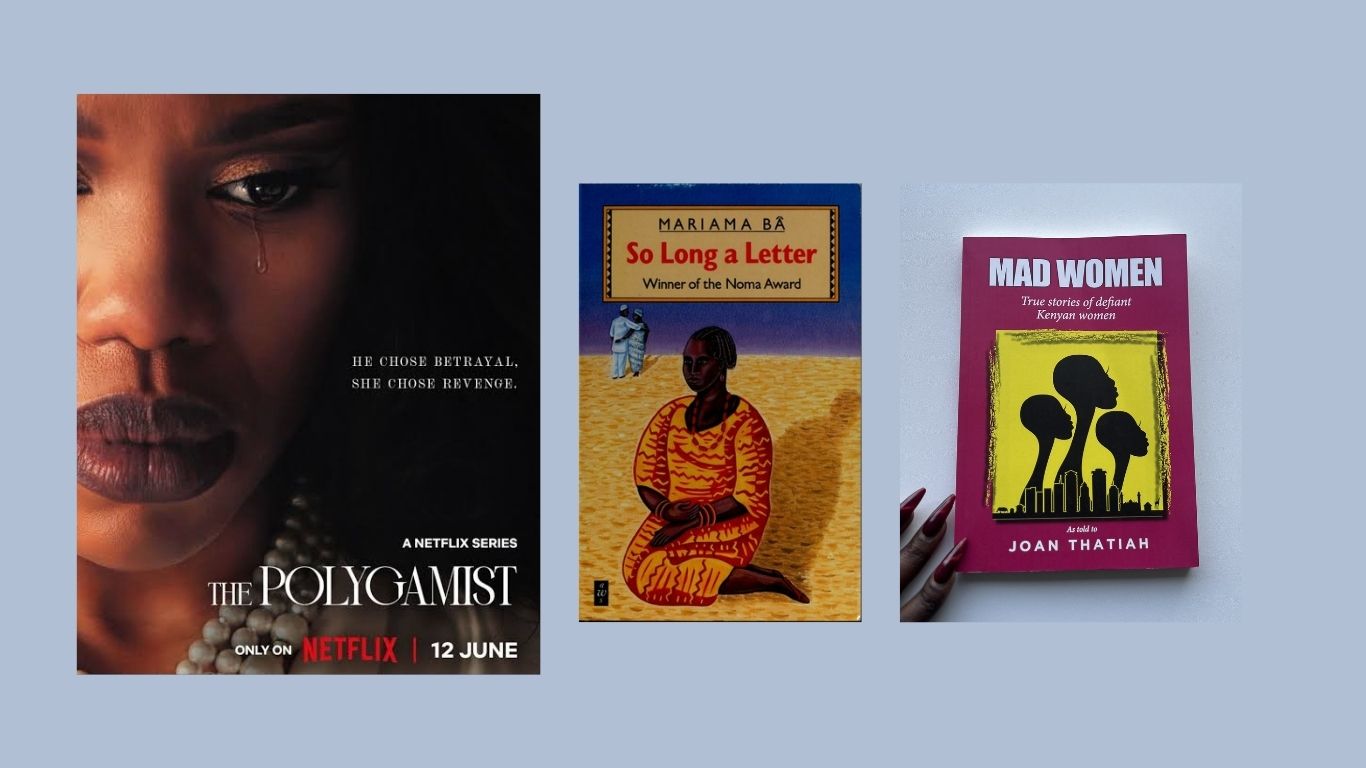
When viewers first meet Jonasi Gomora in Netflix's The Polygamist, adapted from Zimbabwean writer Sue Nyathi's bestselling novel, it is easy to assume that the show is simply about a wealthy African man with multiple wives. By the end of the series, it becomes clear that it is about something else entirely.
It is about deception. And perhaps, unexpectedly, it is about the shame of being seen loving.
The series has sparked intense conversations online. Some viewers have condemned Jonasi's behaviour. Others have directed their frustrations towards the women around him. Joyce, played by Gugu Gumede, has become a lightning rod. People have questioned why she stayed, why she fought so hard for a husband who repeatedly humiliated her. And also why she physically blocked him from leaving the house when she knew exactly where he was going.
Matipa, the ‘younger woman’, has fared no better. She has been mocked for believing promises made by a married man and for imagining herself as his future. This character was so controversial that many netizens argue that even the women dating married men were complaining.
And then there is Essie, perhaps the series' most tragic figure.
For years, Jonasi hides her in plain sight, allowing his first wife and even viewers to believe that she is his brother Magesh's wife. When the truth is revealed, it is shocking. Not because Jonasi has another wife, but because he has built an entire life on concealment. The revelation exposes a man whose relationships are sustained not by honesty or responsibility, but by lies. Which is why describing The Polygamist as a story about African polygamy misses the point.
Anthropologists and historians have long distinguished between polygyny—the practice of one man having multiple wives—and infidelity or promiscuity. Across many African societies, polygyny operated within communal structures. Wives generally knew one another. Senior wives held authority. Children belonged not only to parents but to extended families. Marriage itself was understood as a union between lineages rather than merely two individuals.
This did not mean that polygyny was free of jealousy or pain. Senegalese author Mariama Bâ explored those tensions in So Long a Letter, where the protagonist Ramatoulaye confronts the emotional devastation caused by her husband's decision to marry a younger woman. But the pain in Bâ's work emerges within a recognised social structure where secrecy is not the foundation.
Jonasi's world is different. His power depends on concealment, and that distinction matters.
Perhaps that is why The Polygamist finds an unexpected companion in Mad Women. In the story "The Matriarch", a woman discovers that the true authority in the household does not belong to the husband, but to the matriarch who sanctioned the marriage. The story complicates assumptions about where power resides. Patriarchy, it suggests, is sustained not only by men but by families, traditions and communities.
The same dynamic is visible in The Polygamist. Jonasi's brother Magesh repeatedly covers for him. He helps maintain the lies and protects his brother from consequences. Only when he witnesses the effects of Jonasi's violence on Joyce does he intervene and for many women, that moment feels painfully familiar. Women's concerns are often dismissed until another man acknowledges them.
Yet perhaps the most fascinating aspect of the series is not Jonasi himself. It is the women. Joyce, Matipa and Essie occupy different positions in Jonasi's life, but all three share something in common. They believe him. And for that belief, they inherit the shame of loving.
The wife is mocked for staying.
The other woman is mocked for believing.
The hidden wife is mocked for accepting invisibility.
Meanwhile, the man at the centre of the chaos often escapes with his masculinity intact.
The public discourse surrounding the show reveals something deeper about contemporary relationships. Love has become embarrassing.
Social media has given us an entire vocabulary for ridicule. Women who express vulnerability are labelled "pick me", and men who show that they care and love their partners are called “simps”. Those who trust too easily are called delusional. Heartbreak itself has become something to hide.
Women are taught to love strategically.
“Do not call first.”
“Do not care too much.”
“Do not post him too early. Just soft-launch his shadow or a strand of hair”
“Do not appear too certain.”
“Above all, do not embarrass yourself because men will embarrass you. It is not a matter of if but when.”
Perhaps this explains why Joyce unsettles audiences.
She does not suffer elegantly. She cries. She screams. She fights. She blocks gates. She holds on to her husband's leg as she is dragged on the pavement. She gets arrested for putting her hands on her husband’s lovers. She refuses to pretend that twenty years of marriage can disappear without consequence.
Her grief is visible. And maybe that visibility is what makes viewers uncomfortable. Because behind every joke about Joyce lies a fear many people recognise. The fear of being seen loving.
African literature has wrestled with this tension for decades. In So Long a Letter, Mariama Bâ captured the loneliness and betrayal experienced by wives in polygamous marriages. In Mad Women, women navigate institutions that simultaneously protect and imprison them. These stories remind readers that relationships are rarely private matters. They are shaped by culture, family and power.
But contemporary dating appears to have introduced another pressure of survival, self-preservation and strategy and with good reason nonetheless. Women have watched mothers, sisters and friends become cautionary tales. They have learned that heartbreak attracts ridicule. Even heartbreak songs sung by women are often met with embarrassment rather than compassion.
Somewhere along the way, emotional pain became something to conceal. You have to tend to your wounds quietly, cry privately and heal beautifully. Do not let anyone catch you loving.
Which raises a troubling question. When did love become so humiliating?
Religions describe love as patient and kind. Literature celebrates it. Human beings organise entire lives around it. Yet history is equally filled with stories of jealousy, violence, obsession and possession committed in its name.
Perhaps what we call love is often something else. Perhaps it is insecurity, entitlement, loneliness and fear. Or perhaps love itself has never changed. Perhaps what has changed is our willingness to admit that it broke us.
Because beneath all the arguments about first wives, side chicks and cheating, The Polygamist leaves viewers with a much quieter question.
Not why women stay. Not why men cheat. But why we have made it so embarrassing to admit that we loved.
And whether, in trying so hard not to be humiliated, we have forgotten how to love at all.
Tracy Ochieng is a staff writer with Books in Africa. Email: tracy.ochieng@ekitabu.com
Featured Book

Related Book
Get to know more about the mentioned books
Related Article

'The Polygamist' and the shame of being seen loving
By
When viewers first meet Jonasi Gomora in Netflix's The Polygamist, adapted from Zimbabwean writer Sue Nyathi's bestselling novel, it is easy to assume that the show is simply about a wealthy African man with multiple wives. By the end of the series, it becomes clear that it is about something else entirely.
It is about deception. And perhaps, unexpectedly, it is about the shame of being seen loving.
The series has sparked intense conversations online. Some viewers have condemned Jonasi's behaviour. Others have directed their frustrations towards the women around him. Joyce, played by Gugu Gumede, has become a lightning rod. People have questioned why she stayed, why she fought so hard for a husband who repeatedly humiliated her. And also why she physically blocked him from leaving the house when she knew exactly where he was going.
Matipa, the ‘younger woman’, has fared no better. She has been mocked for believing promises made by a married man and for imagining herself as his future. This character was so controversial that many netizens argue that even the women dating married men were complaining.
And then there is Essie, perhaps the series' most tragic figure.
For years, Jonasi hides her in plain sight, allowing his first wife and even viewers to believe that she is his brother Magesh's wife. When the truth is revealed, it is shocking. Not because Jonasi has another wife, but because he has built an entire life on concealment. The revelation exposes a man whose relationships are sustained not by honesty or responsibility, but by lies. Which is why describing The Polygamist as a story about African polygamy misses the point.
Anthropologists and historians have long distinguished between polygyny—the practice of one man having multiple wives—and infidelity or promiscuity. Across many African societies, polygyny operated within communal structures. Wives generally knew one another. Senior wives held authority. Children belonged not only to parents but to extended families. Marriage itself was understood as a union between lineages rather than merely two individuals.
This did not mean that polygyny was free of jealousy or pain. Senegalese author Mariama Bâ explored those tensions in So Long a Letter, where the protagonist Ramatoulaye confronts the emotional devastation caused by her husband's decision to marry a younger woman. But the pain in Bâ's work emerges within a recognised social structure where secrecy is not the foundation.
Jonasi's world is different. His power depends on concealment, and that distinction matters.
Perhaps that is why The Polygamist finds an unexpected companion in Mad Women. In the story "The Matriarch", a woman discovers that the true authority in the household does not belong to the husband, but to the matriarch who sanctioned the marriage. The story complicates assumptions about where power resides. Patriarchy, it suggests, is sustained not only by men but by families, traditions and communities.
The same dynamic is visible in The Polygamist. Jonasi's brother Magesh repeatedly covers for him. He helps maintain the lies and protects his brother from consequences. Only when he witnesses the effects of Jonasi's violence on Joyce does he intervene and for many women, that moment feels painfully familiar. Women's concerns are often dismissed until another man acknowledges them.
Yet perhaps the most fascinating aspect of the series is not Jonasi himself. It is the women. Joyce, Matipa and Essie occupy different positions in Jonasi's life, but all three share something in common. They believe him. And for that belief, they inherit the shame of loving.
The wife is mocked for staying.
The other woman is mocked for believing.
The hidden wife is mocked for accepting invisibility.
Meanwhile, the man at the centre of the chaos often escapes with his masculinity intact.
The public discourse surrounding the show reveals something deeper about contemporary relationships. Love has become embarrassing.
Social media has given us an entire vocabulary for ridicule. Women who express vulnerability are labelled "pick me", and men who show that they care and love their partners are called “simps”. Those who trust too easily are called delusional. Heartbreak itself has become something to hide.
Women are taught to love strategically.
“Do not call first.”
“Do not care too much.”
“Do not post him too early. Just soft-launch his shadow or a strand of hair”
“Do not appear too certain.”
“Above all, do not embarrass yourself because men will embarrass you. It is not a matter of if but when.”
Perhaps this explains why Joyce unsettles audiences.
She does not suffer elegantly. She cries. She screams. She fights. She blocks gates. She holds on to her husband's leg as she is dragged on the pavement. She gets arrested for putting her hands on her husband’s lovers. She refuses to pretend that twenty years of marriage can disappear without consequence.
Her grief is visible. And maybe that visibility is what makes viewers uncomfortable. Because behind every joke about Joyce lies a fear many people recognise. The fear of being seen loving.
African literature has wrestled with this tension for decades. In So Long a Letter, Mariama Bâ captured the loneliness and betrayal experienced by wives in polygamous marriages. In Mad Women, women navigate institutions that simultaneously protect and imprison them. These stories remind readers that relationships are rarely private matters. They are shaped by culture, family and power.
But contemporary dating appears to have introduced another pressure of survival, self-preservation and strategy and with good reason nonetheless. Women have watched mothers, sisters and friends become cautionary tales. They have learned that heartbreak attracts ridicule. Even heartbreak songs sung by women are often met with embarrassment rather than compassion.
Somewhere along the way, emotional pain became something to conceal. You have to tend to your wounds quietly, cry privately and heal beautifully. Do not let anyone catch you loving.
Which raises a troubling question. When did love become so humiliating?
Religions describe love as patient and kind. Literature celebrates it. Human beings organise entire lives around it. Yet history is equally filled with stories of jealousy, violence, obsession and possession committed in its name.
Perhaps what we call love is often something else. Perhaps it is insecurity, entitlement, loneliness and fear. Or perhaps love itself has never changed. Perhaps what has changed is our willingness to admit that it broke us.
Because beneath all the arguments about first wives, side chicks and cheating, The Polygamist leaves viewers with a much quieter question.
Not why women stay. Not why men cheat. But why we have made it so embarrassing to admit that we loved.
And whether, in trying so hard not to be humiliated, we have forgotten how to love at all.
Tracy Ochieng is a staff writer with Books in Africa. Email: tracy.ochieng@ekitabu.com
Share :


Lorem ipsum dolor sit amet, consectetur adipiscing elit. Suspendisse varius enim in eros elementum tristique. Duis cursus, mi quis viverra ornare, eros dolor interdum nulla, ut commodo diam libero vitae erat. Aenean faucibus nibh et justo cursus id rutrum lorem imperdiet. Nunc ut sem vitae risus tristique posuere.
Lorem ipsum dolor sit amet, consectetur adipiscing elit. Suspendisse varius enim in eros elementum tristique. Duis cursus, mi quis viverra ornare, eros dolor interdum nulla, ut commodo diam libero vitae erat. Aenean faucibus nibh et justo cursus id rutrum lorem imperdiet. Nunc ut sem vitae risus tristique posuere.