
What Nicholas Mukoko reveals about modern masculinity
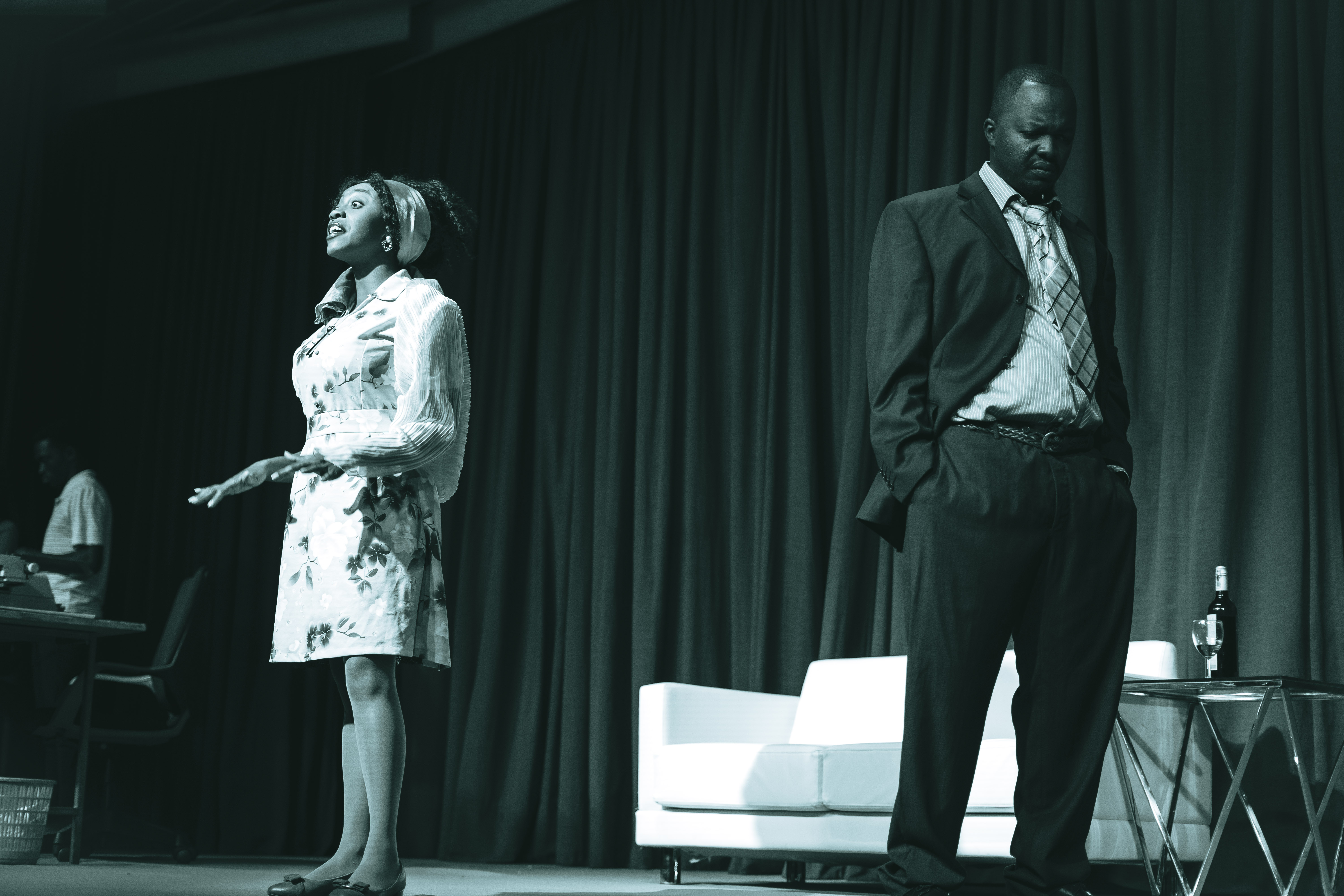
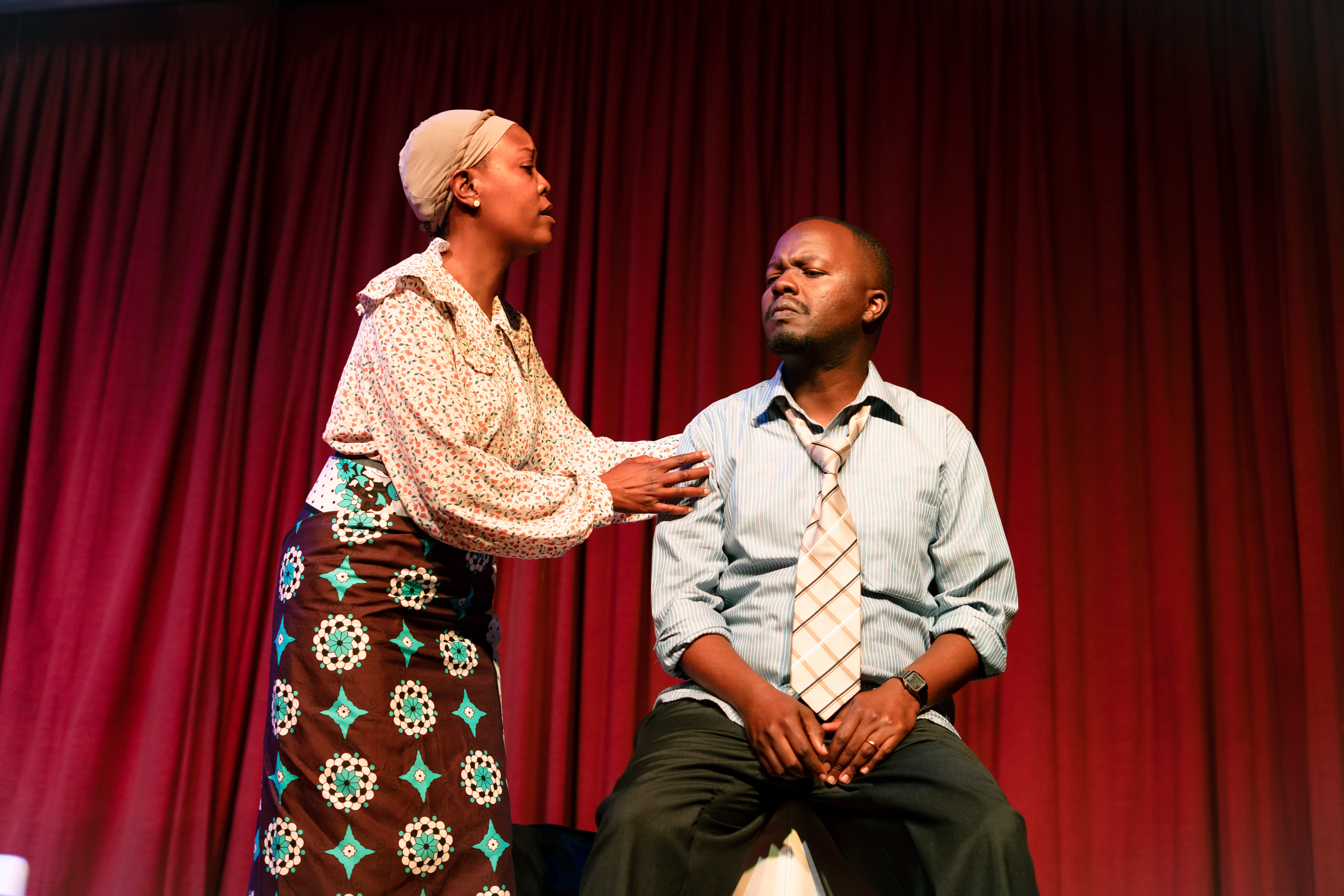
Watching the play After 4.30 in 2026 feels unsettling because Nicholas Mukoko does not feel like a relic of the 1970s. He feels contemporary. Written by David Maillu more than five decades ago, the character embodies attitudes towards women, marriage, power and rejection that remain visible in today's conversations about gender.
In an era shaped by social media personalities, relationship podcasts and online "manosphere" communities, audiences continue to encounter versions of Mukoko's worldview in both digital and physical spaces.
During our conversation with the former cast of After 4.30, Martin Kigondu reflected on how playing Mukoko forced him to confront experiences that many women recognised immediately.
"For me, it was a performance," he said. "For them, it reflected real experiences."
That response from audiences may be part of what has made After 4:30 resonate so strongly. The play does not simply present a flawed man; it exposes a system of thinking that normalises entitlement, excuses harmful behaviour and expects women to absorb the emotional consequences.
The story re-emerges at a time when Kenya continues to grapple with conversations around gender-based violence, femicide and the growing hostility that often characterises online discussions between men and women. While Mukoko exists on the page, the attitudes he represents continue to spark debate in contemporary society.
What makes the adaptation powerful is that it does not ask audiences to cancel or condemn a villain from a distance. Instead, it asks a more uncomfortable question: How much of Nicholas Mukoko still exists around us?
For Kigondu, the lesson was ultimately about responsibility.
"As men we have to be conscious about how we move in the world," he said.
That may be the enduring relevance of After 4:30. More than fifty years after it was written, the story remains a challenge to men—not simply to recognise harmful patterns, but to consciously choose something different.
In this conversation with Books in Africa, actor, director and playwright Martin Kigondu reflects on stepping into Mukoko's shoes, adapting literature for the stage, and what After 4:30 reveals about masculinity, theatre and the enduring power of storytelling.
You've described yourself as an actor, writer, director and producer. How do you usually introduce Martin Kigondu to someone meeting him for the first time?
My name is Martin Kigondu although my national ID reads Kigondu Martin. I prefer it that way because I consider myself African first before anything else.
I'm a thespian, which simply means I'm an actor who primarily works in theatre. But my work spans several forms. I've written for television and film, directed productions, worked in radio and podcasting, and produced theatre. At the moment, it often feels like I'm fitting thirty-six hours into a twenty-four-hour day.
Of all those roles, producing is probably the toughest. Writing comes next, then acting. But directing remains my first love.
How long has it been in the industry?
If all goes well, by 2027 I'll be celebrating twenty years in the industry.
Awards are always exciting because they acknowledge the work you've done, but I've learned not to centre my career around them. Some of the artists I admire most have very few awards. So I constantly remind myself that the work itself matters more than the recognition.
That said, I've been fortunate enough to win a few over the years—Best Director, Best Producer, Best Playwright and Best Actor in a solo performance.
What keeps you grounded despite the recognition?
Family. Always family. No matter what happens professionally, I can go home, call my mum, have lunch with her, and spend time with my brother. That's what reminds me who I am outside of the industry.
Sometimes grounding yourself is as simple as sharing a plate of githeri with the people who knew you before any of this happened.
You’ve performed in several stage adaptations of literary works—from Ngũgĩ wa Thiong’o’s I Will Marry When I Want to David Maillu’s After 4.30. What has that intersection between theatre and literature been like for you?
It’s been a wonderful relationship.
I actually started performing set books for schools before joining the Phoenix Players. We would tour high schools performing literary texts—Merchant of Venice, Kifo Kisimani, and other works students were studying.
So my career has always been connected to literature.
Over time I realised how powerful it is to bring characters people have only imagined on the page to life on stage. Kenya has a wealth of locally published books with incredible stories. I feel fortunate to be among the actors who have built a career performing these works.
What struck you most about After 4.30 when you were handed the script?
Honestly, my first reaction was surprise. I read it thinking it must have been written recently because the themes felt so current. The conversations about gender, power, and relationships feel like they belong in 2024.
Then I discovered it was written in 1974. That was shocking. It made me realise just how little some things have changed in society.
Your character, Nicholas Mukoko, is both charming and unsettling. How did you approach portraying him?
The process is everything.
As an actor, it’s not necessarily your job to love the character. When you love a character too much, you soften them. You protect them.
Instead, I try to play the character honestly—as I understand him—while collaborating closely with the director and production team. In this case we worked with director Nick Njache and stage manager George Mungai to find the right balance.
At the same time, I was filming a television series during the day where I played a detective solving murders. So I had two completely different characters in my head—one for TV and one for theatre.But that’s part of the craft. Acting is like exercising a muscle.
Did you ever feel like the character possessed you during a performance?
Sometimes, yes—but rarely for the entire performance.
Theatre is like juggling multiple balls at once. You’re in character, but you’re also aware of the audience, your scene partners, and the technical aspects of the show.
Occasionally there’s a moment—maybe fifteen minutes in a two-hour performance—when everything aligns and you’re fully inside the character. Those moments are magical.
But most of the time you’re also working very hard to maintain the performance.
The marriage in the play is particularly heartbreaking. Why do you think relationships often reproduce these dynamics?
Part of it comes from how we were raised.
Many men unconsciously look for aspects of their mothers in their partners—signals of what “home” feels like. But sometimes that turns into trying to mould a partner into that image, which can end up hurting someone else’s daughter.
Another factor is historical. Kenya in 1974 was a relatively young nation thus many of our social expectations about marriage were shaped in the aftermath of colonial violence and the Mau Mau era.
Those patterns have been passed down across generations. The challenge now is deciding whether we continue them—or consciously try to change them.
Beyond individual stories, you’ve spoken about the broader challenges facing the arts in Kenya. What needs to change?
The biggest challenge is that we are not yet a fully recognised industry.
We’re closer to a sector—very juakali. There is immense talent, but we lack the structures and numbers needed for recognition.
The second challenge is culture. Many Kenyans still associate theatre only with school set books or educational performances.
We don’t yet have a strong culture of people buying tickets and attending theatre regularly.
And finally, political leadership rarely prioritises the arts. Politicians promise stadiums but almost never theatres or performance spaces. Yet the arts are powerful. Perhaps that’s why they’re not always encouraged because they have the ability to question power.
Nearly twenty years into the craft, what keeps you going?
The joy of the work. When you’re on stage and the audience responds—whether they laugh, reflect, or even feel uncomfortable—you realise storytelling still matters.
And that’s enough reason to keep going.
Tracy Ochieng is a staff writer with Books in Africa. Email: tracy.ochieng@ekitabu.com
Featured Book

Related Book
Get to know more about the mentioned books
Related Article

What Nicholas Mukoko reveals about modern masculinity
By
Watching the play After 4.30 in 2026 feels unsettling because Nicholas Mukoko does not feel like a relic of the 1970s. He feels contemporary. Written by David Maillu more than five decades ago, the character embodies attitudes towards women, marriage, power and rejection that remain visible in today's conversations about gender.
In an era shaped by social media personalities, relationship podcasts and online "manosphere" communities, audiences continue to encounter versions of Mukoko's worldview in both digital and physical spaces.
During our conversation with the former cast of After 4.30, Martin Kigondu reflected on how playing Mukoko forced him to confront experiences that many women recognised immediately.
"For me, it was a performance," he said. "For them, it reflected real experiences."
That response from audiences may be part of what has made After 4:30 resonate so strongly. The play does not simply present a flawed man; it exposes a system of thinking that normalises entitlement, excuses harmful behaviour and expects women to absorb the emotional consequences.
The story re-emerges at a time when Kenya continues to grapple with conversations around gender-based violence, femicide and the growing hostility that often characterises online discussions between men and women. While Mukoko exists on the page, the attitudes he represents continue to spark debate in contemporary society.
What makes the adaptation powerful is that it does not ask audiences to cancel or condemn a villain from a distance. Instead, it asks a more uncomfortable question: How much of Nicholas Mukoko still exists around us?
For Kigondu, the lesson was ultimately about responsibility.
"As men we have to be conscious about how we move in the world," he said.
That may be the enduring relevance of After 4:30. More than fifty years after it was written, the story remains a challenge to men—not simply to recognise harmful patterns, but to consciously choose something different.
In this conversation with Books in Africa, actor, director and playwright Martin Kigondu reflects on stepping into Mukoko's shoes, adapting literature for the stage, and what After 4:30 reveals about masculinity, theatre and the enduring power of storytelling.
You've described yourself as an actor, writer, director and producer. How do you usually introduce Martin Kigondu to someone meeting him for the first time?
My name is Martin Kigondu although my national ID reads Kigondu Martin. I prefer it that way because I consider myself African first before anything else.
I'm a thespian, which simply means I'm an actor who primarily works in theatre. But my work spans several forms. I've written for television and film, directed productions, worked in radio and podcasting, and produced theatre. At the moment, it often feels like I'm fitting thirty-six hours into a twenty-four-hour day.
Of all those roles, producing is probably the toughest. Writing comes next, then acting. But directing remains my first love.
How long has it been in the industry?
If all goes well, by 2027 I'll be celebrating twenty years in the industry.
Awards are always exciting because they acknowledge the work you've done, but I've learned not to centre my career around them. Some of the artists I admire most have very few awards. So I constantly remind myself that the work itself matters more than the recognition.
That said, I've been fortunate enough to win a few over the years—Best Director, Best Producer, Best Playwright and Best Actor in a solo performance.
What keeps you grounded despite the recognition?
Family. Always family. No matter what happens professionally, I can go home, call my mum, have lunch with her, and spend time with my brother. That's what reminds me who I am outside of the industry.
Sometimes grounding yourself is as simple as sharing a plate of githeri with the people who knew you before any of this happened.
You’ve performed in several stage adaptations of literary works—from Ngũgĩ wa Thiong’o’s I Will Marry When I Want to David Maillu’s After 4.30. What has that intersection between theatre and literature been like for you?
It’s been a wonderful relationship.
I actually started performing set books for schools before joining the Phoenix Players. We would tour high schools performing literary texts—Merchant of Venice, Kifo Kisimani, and other works students were studying.
So my career has always been connected to literature.
Over time I realised how powerful it is to bring characters people have only imagined on the page to life on stage. Kenya has a wealth of locally published books with incredible stories. I feel fortunate to be among the actors who have built a career performing these works.
What struck you most about After 4.30 when you were handed the script?
Honestly, my first reaction was surprise. I read it thinking it must have been written recently because the themes felt so current. The conversations about gender, power, and relationships feel like they belong in 2024.
Then I discovered it was written in 1974. That was shocking. It made me realise just how little some things have changed in society.
Your character, Nicholas Mukoko, is both charming and unsettling. How did you approach portraying him?
The process is everything.
As an actor, it’s not necessarily your job to love the character. When you love a character too much, you soften them. You protect them.
Instead, I try to play the character honestly—as I understand him—while collaborating closely with the director and production team. In this case we worked with director Nick Njache and stage manager George Mungai to find the right balance.
At the same time, I was filming a television series during the day where I played a detective solving murders. So I had two completely different characters in my head—one for TV and one for theatre.But that’s part of the craft. Acting is like exercising a muscle.
Did you ever feel like the character possessed you during a performance?
Sometimes, yes—but rarely for the entire performance.
Theatre is like juggling multiple balls at once. You’re in character, but you’re also aware of the audience, your scene partners, and the technical aspects of the show.
Occasionally there’s a moment—maybe fifteen minutes in a two-hour performance—when everything aligns and you’re fully inside the character. Those moments are magical.
But most of the time you’re also working very hard to maintain the performance.
The marriage in the play is particularly heartbreaking. Why do you think relationships often reproduce these dynamics?
Part of it comes from how we were raised.
Many men unconsciously look for aspects of their mothers in their partners—signals of what “home” feels like. But sometimes that turns into trying to mould a partner into that image, which can end up hurting someone else’s daughter.
Another factor is historical. Kenya in 1974 was a relatively young nation thus many of our social expectations about marriage were shaped in the aftermath of colonial violence and the Mau Mau era.
Those patterns have been passed down across generations. The challenge now is deciding whether we continue them—or consciously try to change them.
Beyond individual stories, you’ve spoken about the broader challenges facing the arts in Kenya. What needs to change?
The biggest challenge is that we are not yet a fully recognised industry.
We’re closer to a sector—very juakali. There is immense talent, but we lack the structures and numbers needed for recognition.
The second challenge is culture. Many Kenyans still associate theatre only with school set books or educational performances.
We don’t yet have a strong culture of people buying tickets and attending theatre regularly.
And finally, political leadership rarely prioritises the arts. Politicians promise stadiums but almost never theatres or performance spaces. Yet the arts are powerful. Perhaps that’s why they’re not always encouraged because they have the ability to question power.
Nearly twenty years into the craft, what keeps you going?
The joy of the work. When you’re on stage and the audience responds—whether they laugh, reflect, or even feel uncomfortable—you realise storytelling still matters.
And that’s enough reason to keep going.
Tracy Ochieng is a staff writer with Books in Africa. Email: tracy.ochieng@ekitabu.com
Share :


 Delete