
Latest Article
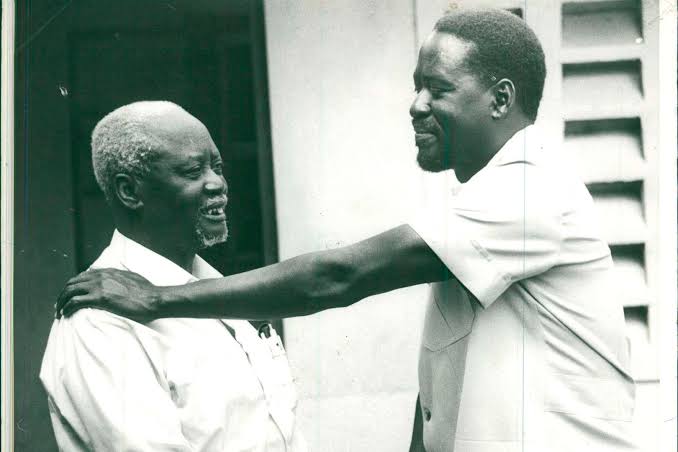
Baba, while you are away: the songs, struggles and contradictions of Raila Odinga
In death, Raila was accorded a state funeral, and the country watched as a man who had spent decades seeking the presidency received the ceremonial honours of a former national leader. The symbolism was striking. He never became president, yet his death occasioned the rituals, public mourning and national attention usually reserved for figures who had occupied the highest office.
Filter
.jpg)
The problem is not that young people have forgotten. It is that too few of us have been taught what came before. History and Government is treated as an elective in our schools, even though understanding a nation's past is as essential to citizenship as reading or writing. A society that leaves its history to choice should not be surprised when collective memory begins to fade.
.png)
For the two hours Terian spent in the ward, Moraa paced up and down the reception area as she talked to herself. She still could not come up with a plausible explanation as to why Terian had been put under her care. Who was she? Surely she could not be of romantic interest to her boss? She, more than anyone, knew Masikonde and his taste of women.

But the Creator instinctively knew that would be a waste of time. As time would demonstrate, corporal punishment, or the rod if you may – and counselling – are ineffectual when certain children mysteriously develop a trouble-causing worm in their brains. They will swallow intoxicants, stick syringes into the veins, bum, fight and drop out of school, wander into crime and seek death, sex and its diseases with a vengeance. You will cry, curse, whip them, call the police, take them to the witchdoctor, and it will do you and them no good.
.png)
Shifting in the driver’s seat, he studied the new arrival. She was tall; he guessed five feet, maybe nine inches. She bordered between slim and skinny. Even scrawny, if he could be brutally honest. Her long neck stuck out of her tee shirt; a less graceful person would have looked stoopy with that neck.She walked in carrying two clear buckets on each of her slender arms, and a tattered rucksack of indefinite colour strapped on her back. She placed the buckets near her feet. He could clearly see githeri in one, and ugali in the other.
.png)
"The Art Deco Buildings of Nairobi" is the latest work by South African writer Barbara Adair. More than a study of architecture, the book documents the memories and histories of Nairobi's African Asian communities, particularly Indian Kenyan families who transformed Art Deco designs into spaces that reflected their own traditions, aspirations and ways of life.

Anthropologists and historians have long distinguished between polygyny—the practice of one man having multiple wives—and infidelity or promiscuity. Across many African societies, polygyny operated within communal structures. Wives generally knew one another. Senior wives held authority. Children belonged not only to parents but to extended families. Marriage itself was understood as a union between lineages rather than merely two individuals.
