
Baba, While You Are Away: The Songs, Struggles and Contradictions of Raila Odinga
“Those who suffer from Raila-mania are more than those who suffer from Raila-phobia,” Raila Odinga once said in a 2017 interview with KTN News.
Perhaps few statements capture the complexity of Raila Amolo Odinga quite so succinctly. He inspired extraordinary devotion and equally fierce opposition, becoming a political figure whose name could evoke hope, admiration, resentment or outright hostility. To understand Baba was to encounter a man who rarely left people indifferent.
Dubbed the Saviour of the People, Joshua, Jakom, the Father of Devolution and, most affectionately, Baba, Raila carried the hopes and dreams of millions of Kenyans. For his supporters, he represented the possibility of a different country; for his critics, he was a politician whose ambitions and decisions invited scrutiny. Between these competing interpretations lay a political life marked by struggle, sacrifice, compromise and contradiction.
These hopes found expression in different ways, but perhaps none captured them quite like music. For Raila's supporters, songs turned the prospect of his presidency into something they could hear, sing and dance towards. His name was more than a campaign slogan; it was a chorus around which people gathered to imagine a different political future.
In 2014, Raila travelled to the United States for a three-month sabbatical and lecture tour, leaving Kenya without one of its most prominent opposition figures. When he returned on 31 May, he was met by jubilant supporters who gathered at Uhuru Park in Nairobi, singing opposition songs and awaiting his address. The homecoming became more than a welcome for a politician returning from abroad. It was a moment of political theatre, an opportunity for his supporters to voice their frustrations with the Jubilee administration and reaffirm their faith in the man they called Baba. “Baba, while you were away” became the refrain of the moment, capturing the grievances and political frustrations that supporters wanted him to confront. The phrase travelled beyond the rally, finding its way into speeches, headlines and public conversation.
It is a revealing episode in Raila's political history. His absence had created an opportunity for his supporters to narrate what they believed had gone wrong in the country, while his return gave them a stage on which to renew their demands. The music, the slogans and the crowds expressed a political relationship built on more than electoral ambition. They reflected an expectation that Baba would return to confront the problems his supporters believed had been neglected.
He was, after all, The Saviour of Kenya, as the late benga maestro Musa Juma sang. It was a powerful title, but also a dangerous one. To be cast as a people's saviour is to inherit their hopes, their grievances and their expectations of deliverance, leaving little room for the ordinary compromises of politics, and even less room for disappointment. But a saviour, once imagined, must eventually answer to the promises made in his name. And for Raila, those promises were repeatedly tied to one destination: State House.
In 2007, 2013, 2017 and 2022, Kenyans returned to the ballot with Raila's name on the presidential ticket and the possibility of a different political future in their minds. The songs accompanied the campaigns, turning electoral hope into something people could sing together. But while the music promised victory, the elections would tell a more complicated story.
Election acrobatics
Perhaps the significance of 2002 lies not only in the betrayal Raila and his allies believed they experienced after helping Mwai Kibaki defeat KANU, but also in the constitutional future Kenya might have pursued.
The NARC coalition had campaigned on an understanding that included a prime ministerial position for Raila and a decentralised distribution of power in a pure parliamentary system. That arrangement unravelled after the election. The promised office was not created, the coalition fractured, and the country continued under a presidential and parliamentary system in which executive power remained heavily concentrated in State House.
It is impossible to know what Kenya would look like today had that agreement been honoured and a parliamentary system subsequently established. But the question is worth asking. Would political competition have remained so intensely focused on capturing the presidency? Would the sharing of executive power have developed differently? And would every presidential election have carried the existential weight that it does today?
Five years later, Raila would find himself on the other side of the contest, seeking the presidency in his own right. The songs would return, the crowds would gather, and Kenya would once again confront the question of who had the right to govern.
Baba the great mobiliser
Raila’s influence was never confined to election day. There was another measure of his political power, one that could not be captured by votes alone: his ability to call people into the streets and bring the country to a political standstill.
“Tuesday! Tuesday! Tarehe mbili mwezi wa tano, tunarudi uwanjani,” Baba would declare, summoning his supporters back to the political arena. Such calls were familiar to a generation of Kenyans who had come to associate Raila’s political interventions with mass action, street demonstrations and the promise of confronting an establishment they believed had failed them.
In 2023, that familiar call to action returned. Raila led countrywide demonstrations against President William Ruto’s administration, with grievances ranging from the rising cost of living and increased taxes to the opposition’s rejection of the 2022 presidential election results and concerns over the restructuring of the Independent Electoral and Boundaries Commission (IEBC). Mondays and Thursdays became recurring days of protest, as demonstrators took to the streets in Nairobi, Kisumu and other parts of the country.
For his supporters, these demonstrations were about more than Raila’s political ambitions. They were an opportunity to challenge economic pressures and demand accountability from a government they felt was not listening. Raila’s ability to mobilise people across the country demonstrated that, even without occupying State House, he remained capable of setting the political agenda and compelling the government to respond.
But mass mobilisation came at a cost. The demonstrations were met with a forceful government response, arrests and violent confrontations between protesters and police. People were injured and killed, while businesses and public property were damaged. Behind the political slogans were citizens whose lives could not be reduced to the contest between Raila and Ruto: people who had taken to the streets with grievances of their own, and who bore the consequences when those streets became sites of confrontation.
This is the difficult question at the heart of Raila’s influence. What did it mean to command such loyalty? What did his supporters believe they could achieve by answering his calls, and what did they lose along the way? His capacity to mobilise was undeniable. The outcomes, however, were more complicated.
That complexity would become even more pronounced as Kenya’s political landscape shifted. The man many had come to regard as a permanent figure of opposition would enter political arrangements that challenged the very image on which much of his public appeal had been built. And when a new generation of protesters took to the streets in 2024, it raised a different question: what happens when young Kenyans decide that the established political class, including its most celebrated opposition figures, no longer speaks for them?
Agwambo please stay at home…
It would be a mistake to describe Kenya’s Gen Z as the first generation of young people to rise against an oppressive government. Long before the Finance Bill protests of 2024, Kenyan students, activists and young political organisers had challenged state repression, often at considerable personal cost.
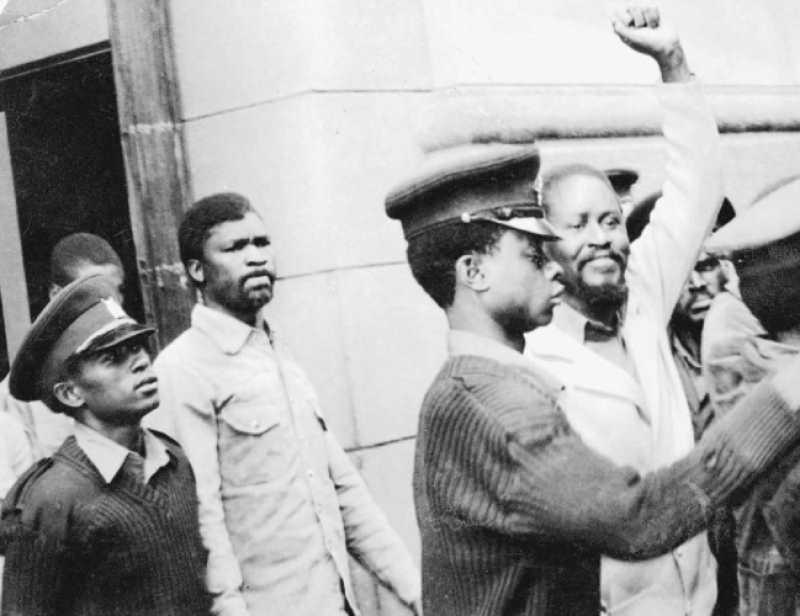
In the 1980s, university students confronted Daniel arap Moi’s increasingly authoritarian government. In July 1990, young activists and other citizens joined the Saba Saba demonstrations demanding multiparty democracy. The protests were violently suppressed, and the struggle for political pluralism continued through arrests, detention and further confrontations with the state. Raila Odinga himself was part of that history, having been sent to prison three times for a total of eight and a half years.”
The significance of Gen Z, then, was not that young Kenyans had suddenly discovered resistance. It was that a new generation was confronting a different political moment, drawing on a longer history of struggle while refusing to be confined by its established leaders.
This distinction matters when considering the relationship between Raila and the young people who took to the streets in June 2024. For years, Baba had represented opposition to the political establishment for many Kenyans. His calls for mass action had brought people into the streets, and his political career had been shaped by confrontations with successive governments. Yet, when Gen Z began organising against the Finance Bill, it did not turn to him to lead the movement.
Instead, 19-year-old Anini Barasa delivered a message that captured the generational shift: “Agwambo, please stay at home; we saw your efforts, we saw everything you did for Kenya.” She told him that her generation would take over and carry the struggle forward.
Raila acknowledged the appeal, describing himself as a proud father. He later explained that the young people had told him he had done enough and that they would continue without him. For a politician accustomed to being at the centre of opposition politics, it was a remarkable moment: a generation was recognising his contribution while asserting its right to determine its own political direction. But the distance between Baba and Gen Z would become more pronounced as the crisis unfolded.
After the deadly confrontations of June, Raila engaged President William Ruto in discussions about the protests. In August, he disclosed that former President Uhuru Kenyatta had asked him to reach out to Ruto, although Raila also said that Ruto had contacted him seeking advice. The discussions eventually fed into the proposed National Multi-Sectoral Forum and the donation of “experts” who were mainly Raila’s allies.
To some, Raila’s intervention could be understood as an effort to prevent further bloodshed and find a way out of a dangerous impasse. To others, it raised an uncomfortable question: why should a political establishment negotiate over the future of a movement whose young participants had insisted on speaking for themselves and further not have any Gen Z “donated” as experts?
The accusation that Raila was riding on the blood of Gen Z to secure political advantage emerged from this tension. It was an accusation about both motive and representation, and it should not be mistaken for an established account of his intentions. But its emotional force is important. Young Kenyans had risked their lives demanding accountability, and some feared that their sacrifices would once again become bargaining chips in negotiations among political elites.
Was Raila trying to resolve a national crisis, or was he returning to a familiar political role in which access to power took precedence over the demands of the people he claimed to represent? Could he have believed that engagement with Ruto was necessary while failing to appreciate how deeply the movement distrusted established political brokers?
These questions cannot be answered simply by declaring him a hero or a traitor. They require us to examine what the engagement achieved, which demands were addressed and whether the protesters’ insistence on independent political agency was respected.
Perhaps the most revealing part of the episode is that Gen Z could acknowledge Raila’s place in Kenya’s history without accepting him as the custodian of its future. They did not have to deny the sacrifices of earlier generations to insist that their own struggle would have its own leaders, methods and demands.
For Baba, whose influence had long rested on his ability to mobilise Kenyans, this was a different kind of political challenge. The question was no longer whether people would answer his call to the streets but whether he could recognise a movement that had deliberately chosen to make its own call.
I’m sad to say I’m on my way…
There is a particular cruelty in death when a life has been spent pursuing something that remains just out of reach. For Raila Amolo Odinga, the presidency was a lifelong political ambition, one that brought him to the threshold of power time and again, only for the door to close before he could walk through it.
On 15 October 2025, that pursuit came to an end. Raila died in India, aged 80, bringing to a close a political life that had shaped Kenya for decades. The man who had contested elections, challenged presidents, mobilised crowds and remained at the centre of the country’s political imagination was gone.
And suddenly, there would be no next Raila rally. No new declaration from a podium. No familiar voice announcing another day of mass action. No opportunity to hear him share vitendawili and songs. No opportunity to hear him explain a decision that had angered his supporters or defend a compromise his critics could not accept. There would be no final answer to the questions that had followed him throughout his career: what had his struggles achieved, what had his compromises cost, and what might Kenya have looked like had he finally occupied the State House he had pursued for so long?
In death, Raila was accorded a state funeral, and the country watched as a man who had spent decades seeking the presidency received the ceremonial honours of a former national leader. The symbolism was striking. He never became president, yet his death occasioned the rituals, public mourning and national attention usually reserved for figures who had occupied the highest office.
But a funeral cannot settle a political argument. It cannot tell us whether the sacrifices made in his name were worth it, whether his compromises advanced the causes he championed, or whether the next generation will inherit his unfinished struggles or choose an entirely different path.
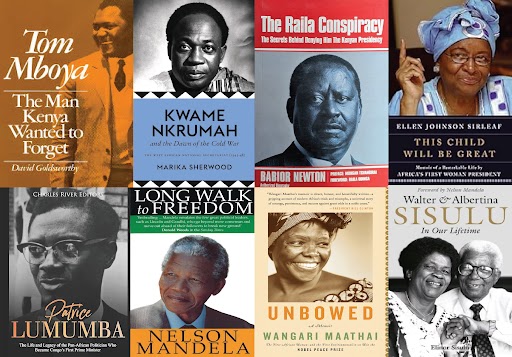
Perhaps that is the difficulty of saying goodbye to Baba because we are left with the songs, the memories, the books and the competing accounts of a man who meant different things to different Kenyans. Some remember a freedom fighter and a champion of democratic reform. Others remember the compromises, the disappointments and the moments when his decisions seemed to contradict the promises that had drawn them to him. And we are left to decide what to do with what Baba has left behind.
But I'm sad to say I'm on my way
Won't be back for many a day
My heart is down
My head is turning around
I had to leave a little girl in Kingston town.
Tracy Ochieng is a staff writer with Books in Africa. Tracy.Ochieng@ekitabu.com
Featured Book

Related Book
Get to know more about the mentioned books
Related Article
Baba, While You Are Away: The Songs, Struggles and Contradictions of Raila Odinga
By
“Those who suffer from Raila-mania are more than those who suffer from Raila-phobia,” Raila Odinga once said in a 2017 interview with KTN News.
Perhaps few statements capture the complexity of Raila Amolo Odinga quite so succinctly. He inspired extraordinary devotion and equally fierce opposition, becoming a political figure whose name could evoke hope, admiration, resentment or outright hostility. To understand Baba was to encounter a man who rarely left people indifferent.
Dubbed the Saviour of the People, Joshua, Jakom, the Father of Devolution and, most affectionately, Baba, Raila carried the hopes and dreams of millions of Kenyans. For his supporters, he represented the possibility of a different country; for his critics, he was a politician whose ambitions and decisions invited scrutiny. Between these competing interpretations lay a political life marked by struggle, sacrifice, compromise and contradiction.
These hopes found expression in different ways, but perhaps none captured them quite like music. For Raila's supporters, songs turned the prospect of his presidency into something they could hear, sing and dance towards. His name was more than a campaign slogan; it was a chorus around which people gathered to imagine a different political future.
In 2014, Raila travelled to the United States for a three-month sabbatical and lecture tour, leaving Kenya without one of its most prominent opposition figures. When he returned on 31 May, he was met by jubilant supporters who gathered at Uhuru Park in Nairobi, singing opposition songs and awaiting his address. The homecoming became more than a welcome for a politician returning from abroad. It was a moment of political theatre, an opportunity for his supporters to voice their frustrations with the Jubilee administration and reaffirm their faith in the man they called Baba. “Baba, while you were away” became the refrain of the moment, capturing the grievances and political frustrations that supporters wanted him to confront. The phrase travelled beyond the rally, finding its way into speeches, headlines and public conversation.
It is a revealing episode in Raila's political history. His absence had created an opportunity for his supporters to narrate what they believed had gone wrong in the country, while his return gave them a stage on which to renew their demands. The music, the slogans and the crowds expressed a political relationship built on more than electoral ambition. They reflected an expectation that Baba would return to confront the problems his supporters believed had been neglected.
He was, after all, The Saviour of Kenya, as the late benga maestro Musa Juma sang. It was a powerful title, but also a dangerous one. To be cast as a people's saviour is to inherit their hopes, their grievances and their expectations of deliverance, leaving little room for the ordinary compromises of politics, and even less room for disappointment. But a saviour, once imagined, must eventually answer to the promises made in his name. And for Raila, those promises were repeatedly tied to one destination: State House.
In 2007, 2013, 2017 and 2022, Kenyans returned to the ballot with Raila's name on the presidential ticket and the possibility of a different political future in their minds. The songs accompanied the campaigns, turning electoral hope into something people could sing together. But while the music promised victory, the elections would tell a more complicated story.
Election acrobatics
Perhaps the significance of 2002 lies not only in the betrayal Raila and his allies believed they experienced after helping Mwai Kibaki defeat KANU, but also in the constitutional future Kenya might have pursued.
The NARC coalition had campaigned on an understanding that included a prime ministerial position for Raila and a decentralised distribution of power in a pure parliamentary system. That arrangement unravelled after the election. The promised office was not created, the coalition fractured, and the country continued under a presidential and parliamentary system in which executive power remained heavily concentrated in State House.
It is impossible to know what Kenya would look like today had that agreement been honoured and a parliamentary system subsequently established. But the question is worth asking. Would political competition have remained so intensely focused on capturing the presidency? Would the sharing of executive power have developed differently? And would every presidential election have carried the existential weight that it does today?
Five years later, Raila would find himself on the other side of the contest, seeking the presidency in his own right. The songs would return, the crowds would gather, and Kenya would once again confront the question of who had the right to govern.
Baba the great mobiliser
Raila’s influence was never confined to election day. There was another measure of his political power, one that could not be captured by votes alone: his ability to call people into the streets and bring the country to a political standstill.
“Tuesday! Tuesday! Tarehe mbili mwezi wa tano, tunarudi uwanjani,” Baba would declare, summoning his supporters back to the political arena. Such calls were familiar to a generation of Kenyans who had come to associate Raila’s political interventions with mass action, street demonstrations and the promise of confronting an establishment they believed had failed them.
In 2023, that familiar call to action returned. Raila led countrywide demonstrations against President William Ruto’s administration, with grievances ranging from the rising cost of living and increased taxes to the opposition’s rejection of the 2022 presidential election results and concerns over the restructuring of the Independent Electoral and Boundaries Commission (IEBC). Mondays and Thursdays became recurring days of protest, as demonstrators took to the streets in Nairobi, Kisumu and other parts of the country.
For his supporters, these demonstrations were about more than Raila’s political ambitions. They were an opportunity to challenge economic pressures and demand accountability from a government they felt was not listening. Raila’s ability to mobilise people across the country demonstrated that, even without occupying State House, he remained capable of setting the political agenda and compelling the government to respond.
But mass mobilisation came at a cost. The demonstrations were met with a forceful government response, arrests and violent confrontations between protesters and police. People were injured and killed, while businesses and public property were damaged. Behind the political slogans were citizens whose lives could not be reduced to the contest between Raila and Ruto: people who had taken to the streets with grievances of their own, and who bore the consequences when those streets became sites of confrontation.
This is the difficult question at the heart of Raila’s influence. What did it mean to command such loyalty? What did his supporters believe they could achieve by answering his calls, and what did they lose along the way? His capacity to mobilise was undeniable. The outcomes, however, were more complicated.
That complexity would become even more pronounced as Kenya’s political landscape shifted. The man many had come to regard as a permanent figure of opposition would enter political arrangements that challenged the very image on which much of his public appeal had been built. And when a new generation of protesters took to the streets in 2024, it raised a different question: what happens when young Kenyans decide that the established political class, including its most celebrated opposition figures, no longer speaks for them?
Agwambo please stay at home…
It would be a mistake to describe Kenya’s Gen Z as the first generation of young people to rise against an oppressive government. Long before the Finance Bill protests of 2024, Kenyan students, activists and young political organisers had challenged state repression, often at considerable personal cost.
In the 1980s, university students confronted Daniel arap Moi’s increasingly authoritarian government. In July 1990, young activists and other citizens joined the Saba Saba demonstrations demanding multiparty democracy. The protests were violently suppressed, and the struggle for political pluralism continued through arrests, detention and further confrontations with the state. Raila Odinga himself was part of that history, having been sent to prison three times for a total of eight and a half years.”
The significance of Gen Z, then, was not that young Kenyans had suddenly discovered resistance. It was that a new generation was confronting a different political moment, drawing on a longer history of struggle while refusing to be confined by its established leaders.
This distinction matters when considering the relationship between Raila and the young people who took to the streets in June 2024. For years, Baba had represented opposition to the political establishment for many Kenyans. His calls for mass action had brought people into the streets, and his political career had been shaped by confrontations with successive governments. Yet, when Gen Z began organising against the Finance Bill, it did not turn to him to lead the movement.
Instead, 19-year-old Anini Barasa delivered a message that captured the generational shift: “Agwambo, please stay at home; we saw your efforts, we saw everything you did for Kenya.” She told him that her generation would take over and carry the struggle forward.
Raila acknowledged the appeal, describing himself as a proud father. He later explained that the young people had told him he had done enough and that they would continue without him. For a politician accustomed to being at the centre of opposition politics, it was a remarkable moment: a generation was recognising his contribution while asserting its right to determine its own political direction. But the distance between Baba and Gen Z would become more pronounced as the crisis unfolded.
After the deadly confrontations of June, Raila engaged President William Ruto in discussions about the protests. In August, he disclosed that former President Uhuru Kenyatta had asked him to reach out to Ruto, although Raila also said that Ruto had contacted him seeking advice. The discussions eventually fed into the proposed National Multi-Sectoral Forum and the donation of “experts” who were mainly Raila’s allies.
To some, Raila’s intervention could be understood as an effort to prevent further bloodshed and find a way out of a dangerous impasse. To others, it raised an uncomfortable question: why should a political establishment negotiate over the future of a movement whose young participants had insisted on speaking for themselves and further not have any Gen Z “donated” as experts?
The accusation that Raila was riding on the blood of Gen Z to secure political advantage emerged from this tension. It was an accusation about both motive and representation, and it should not be mistaken for an established account of his intentions. But its emotional force is important. Young Kenyans had risked their lives demanding accountability, and some feared that their sacrifices would once again become bargaining chips in negotiations among political elites.
Was Raila trying to resolve a national crisis, or was he returning to a familiar political role in which access to power took precedence over the demands of the people he claimed to represent? Could he have believed that engagement with Ruto was necessary while failing to appreciate how deeply the movement distrusted established political brokers?
These questions cannot be answered simply by declaring him a hero or a traitor. They require us to examine what the engagement achieved, which demands were addressed and whether the protesters’ insistence on independent political agency was respected.
Perhaps the most revealing part of the episode is that Gen Z could acknowledge Raila’s place in Kenya’s history without accepting him as the custodian of its future. They did not have to deny the sacrifices of earlier generations to insist that their own struggle would have its own leaders, methods and demands.
For Baba, whose influence had long rested on his ability to mobilise Kenyans, this was a different kind of political challenge. The question was no longer whether people would answer his call to the streets but whether he could recognise a movement that had deliberately chosen to make its own call.
I’m sad to say I’m on my way…
There is a particular cruelty in death when a life has been spent pursuing something that remains just out of reach. For Raila Amolo Odinga, the presidency was a lifelong political ambition, one that brought him to the threshold of power time and again, only for the door to close before he could walk through it.
On 15 October 2025, that pursuit came to an end. Raila died in India, aged 80, bringing to a close a political life that had shaped Kenya for decades. The man who had contested elections, challenged presidents, mobilised crowds and remained at the centre of the country’s political imagination was gone.
And suddenly, there would be no next Raila rally. No new declaration from a podium. No familiar voice announcing another day of mass action. No opportunity to hear him share vitendawili and songs. No opportunity to hear him explain a decision that had angered his supporters or defend a compromise his critics could not accept. There would be no final answer to the questions that had followed him throughout his career: what had his struggles achieved, what had his compromises cost, and what might Kenya have looked like had he finally occupied the State House he had pursued for so long?
In death, Raila was accorded a state funeral, and the country watched as a man who had spent decades seeking the presidency received the ceremonial honours of a former national leader. The symbolism was striking. He never became president, yet his death occasioned the rituals, public mourning and national attention usually reserved for figures who had occupied the highest office.
But a funeral cannot settle a political argument. It cannot tell us whether the sacrifices made in his name were worth it, whether his compromises advanced the causes he championed, or whether the next generation will inherit his unfinished struggles or choose an entirely different path.
Perhaps that is the difficulty of saying goodbye to Baba because we are left with the songs, the memories, the books and the competing accounts of a man who meant different things to different Kenyans. Some remember a freedom fighter and a champion of democratic reform. Others remember the compromises, the disappointments and the moments when his decisions seemed to contradict the promises that had drawn them to him. And we are left to decide what to do with what Baba has left behind.
But I'm sad to say I'm on my way
Won't be back for many a day
My heart is down
My head is turning around
I had to leave a little girl in Kingston town.
Tracy Ochieng is a staff writer with Books in Africa. Tracy.Ochieng@ekitabu.com
Share :


Lorem ipsum dolor sit amet, consectetur adipiscing elit. Suspendisse varius enim in eros elementum tristique. Duis cursus, mi quis viverra ornare, eros dolor interdum nulla, ut commodo diam libero vitae erat. Aenean faucibus nibh et justo cursus id rutrum lorem imperdiet. Nunc ut sem vitae risus tristique posuere.
Lorem ipsum dolor sit amet, consectetur adipiscing elit. Suspendisse varius enim in eros elementum tristique. Duis cursus, mi quis viverra ornare, eros dolor interdum nulla, ut commodo diam libero vitae erat. Aenean faucibus nibh et justo cursus id rutrum lorem imperdiet. Nunc ut sem vitae risus tristique posuere.