
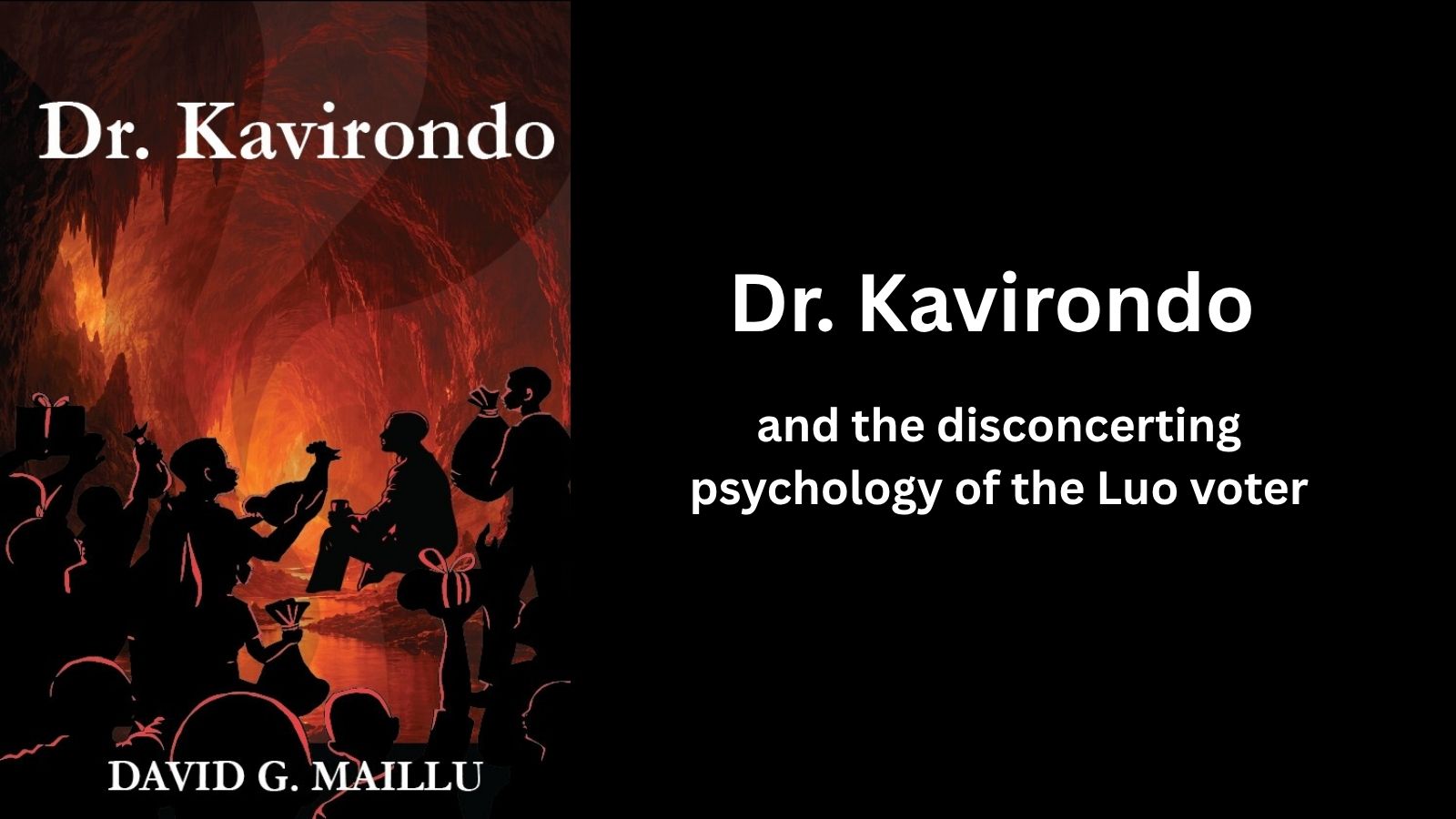

'Dr Kavirondo' and the disconcerting psychology of the Luo voter
“Ignorance is a great asset in political manoeuvres. You succeed in governing the ignorant, but not those with knowledge. Ignorance has a powerful inbuilt mechanism for self-sustenance. It can kill for its own survival within its perpetual fight with knowledge for sustainability.”
The words, written by David Maillu in Dr Kavirondo, have managed to paint a stark reality of what unfolded in Homa Bay.
The images that emerged from the county after the Linda Mwananchi rally are difficult to reconcile with the political consciousness the Luo community has long prided itself in. Four people were killed and 54 injured after political tensions surrounding the rally turned violent. The violence came a day after Homa Bay Town MP Peter Kaluma made remarks warning against people perceived to support the rival political camp, including those backing the “one-term” brigade. The National Cohesion and Integration Commission has since summoned him over the remarks as it investigates whether he breached the law.
‘Kudni’, he called them. Maggots.
However, this is not really about one rally, one politician or even one election. It is about something much sinister and more uncomfortable: the psychology of the Luo voter, and reading David Maillu's Dr Kavirondo at this particular moment couldn’t feel more unsettling. The book, written around a community wrestling with political power, identity and competing loyalties, asks questions that do not seem to have aged nearly as much as they should have: why are Luo voters willing to fight each other for politicians who will ultimately go home to negotiate power without them? What would make a community turn its political disagreements inward with such ferocity? And consequently, what happens when a community that has spent decades rallying around one political centre suddenly has none?
“Our person is in power and so are we…”
“Luos are economically stagnant, but the leaders want to hear you sing that everything is fine in Luo land.”
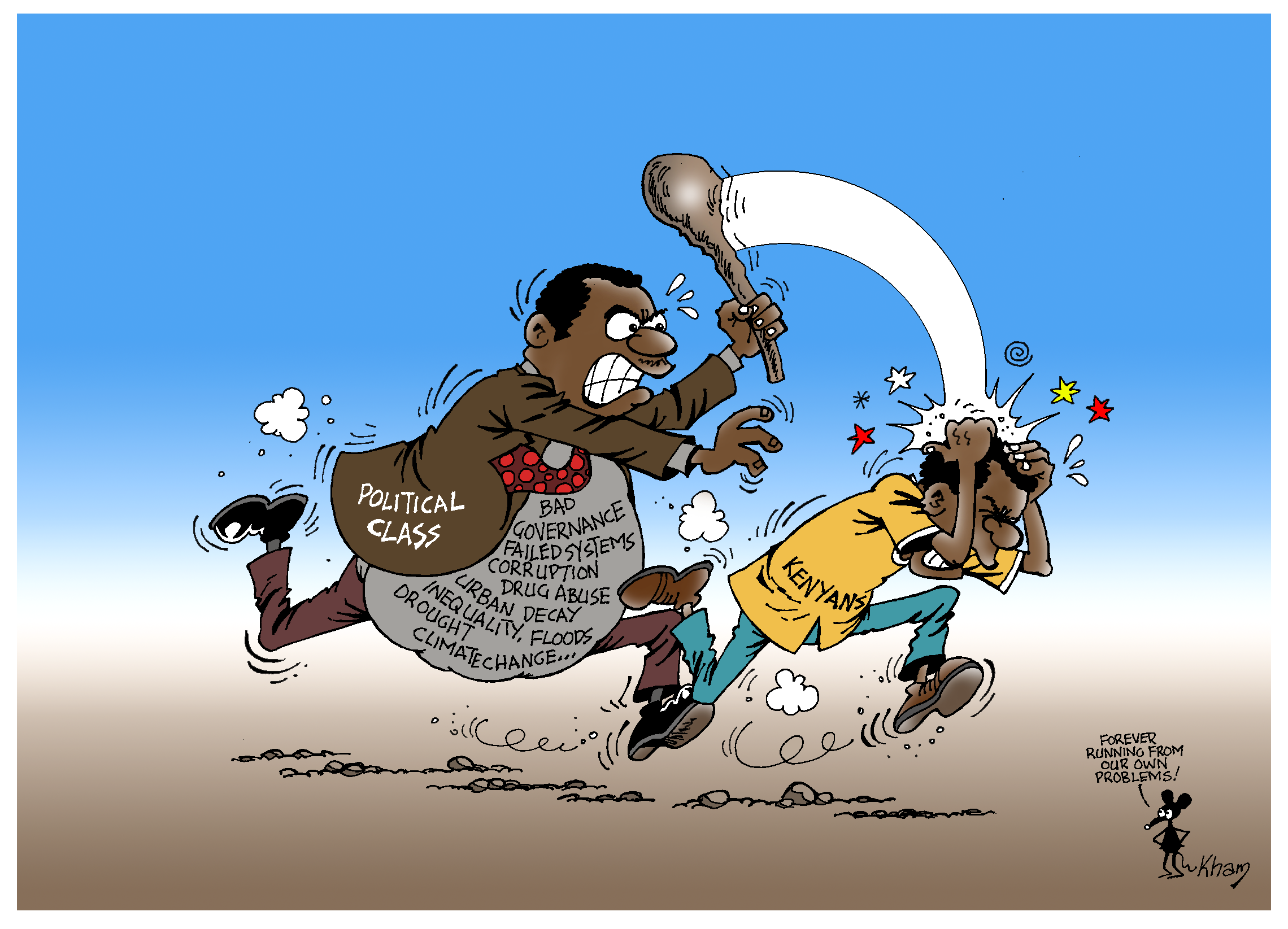
There is another mindset that we need to confront among the Kenyan populace in general: the idea that because one of our own is in a position of power, somehow we are all in power because there is a distinction between having one of ‘our own’ at the table and having a seat at that table ourselves. A politician's proximity to power does not automatically translate into power for the people who voted for them. Representation should give citizens greater leverage to demand better healthcare, roads, water, electricity, schools, jobs and economic opportunities. It should make it easier, not harder, for the ordinary voter to question the person they helped put in office.
This is where our political psychology can become warped. We celebrate our leaders' proximity to power as though their success were evidence of our own. We defend them because they are ours. We celebrate their political victories as communal victories, even when the material well-being ofwell-beingof the people doing the celebrating remain unchanged. And once we have convinced ourselves that an attack on the politician is an attack on the community, accountability begins to look like betrayal.
Political unity is not necessarily political consensus.
“Do you know the cost of challenging Raila Amolo Odinga’s authority in Luo land by claiming Luos are marginalised to wallow in the dust of economic neglect?”
Having to rally behind one party doesn't necessarily mean that everyone is satisfied; it just makes dissent even more difficult. A community can appear extraordinarily united because dissent has become socially or politically costly. If supporting ODM becomes synonymous with being a loyal Luo, then supporting a different party isn't merely a different political choice but defection. And once someone is dubbed a betrayer, then the nature of the political disagreement changes.
You no longer have:
I think you're wrong.
You have:
You are one of them.
And eventually:
You are against us.
And that is where the word “betrayer” or “traitor” becomes so dangerous.
I would argue that perhaps the problem isn't that Luos cannot unite but that they have been exceptionally good at uniting behind a person and exceptionally uncomfortable with what happens when someone refuses to follow.
The verdict by Dr Kavirondo
“They stuck to the psychology that no bull accepts another bull in the same herd. Even when an idiot Luo is in a high position, all Luos worship him… I repeat, Luos are their own economic enemy.”
Two professors in the novel, Dr Kajuang and Dr Kavirondo, engage in what can only be described as intellectual acrobatics, dissecting the psychology of the Luo voter at length. Their conversation is provocative, sometimes sweeping and occasionally uncomfortable, but perhaps that is precisely why Dr Kavirondo deserves to be read.
Maillu does not write to flatter the community. He holds up a mirror and asks some deeply uncomfortable questions about power, political loyalty, economic stagnation, intellectualism, rivalry and our tendency to elevate leaders beyond scrutiny.
Perhaps the Luo voter doesn't need another political messiah. We already had that in Baba. The tragedy is that after his death, the Luo voter has not yet learnt that losing a shepherd does not mean losing their ability to find their own way.
If Luos are so politically conscious, why should another man's political disagreement be enough to make them enemies of one another? That right there is the real provocation of Dr Kavirondo: not that Luos are incapable of unity, but that they have become too accustomed to uniting behind people and personalities rather than principles.
Read the book. Argue with it. Reject what you think is unfair. Challenge what you think is wrong. But, above all, let it provoke you.
Featured Book
.jpg)
Related Book
Get to know more about the mentioned books
Related Article
'Dr Kavirondo' and the disconcerting psychology of the Luo voter
By
“Ignorance is a great asset in political manoeuvres. You succeed in governing the ignorant, but not those with knowledge. Ignorance has a powerful inbuilt mechanism for self-sustenance. It can kill for its own survival within its perpetual fight with knowledge for sustainability.”
The words, written by David Maillu in Dr Kavirondo, have managed to paint a stark reality of what unfolded in Homa Bay.
The images that emerged from the county after the Linda Mwananchi rally are difficult to reconcile with the political consciousness the Luo community has long prided itself in. Four people were killed and 54 injured after political tensions surrounding the rally turned violent. The violence came a day after Homa Bay Town MP Peter Kaluma made remarks warning against people perceived to support the rival political camp, including those backing the “one-term” brigade. The National Cohesion and Integration Commission has since summoned him over the remarks as it investigates whether he breached the law.
‘Kudni’, he called them. Maggots.
However, this is not really about one rally, one politician or even one election. It is about something much sinister and more uncomfortable: the psychology of the Luo voter, and reading David Maillu's Dr Kavirondo at this particular moment couldn’t feel more unsettling. The book, written around a community wrestling with political power, identity and competing loyalties, asks questions that do not seem to have aged nearly as much as they should have: why are Luo voters willing to fight each other for politicians who will ultimately go home to negotiate power without them? What would make a community turn its political disagreements inward with such ferocity? And consequently, what happens when a community that has spent decades rallying around one political centre suddenly has none?
“Our person is in power and so are we…”
“Luos are economically stagnant, but the leaders want to hear you sing that everything is fine in Luo land.”
There is another mindset that we need to confront among the Kenyan populace in general: the idea that because one of our own is in a position of power, somehow we are all in power because there is a distinction between having one of ‘our own’ at the table and having a seat at that table ourselves. A politician's proximity to power does not automatically translate into power for the people who voted for them. Representation should give citizens greater leverage to demand better healthcare, roads, water, electricity, schools, jobs and economic opportunities. It should make it easier, not harder, for the ordinary voter to question the person they helped put in office.
This is where our political psychology can become warped. We celebrate our leaders' proximity to power as though their success were evidence of our own. We defend them because they are ours. We celebrate their political victories as communal victories, even when the material well-being ofwell-beingof the people doing the celebrating remain unchanged. And once we have convinced ourselves that an attack on the politician is an attack on the community, accountability begins to look like betrayal.
Political unity is not necessarily political consensus.
“Do you know the cost of challenging Raila Amolo Odinga’s authority in Luo land by claiming Luos are marginalised to wallow in the dust of economic neglect?”
Having to rally behind one party doesn't necessarily mean that everyone is satisfied; it just makes dissent even more difficult. A community can appear extraordinarily united because dissent has become socially or politically costly. If supporting ODM becomes synonymous with being a loyal Luo, then supporting a different party isn't merely a different political choice but defection. And once someone is dubbed a betrayer, then the nature of the political disagreement changes.
You no longer have:
I think you're wrong.
You have:
You are one of them.
And eventually:
You are against us.
And that is where the word “betrayer” or “traitor” becomes so dangerous.
I would argue that perhaps the problem isn't that Luos cannot unite but that they have been exceptionally good at uniting behind a person and exceptionally uncomfortable with what happens when someone refuses to follow.
The verdict by Dr Kavirondo
“They stuck to the psychology that no bull accepts another bull in the same herd. Even when an idiot Luo is in a high position, all Luos worship him… I repeat, Luos are their own economic enemy.”
Two professors in the novel, Dr Kajuang and Dr Kavirondo, engage in what can only be described as intellectual acrobatics, dissecting the psychology of the Luo voter at length. Their conversation is provocative, sometimes sweeping and occasionally uncomfortable, but perhaps that is precisely why Dr Kavirondo deserves to be read.
Maillu does not write to flatter the community. He holds up a mirror and asks some deeply uncomfortable questions about power, political loyalty, economic stagnation, intellectualism, rivalry and our tendency to elevate leaders beyond scrutiny.
Perhaps the Luo voter doesn't need another political messiah. We already had that in Baba. The tragedy is that after his death, the Luo voter has not yet learnt that losing a shepherd does not mean losing their ability to find their own way.
If Luos are so politically conscious, why should another man's political disagreement be enough to make them enemies of one another? That right there is the real provocation of Dr Kavirondo: not that Luos are incapable of unity, but that they have become too accustomed to uniting behind people and personalities rather than principles.
Read the book. Argue with it. Reject what you think is unfair. Challenge what you think is wrong. But, above all, let it provoke you.
Share :


Lorem ipsum dolor sit amet, consectetur adipiscing elit. Suspendisse varius enim in eros elementum tristique. Duis cursus, mi quis viverra ornare, eros dolor interdum nulla, ut commodo diam libero vitae erat. Aenean faucibus nibh et justo cursus id rutrum lorem imperdiet. Nunc ut sem vitae risus tristique posuere.
Lorem ipsum dolor sit amet, consectetur adipiscing elit. Suspendisse varius enim in eros elementum tristique. Duis cursus, mi quis viverra ornare, eros dolor interdum nulla, ut commodo diam libero vitae erat. Aenean faucibus nibh et justo cursus id rutrum lorem imperdiet. Nunc ut sem vitae risus tristique posuere.