

Nigerian author tackles topical themes, and how love both hurts and heals
Title: The Time and Ash Duology
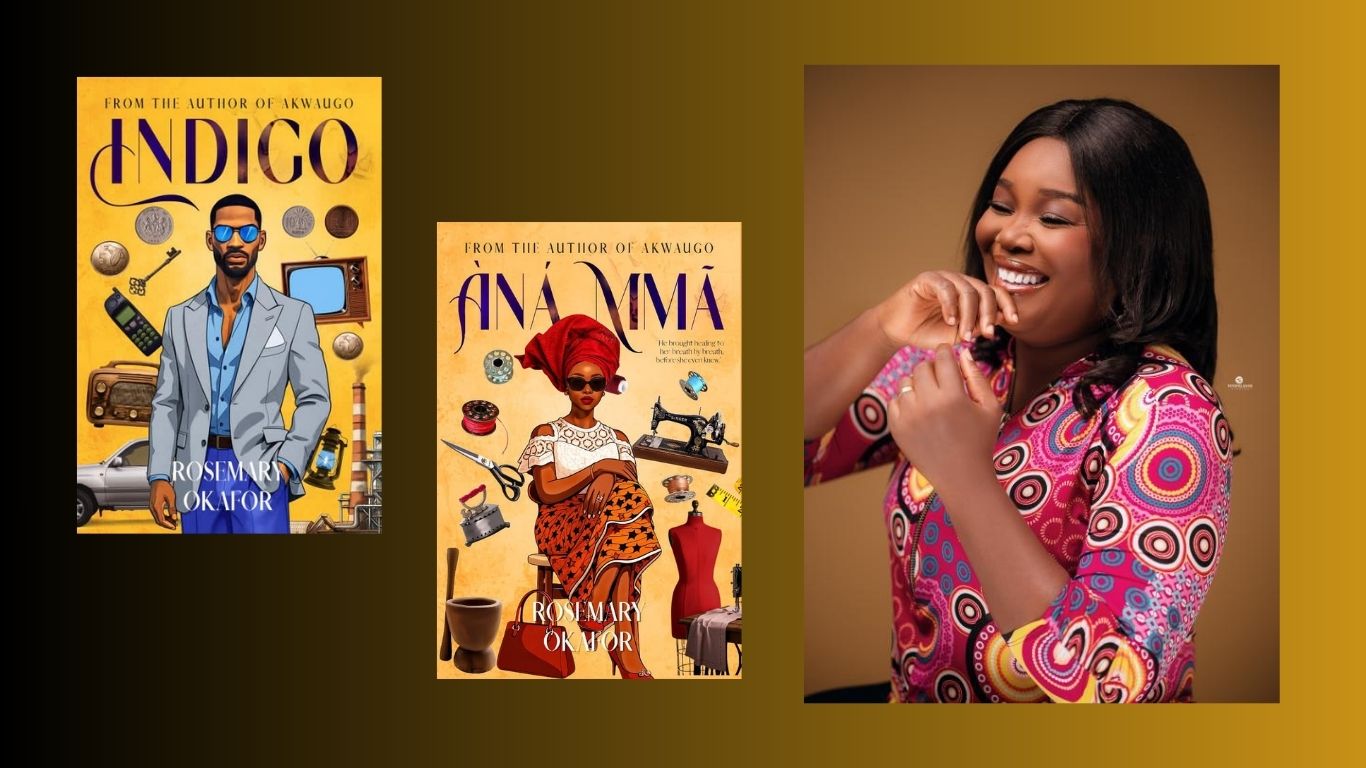
Author: Rosemary Okafor
Publisher: Self-published
Availability: Amazon The Time and Ash Duology
PRICE: ₦20,000(Ksh 1810.97)
From first love and forbidden desire to political intrigue and the corrosive nature of power, self-published Nigerian author Rosemary Okafor has built a reputation for crafting stories that linger long after the final page. A former journalist and academic, Okafor has emerged as a distinctive voice in contemporary African romance, blending emotional depth, cultural authenticity, suspense and humour in narratives that explore the complexities of love, ambition and human vulnerability.
Her latest work, the Time and Ash Duology—comprising Indigo: The Beginning and Àná Mmā: The Finale—is a sweeping political romantic thriller set against the backdrop of modern Nigeria. Through the intertwined lives of Chiagozie and Umendiego, Okafor examines the tension between love and power, survival and selfhood, asking what remains of the heart when ambition, politics and duty threaten to consume it.
Okafor spoke to Books in Africa as the duology was released on 26 May 2026. She spoke at length about her journey from journalism and academia to fiction, the emotional truths that storytelling makes possible, the appeal of morally grey characters, and why Nigeria remains a living presence in the worlds she creates. She also reflects on the enduring pull of love, the cost of power, and the questions she hopes readers will carry with them long after the final chapter.
You began as a journalist and academic before fully embracing fiction. What did storytelling allow you to express that those worlds perhaps could not?
Journalism and academics taught me how to observe, analyse, and communicate facts clearly. But fiction gave me room to explore the emotional and spiritual truths that facts alone sometimes cannot fully capture.
Through storytelling, I could sit with longing, grief, desire, fear, faith, memory, and even silence in a much deeper way. Fiction allowed me to ask difficult questions without needing to provide rigid answers. It also gave me freedom to explore humanity in all its complexity, especially within African and Igbo realities that are often flattened or misunderstood.
In journalism, you report what happened. In fiction, you explore why it mattered, how it felt, and what it did to the human soul.
Your work explores love, longing, ambition and power all at once. What draws you to emotionally complex relationships rather than straightforward romance?
I think emotionally complex relationships are the most honest reflection of human nature. Love is rarely simple. It often exists alongside fear, ambition, insecurity, power, sacrifice, trauma, faith, and desire. I’m drawn to stories where people are not just falling in love, but struggling with themselves while trying to love another person. Those contradictions fascinate me. The tenderness and the damage. The longing and the restraint. The way love can heal someone and still wound them at the same time.
Straightforward romance can be beautiful, but I’m more interested in the emotional tension beneath human connection, the things people cannot say, the battles they fight internally, and the ways power, society, culture, or personal history shape how they love.
For me, the emotional complexity is the story.
Nigerian politics and everyday life seem deeply embedded in your storytelling. How important is cultural specificity to the worlds you create?
Cultural specificity is extremely important to me because it gives stories texture. I do not want my worlds to feel generic or detached from the realities that shaped me as a Nigerian and as an Igbo woman.
The politics, language, proverbs, spirituality, family structures, humour, class struggles, religious tensions, and even everyday survival are part of how Nigerians experience love, ambition, grief, and power. To remove those things from my storytelling would be to remove the very soul of the story itself.
I also believe the more culturally rooted a story is, the more universal it becomes. Human emotions connect across borders, but specificity makes those emotions feel alive and believable. People remember stories that feel lived-in.
So whether I’m writing fantasy, romance, or political fiction, Nigeria is never just a backdrop. It is a living presence inside the story.
Your characters appear deeply flawed yet intensely human. Do you believe readers are becoming more interested in morally grey protagonists?
Yes, I do. I think readers are increasingly drawn to morally grey characters because they feel more human and emotionally truthful.
Most people do not see themselves as entirely good or entirely bad. Human beings are complicated. We can be loving and selfish, brave and cruel, loyal and destructive — sometimes all within the same moment. Morally grey characters reflect that complexity.
I also think readers are becoming more interested in understanding people rather than simply judging them. They want to know why a character made a terrible decision, what shaped them, what they fear, what they desire, and whether redemption is possible for them.
For me, flawed characters create emotional tension and realism. Perfect characters rarely stay with readers for long, but broken, conflicted, deeply human ones often do because they mirror parts of ourselves we may not openly admit to.
The Time and Ash Duology explores ambition, power, longing and survival against the backdrop of modern Nigeria. Why was it important for you to situate this story within such a politically charged landscape?
Nigeria is a pressure cooker of politics where personal desire is constantly negotiating with systems. And that tension is one I have not explored before. The intrigue I needed to build this story’s emotional architecture.
Situating the narrative in a politically charged landscape allowed me to explore how power shapes ordinary lives, how it influences love, morality, betrayal, and even identity. It also lets me ask uncomfortable questions about what survival costs, and what people are willing to become in order to endure or rise.
Chiagozie’s journey appears to wrestle with silence, endurance and ultimately selfhood. What did writing her character teach you about agency and womanhood?
In writing Chiagozie’s journey, I became more aware of how womanhood is often shaped within constraints. Yet even within those constraints, there is still a powerful negotiation happening. Women are constantly making choices, even when those choices are limited or unseen.
Chiagozie also showed me that selfhood is not a single moment of awakening. It is gradual and sometimes messy. It can look like staying when you want to leave, and leaving when everything tells you to stay. But at the centre of it is the same truth: the reclaiming of voice, even when that voice starts as a little rebellion.
Umendiego is both feared and deeply devoted — a character shaped by tenderness and brutality alike. How did you approach writing a man transformed by both love and power?
To frame Umendiego’s character perfectly, I had to first accept that love and violence often co-exist in human history, especially in environments shaped by survival, hierarchy, and fear. He is not meant to be easily understood or morally comfortable, because real power rarely is.
What interested me most was not just what power does to a man, but what it reveals in him. In Umendiego’s case, love does not soften him in a linear way, it complicates him. It exposes his tenderness, but also intensifies his capacity for control, possession, and brutality.
Writing about him required restraint on my part as well. I did not want to excuse his actions, but I also did not want to flatten him into a villain. So I let his contradictions exist without resolution, because that tension is where his humanity lives.
Your stories carry emotional intensity while still feeling culturally grounded and relatable. How important is everyday Nigerian life to the worlds you create?
I am deeply interested in the texture of ordinary life: the markets, the buses, family compound dynamics, church culture, political conversations in passing, and the unspoken rules that govern relationships and community.
Those details are what make emotional intensity believable. Without them, even the most dramatic story can feel distant. But when you root emotion in lived reality, it becomes recognisable. It feels like something the reader has seen, heard, or experienced in some form.
I also think everyday Nigerian life has a kind of honesty that is often underestimated. There is humour inside struggle, tenderness inside chaos, and resilience inside uncertainty. That balance naturally feeds into the kinds of stories I want to tell.
Across the duology, love seems constantly in tension with duty, ambition and survival. Do you believe love can truly withstand power?
Love can withstand power, but not in its naïve form. When love is untouched by awareness, it often becomes vulnerable to power. Power reshapes people. It pressures choices, distorts priorities, and can redefine what love is allowed to become. But love that survives power is usually not the romantic kind we idealise. It is often love that has been tested.
In the duology, what I wanted to explore is not whether love is strong enough to defeat power, but whether it is self-aware enough to survive within it without losing itself.
As a writer, what kind of stories do you feel contemporary African romance still needs more of?
Contemporary African romance still needs more honesty about what love looks like when it is shaped by real life, not just idealised fantasy.
I think we need more stories that allow romance to exist alongside pressure: economic strain, migration, family expectations, religion, politics, mental health, and personal ambition. African love stories are rarely just about two people; they are about ecosystems of influence around them.
We also need more emotionally mature romance, stories that do not rush to resolution, or reduce love to chemistry alone. Love can be tender and still be complicated. It can be beautiful and still require difficult decisions.
Another area that still feels underexplored is vulnerability from male perspectives in African romance, men who are allowed to be uncertain, emotionally expressive, and internally conflicted without being stripped of dignity or reduced to stereotypes.
Which emotion is hardest for you to write convincingly: desire, grief, anger or hope?
Hope. If hope is not grounded properly, it can easily slip into sentimentality or feel unconvincing, especially in stories shaped by struggle or emotional complexity. So when I write hope, I have to be more intentional about its foundation.
If readers walk away from the duology remembering only one thing, what would you want it to be?
That survival is not the same as living, and power is never neutral; it always asks something of the people who touch it. But beyond that, I hope they remember the people. Not just the plot or the setting, but the emotional truth of the characters: their longing, contradictions, choices, and the cost of those choices.
Finally, away from the page, what does an ordinary day in the life of Rosemary Okafor look like?
Oh this will be a difficult one. I don’t have routines. Just the steady thing; job, reading and research, writing, family. And the random things; visits, functions...just a bit here and a bit there.
Tracy Ochieng is a staff writer with Books in Africa. Email: tracy.ochieng@ekitabu.com
Featured Book
Related Book
Get to know more about the mentioned books
Related Article
Nigerian author tackles topical themes, and how love both hurts and heals
By
Title: The Time and Ash Duology
Author: Rosemary Okafor
Publisher: Self-published
Availability: Amazon The Time and Ash Duology
PRICE: ₦20,000(Ksh 1810.97)
From first love and forbidden desire to political intrigue and the corrosive nature of power, self-published Nigerian author Rosemary Okafor has built a reputation for crafting stories that linger long after the final page. A former journalist and academic, Okafor has emerged as a distinctive voice in contemporary African romance, blending emotional depth, cultural authenticity, suspense and humour in narratives that explore the complexities of love, ambition and human vulnerability.
Her latest work, the Time and Ash Duology—comprising Indigo: The Beginning and Àná Mmā: The Finale—is a sweeping political romantic thriller set against the backdrop of modern Nigeria. Through the intertwined lives of Chiagozie and Umendiego, Okafor examines the tension between love and power, survival and selfhood, asking what remains of the heart when ambition, politics and duty threaten to consume it.
Okafor spoke to Books in Africa as the duology was released on 26 May 2026. She spoke at length about her journey from journalism and academia to fiction, the emotional truths that storytelling makes possible, the appeal of morally grey characters, and why Nigeria remains a living presence in the worlds she creates. She also reflects on the enduring pull of love, the cost of power, and the questions she hopes readers will carry with them long after the final chapter.
You began as a journalist and academic before fully embracing fiction. What did storytelling allow you to express that those worlds perhaps could not?
Journalism and academics taught me how to observe, analyse, and communicate facts clearly. But fiction gave me room to explore the emotional and spiritual truths that facts alone sometimes cannot fully capture.
Through storytelling, I could sit with longing, grief, desire, fear, faith, memory, and even silence in a much deeper way. Fiction allowed me to ask difficult questions without needing to provide rigid answers. It also gave me freedom to explore humanity in all its complexity, especially within African and Igbo realities that are often flattened or misunderstood.
In journalism, you report what happened. In fiction, you explore why it mattered, how it felt, and what it did to the human soul.
Your work explores love, longing, ambition and power all at once. What draws you to emotionally complex relationships rather than straightforward romance?
I think emotionally complex relationships are the most honest reflection of human nature. Love is rarely simple. It often exists alongside fear, ambition, insecurity, power, sacrifice, trauma, faith, and desire. I’m drawn to stories where people are not just falling in love, but struggling with themselves while trying to love another person. Those contradictions fascinate me. The tenderness and the damage. The longing and the restraint. The way love can heal someone and still wound them at the same time.
Straightforward romance can be beautiful, but I’m more interested in the emotional tension beneath human connection, the things people cannot say, the battles they fight internally, and the ways power, society, culture, or personal history shape how they love.
For me, the emotional complexity is the story.
Nigerian politics and everyday life seem deeply embedded in your storytelling. How important is cultural specificity to the worlds you create?
Cultural specificity is extremely important to me because it gives stories texture. I do not want my worlds to feel generic or detached from the realities that shaped me as a Nigerian and as an Igbo woman.
The politics, language, proverbs, spirituality, family structures, humour, class struggles, religious tensions, and even everyday survival are part of how Nigerians experience love, ambition, grief, and power. To remove those things from my storytelling would be to remove the very soul of the story itself.
I also believe the more culturally rooted a story is, the more universal it becomes. Human emotions connect across borders, but specificity makes those emotions feel alive and believable. People remember stories that feel lived-in.
So whether I’m writing fantasy, romance, or political fiction, Nigeria is never just a backdrop. It is a living presence inside the story.
Your characters appear deeply flawed yet intensely human. Do you believe readers are becoming more interested in morally grey protagonists?
Yes, I do. I think readers are increasingly drawn to morally grey characters because they feel more human and emotionally truthful.
Most people do not see themselves as entirely good or entirely bad. Human beings are complicated. We can be loving and selfish, brave and cruel, loyal and destructive — sometimes all within the same moment. Morally grey characters reflect that complexity.
I also think readers are becoming more interested in understanding people rather than simply judging them. They want to know why a character made a terrible decision, what shaped them, what they fear, what they desire, and whether redemption is possible for them.
For me, flawed characters create emotional tension and realism. Perfect characters rarely stay with readers for long, but broken, conflicted, deeply human ones often do because they mirror parts of ourselves we may not openly admit to.
The Time and Ash Duology explores ambition, power, longing and survival against the backdrop of modern Nigeria. Why was it important for you to situate this story within such a politically charged landscape?
Nigeria is a pressure cooker of politics where personal desire is constantly negotiating with systems. And that tension is one I have not explored before. The intrigue I needed to build this story’s emotional architecture.
Situating the narrative in a politically charged landscape allowed me to explore how power shapes ordinary lives, how it influences love, morality, betrayal, and even identity. It also lets me ask uncomfortable questions about what survival costs, and what people are willing to become in order to endure or rise.
Chiagozie’s journey appears to wrestle with silence, endurance and ultimately selfhood. What did writing her character teach you about agency and womanhood?
In writing Chiagozie’s journey, I became more aware of how womanhood is often shaped within constraints. Yet even within those constraints, there is still a powerful negotiation happening. Women are constantly making choices, even when those choices are limited or unseen.
Chiagozie also showed me that selfhood is not a single moment of awakening. It is gradual and sometimes messy. It can look like staying when you want to leave, and leaving when everything tells you to stay. But at the centre of it is the same truth: the reclaiming of voice, even when that voice starts as a little rebellion.
Umendiego is both feared and deeply devoted — a character shaped by tenderness and brutality alike. How did you approach writing a man transformed by both love and power?
To frame Umendiego’s character perfectly, I had to first accept that love and violence often co-exist in human history, especially in environments shaped by survival, hierarchy, and fear. He is not meant to be easily understood or morally comfortable, because real power rarely is.
What interested me most was not just what power does to a man, but what it reveals in him. In Umendiego’s case, love does not soften him in a linear way, it complicates him. It exposes his tenderness, but also intensifies his capacity for control, possession, and brutality.
Writing about him required restraint on my part as well. I did not want to excuse his actions, but I also did not want to flatten him into a villain. So I let his contradictions exist without resolution, because that tension is where his humanity lives.
Your stories carry emotional intensity while still feeling culturally grounded and relatable. How important is everyday Nigerian life to the worlds you create?
I am deeply interested in the texture of ordinary life: the markets, the buses, family compound dynamics, church culture, political conversations in passing, and the unspoken rules that govern relationships and community.
Those details are what make emotional intensity believable. Without them, even the most dramatic story can feel distant. But when you root emotion in lived reality, it becomes recognisable. It feels like something the reader has seen, heard, or experienced in some form.
I also think everyday Nigerian life has a kind of honesty that is often underestimated. There is humour inside struggle, tenderness inside chaos, and resilience inside uncertainty. That balance naturally feeds into the kinds of stories I want to tell.
Across the duology, love seems constantly in tension with duty, ambition and survival. Do you believe love can truly withstand power?
Love can withstand power, but not in its naïve form. When love is untouched by awareness, it often becomes vulnerable to power. Power reshapes people. It pressures choices, distorts priorities, and can redefine what love is allowed to become. But love that survives power is usually not the romantic kind we idealise. It is often love that has been tested.
In the duology, what I wanted to explore is not whether love is strong enough to defeat power, but whether it is self-aware enough to survive within it without losing itself.
As a writer, what kind of stories do you feel contemporary African romance still needs more of?
Contemporary African romance still needs more honesty about what love looks like when it is shaped by real life, not just idealised fantasy.
I think we need more stories that allow romance to exist alongside pressure: economic strain, migration, family expectations, religion, politics, mental health, and personal ambition. African love stories are rarely just about two people; they are about ecosystems of influence around them.
We also need more emotionally mature romance, stories that do not rush to resolution, or reduce love to chemistry alone. Love can be tender and still be complicated. It can be beautiful and still require difficult decisions.
Another area that still feels underexplored is vulnerability from male perspectives in African romance, men who are allowed to be uncertain, emotionally expressive, and internally conflicted without being stripped of dignity or reduced to stereotypes.
Which emotion is hardest for you to write convincingly: desire, grief, anger or hope?
Hope. If hope is not grounded properly, it can easily slip into sentimentality or feel unconvincing, especially in stories shaped by struggle or emotional complexity. So when I write hope, I have to be more intentional about its foundation.
If readers walk away from the duology remembering only one thing, what would you want it to be?
That survival is not the same as living, and power is never neutral; it always asks something of the people who touch it. But beyond that, I hope they remember the people. Not just the plot or the setting, but the emotional truth of the characters: their longing, contradictions, choices, and the cost of those choices.
Finally, away from the page, what does an ordinary day in the life of Rosemary Okafor look like?
Oh this will be a difficult one. I don’t have routines. Just the steady thing; job, reading and research, writing, family. And the random things; visits, functions...just a bit here and a bit there.
Tracy Ochieng is a staff writer with Books in Africa. Email: tracy.ochieng@ekitabu.com
Share :


Lorem ipsum dolor sit amet, consectetur adipiscing elit. Suspendisse varius enim in eros elementum tristique. Duis cursus, mi quis viverra ornare, eros dolor interdum nulla, ut commodo diam libero vitae erat. Aenean faucibus nibh et justo cursus id rutrum lorem imperdiet. Nunc ut sem vitae risus tristique posuere.
Lorem ipsum dolor sit amet, consectetur adipiscing elit. Suspendisse varius enim in eros elementum tristique. Duis cursus, mi quis viverra ornare, eros dolor interdum nulla, ut commodo diam libero vitae erat. Aenean faucibus nibh et justo cursus id rutrum lorem imperdiet. Nunc ut sem vitae risus tristique posuere.