

Reclaiming memory: Women’s role in liberation struggle retold at Africa Forward Fest
There is something powerful about sitting in rooms where history is not only remembered, but reclaimed. Across the sessions at the recent Africa Forward Fest, one truth emerged repeatedly: Women were never simply standing beside liberation movements; they were often at the centre.
From Empress Taytu Betul to contemporary activists such as Wahu Kaara and Wanjira Wanjiru, discussions throughout the festival examined how African women have organised resistance movements, mobilised communities, and shaped political consciousness despite being sidelined in official historical narratives. Two sessions in particular—Blood Debts: Can the Past Ever Be Paid? and a conversation with Ethiopian-Eritrean author Donica Merhazion on her novel Born at the End of the World—explored the intersections of memory, liberation, storytelling, and historical inheritance through the lens of women’s experiences across generations.
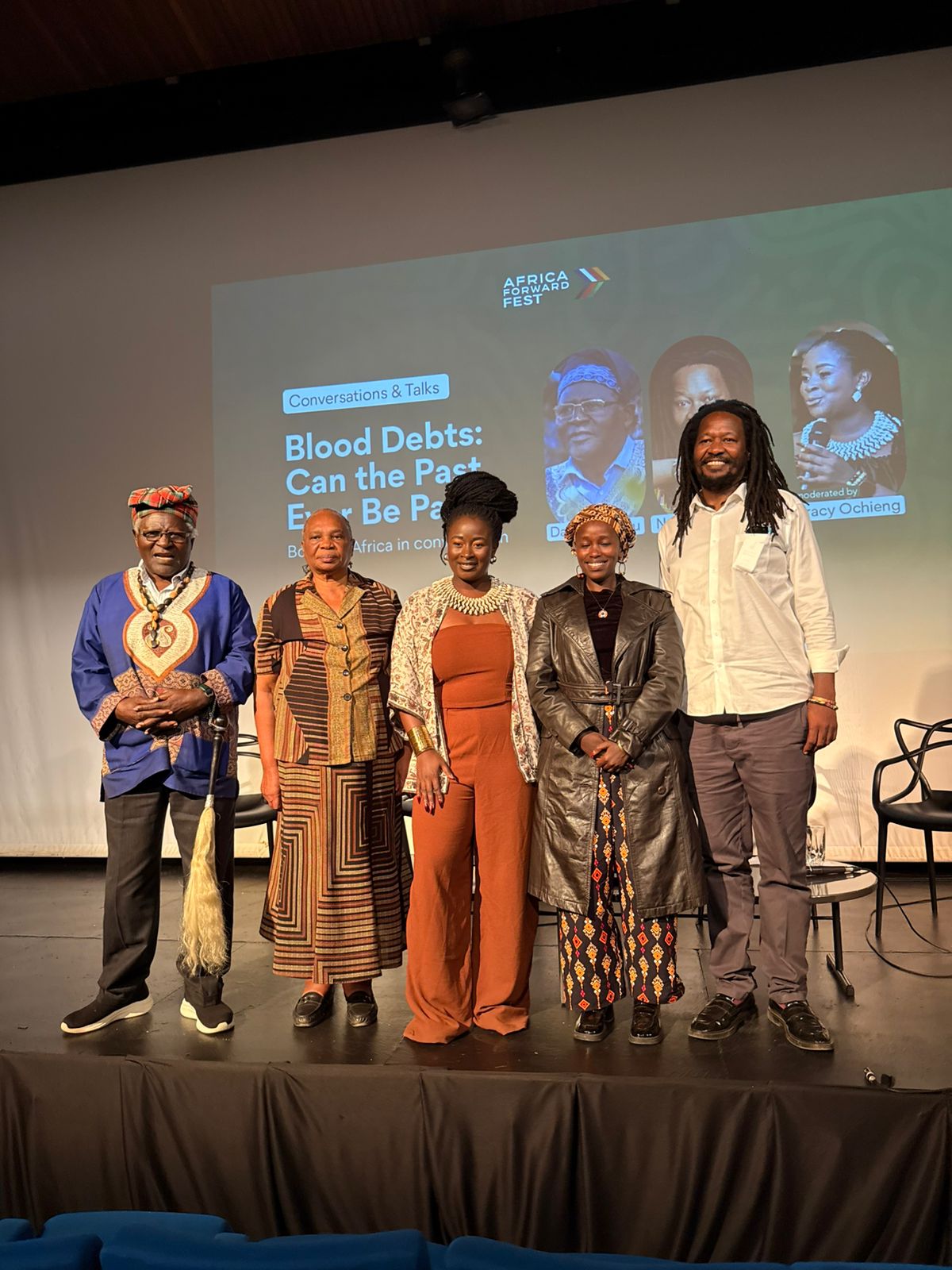
The panel discussion Blood Debts: Can the Past Ever Be Paid? brought together David G. Maillu, Ndungi Githuku, Wahu Kaara, and Wanjira Wanjiru in a conversation that interrogated the Gen Z 2024 protests, colonial violence, historical accountability, and the lingering wounds left by systems of oppression. While the discussion moved across political memory, justice, and post-independence realities, women’s labour within liberation struggles remained central throughout the session.
Kaara, whose activism spans climate justice, feminist organising, and Pan-African social movements, spoke about liberation as an ongoing struggle tied to systems of economic exploitation, patriarchy, and environmental injustice. Her interventions consistently returned to the role women have played in organising communities and sustaining movements, often without recognition within official accounts of history.
Across Africa’s liberation movements, women were often responsible for building underground resistance networks, transporting weapons and information, sheltering fighters, mobilising communities, and sustaining families through periods of war and political upheaval. Yet many of their contributions remain underdocumented or overshadowed by the visibility given to male nationalist leaders.
In Kenya, women played critical roles during the Mau Mau uprising, with figures such as Field Marshal Muthoni Kirima becoming key leaders within the armed resistance movement. Women acted as couriers, spies, strategists, and providers for fighters living in the forest, often risking imprisonment, torture, or death.
In Algeria, women participated directly in the anti-colonial struggle against French rule, with some serving as fighters and intelligence operatives during the Algerian War of Independence. In Mozambique and Angola, women joined liberation armies and political education programmes while also organising rural communities during prolonged struggles against Portuguese colonialism.
The conversations at Africa Forward Fest also echoed broader discussions around the visibility of women within liberation histories. In South Africa, for instance, figures such as Winnie Madikizela-Mandela played significant roles within the anti-apartheid movement, particularly during periods when many political leaders were imprisoned or exiled. Documentaries such as ‘The Trials of Winnie Mandela’ revisit her political legacy and the ways women involved in liberation struggles are often remembered through controversy or personal relationships rather than their organisational and political work. Rather than framing women solely as companions to male revolutionaries, the sessions repeatedly pointed towards a broader understanding of liberation history, one where women were themselves political actors, organisers, intellectuals, and strategists.
The conversations around memory and resistance continued in a separate session with Donica Merhazion, whose discussion on her book Born at the End of the World evolved into a wider exploration of Ethiopian and Eritrean history, identity, colonialism, and political violence.
Drawing from archival material, historical references, and personal family history, Merhazion guided audiences through the historical formation of Abyssinia, the Kingdom of Aksum, Italian colonial expansion in Eritrea, and the violence that later unfolded under the Derg regime.
Particular attention was given to the story of Empress Taytu Betul, the Ethiopian empress widely recognised for her role during the Battle of Adwa. Merhazion described Taytu as a political strategist deeply involved in diplomacy and military decision-making during Ethiopia’s resistance against Italian colonial invasion.
According to the historical material presented during the session, Taytu played a significant role during the siege of Mekelle by cutting off water supplies to Italian forces and later leading thousands of soldiers at the Battle of Adwa. The discussion also highlighted her opposition to treaty agreements that threatened Ethiopian sovereignty after recognising discrepancies between the Italian and Amharic versions of the treaty. By foregrounding Taytu’s role within Ethiopian resistance history, the session challenged the tendency to frame liberation struggles primarily through male leadership while reducing women to symbolic figures.
Merhazion also reflected on the political violence of the Red Terror period following the rise of the Derg regime in Ethiopia in 1974. She recounted how both her parents were involved in resistance efforts, holding secret meetings, raising medical support, educating communities, and assisting families affected by state violence.
Her personal connection to this history shaped the emotional centre of the discussion. Merhazion shared that she was born in Alem Bekagn prison in Addis Ababa, a prison whose name translates to “end of the world.” Through this, Born at the End of the World became part of a broader effort to document inherited histories and preserve memories carried across generations.
Audience engagement formed a significant part of both conversations. Students, young readers, activists, and older attendees participated in discussions around historical memory, political education, and the importance of documenting African histories from within African perspectives.
One audience member later described the session as “a great history lesson,” noting the significance of hearing these stories directly from the author while learning about historical sites such as the Red Terror Museum in Addis Ababa. The attendee also reflected on the importance of exposing younger audiences to these histories, particularly stories that are rarely taught in schools despite shaping the political realities of the region.
Across both sessions, storytelling emerged as a political act tied to memory, survival, and self-definition. Whether through discussions on colonial violence, feminist resistance, or inherited trauma, the conversations consistently returned to the importance of Africans documenting their own histories and resisting erasure.
In many ways, the festival became a space where women’s contributions to liberation movements were repositioned from the margins to the centre. Rather than appearing as secondary figures within nationalist narratives, women were discussed as organisers, strategists, educators, and custodians of collective memory.
As discussions around liberation, identity, and resistance continue to evolve across the continent, the conversations at Africa Forward Fest demonstrated the continuing relevance of revisiting history through the voices and experiences that have too often been overlooked.
Tracy Ochieng is a staff writer with Books in Africa. Email: tracy.ochieng@ekitabu.com
Featured Book
Related Book
Get to know more about the mentioned books
Related Article
Reclaiming memory: Women’s role in liberation struggle retold at Africa Forward Fest
By
There is something powerful about sitting in rooms where history is not only remembered, but reclaimed. Across the sessions at the recent Africa Forward Fest, one truth emerged repeatedly: Women were never simply standing beside liberation movements; they were often at the centre.
From Empress Taytu Betul to contemporary activists such as Wahu Kaara and Wanjira Wanjiru, discussions throughout the festival examined how African women have organised resistance movements, mobilised communities, and shaped political consciousness despite being sidelined in official historical narratives. Two sessions in particular—Blood Debts: Can the Past Ever Be Paid? and a conversation with Ethiopian-Eritrean author Donica Merhazion on her novel Born at the End of the World—explored the intersections of memory, liberation, storytelling, and historical inheritance through the lens of women’s experiences across generations.
The panel discussion Blood Debts: Can the Past Ever Be Paid? brought together David G. Maillu, Ndungi Githuku, Wahu Kaara, and Wanjira Wanjiru in a conversation that interrogated the Gen Z 2024 protests, colonial violence, historical accountability, and the lingering wounds left by systems of oppression. While the discussion moved across political memory, justice, and post-independence realities, women’s labour within liberation struggles remained central throughout the session.
Kaara, whose activism spans climate justice, feminist organising, and Pan-African social movements, spoke about liberation as an ongoing struggle tied to systems of economic exploitation, patriarchy, and environmental injustice. Her interventions consistently returned to the role women have played in organising communities and sustaining movements, often without recognition within official accounts of history.
Across Africa’s liberation movements, women were often responsible for building underground resistance networks, transporting weapons and information, sheltering fighters, mobilising communities, and sustaining families through periods of war and political upheaval. Yet many of their contributions remain underdocumented or overshadowed by the visibility given to male nationalist leaders.
In Kenya, women played critical roles during the Mau Mau uprising, with figures such as Field Marshal Muthoni Kirima becoming key leaders within the armed resistance movement. Women acted as couriers, spies, strategists, and providers for fighters living in the forest, often risking imprisonment, torture, or death.
In Algeria, women participated directly in the anti-colonial struggle against French rule, with some serving as fighters and intelligence operatives during the Algerian War of Independence. In Mozambique and Angola, women joined liberation armies and political education programmes while also organising rural communities during prolonged struggles against Portuguese colonialism.
The conversations at Africa Forward Fest also echoed broader discussions around the visibility of women within liberation histories. In South Africa, for instance, figures such as Winnie Madikizela-Mandela played significant roles within the anti-apartheid movement, particularly during periods when many political leaders were imprisoned or exiled. Documentaries such as ‘The Trials of Winnie Mandela’ revisit her political legacy and the ways women involved in liberation struggles are often remembered through controversy or personal relationships rather than their organisational and political work. Rather than framing women solely as companions to male revolutionaries, the sessions repeatedly pointed towards a broader understanding of liberation history, one where women were themselves political actors, organisers, intellectuals, and strategists.
The conversations around memory and resistance continued in a separate session with Donica Merhazion, whose discussion on her book Born at the End of the World evolved into a wider exploration of Ethiopian and Eritrean history, identity, colonialism, and political violence.
Drawing from archival material, historical references, and personal family history, Merhazion guided audiences through the historical formation of Abyssinia, the Kingdom of Aksum, Italian colonial expansion in Eritrea, and the violence that later unfolded under the Derg regime.
Particular attention was given to the story of Empress Taytu Betul, the Ethiopian empress widely recognised for her role during the Battle of Adwa. Merhazion described Taytu as a political strategist deeply involved in diplomacy and military decision-making during Ethiopia’s resistance against Italian colonial invasion.
According to the historical material presented during the session, Taytu played a significant role during the siege of Mekelle by cutting off water supplies to Italian forces and later leading thousands of soldiers at the Battle of Adwa. The discussion also highlighted her opposition to treaty agreements that threatened Ethiopian sovereignty after recognising discrepancies between the Italian and Amharic versions of the treaty. By foregrounding Taytu’s role within Ethiopian resistance history, the session challenged the tendency to frame liberation struggles primarily through male leadership while reducing women to symbolic figures.
Merhazion also reflected on the political violence of the Red Terror period following the rise of the Derg regime in Ethiopia in 1974. She recounted how both her parents were involved in resistance efforts, holding secret meetings, raising medical support, educating communities, and assisting families affected by state violence.
Her personal connection to this history shaped the emotional centre of the discussion. Merhazion shared that she was born in Alem Bekagn prison in Addis Ababa, a prison whose name translates to “end of the world.” Through this, Born at the End of the World became part of a broader effort to document inherited histories and preserve memories carried across generations.
Audience engagement formed a significant part of both conversations. Students, young readers, activists, and older attendees participated in discussions around historical memory, political education, and the importance of documenting African histories from within African perspectives.
One audience member later described the session as “a great history lesson,” noting the significance of hearing these stories directly from the author while learning about historical sites such as the Red Terror Museum in Addis Ababa. The attendee also reflected on the importance of exposing younger audiences to these histories, particularly stories that are rarely taught in schools despite shaping the political realities of the region.
Across both sessions, storytelling emerged as a political act tied to memory, survival, and self-definition. Whether through discussions on colonial violence, feminist resistance, or inherited trauma, the conversations consistently returned to the importance of Africans documenting their own histories and resisting erasure.
In many ways, the festival became a space where women’s contributions to liberation movements were repositioned from the margins to the centre. Rather than appearing as secondary figures within nationalist narratives, women were discussed as organisers, strategists, educators, and custodians of collective memory.
As discussions around liberation, identity, and resistance continue to evolve across the continent, the conversations at Africa Forward Fest demonstrated the continuing relevance of revisiting history through the voices and experiences that have too often been overlooked.
Tracy Ochieng is a staff writer with Books in Africa. Email: tracy.ochieng@ekitabu.com
Share :


Lorem ipsum dolor sit amet, consectetur adipiscing elit. Suspendisse varius enim in eros elementum tristique. Duis cursus, mi quis viverra ornare, eros dolor interdum nulla, ut commodo diam libero vitae erat. Aenean faucibus nibh et justo cursus id rutrum lorem imperdiet. Nunc ut sem vitae risus tristique posuere.
Lorem ipsum dolor sit amet, consectetur adipiscing elit. Suspendisse varius enim in eros elementum tristique. Duis cursus, mi quis viverra ornare, eros dolor interdum nulla, ut commodo diam libero vitae erat. Aenean faucibus nibh et justo cursus id rutrum lorem imperdiet. Nunc ut sem vitae risus tristique posuere.