
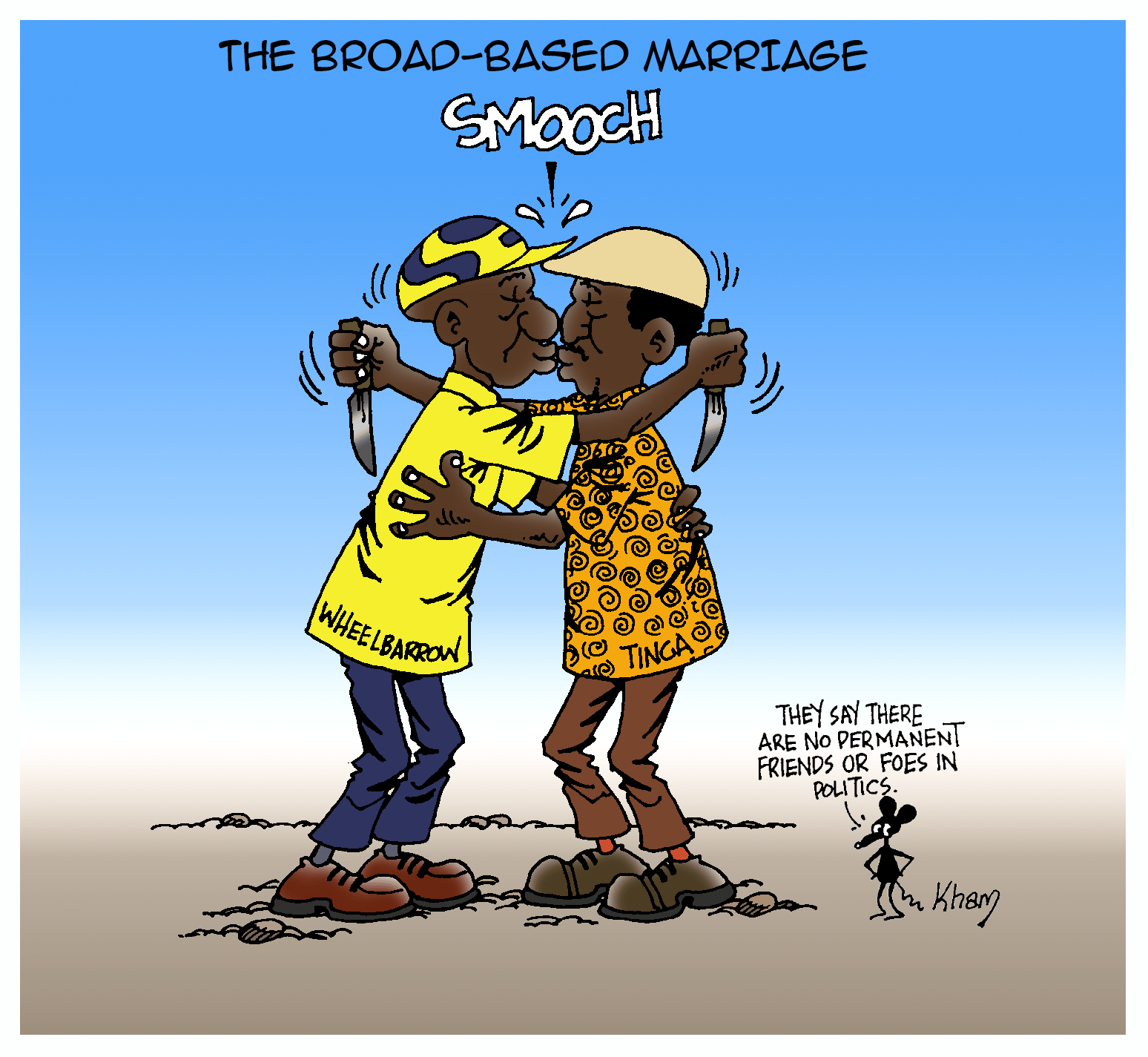

Succession fiasco in Raila’s ODM: Reliving ‘The Godfather’?
When Hollywood legend Robert Duvall – the actor who played Consigliori or advisor Tom Hagen in Mario Puzo’s blockbuster novel The Godfather died in February, I felt a surprising grief – as if a distant yet revered uncle had fallen.
I have “known” Hagen since I was 16. An Anglican and policeman’s son, I ought to have been outraged by the manner in which the Corleone family, which Hagen represented, flagrantly broke the law and scoffed at the 10 commandments. But I shamelessly wanted Vito Corleone to annihilate his enemies and win.
Forty years on and countless readings later, I still revere the larger-than-life Don, the deceptively harmless statesman, formidable adversary and empire builder.
There were other colourful crooks, too: Santino, the Don’s eldest son, who never saw a problem at which he couldn’t shove a fist. Michael, the youngest son and reluctant leader. Freddo, the halfwit, pant-pissing middle child. Genco Abbandando, the dying Consigliori. Caporegimes Salvatore Tessio and Pete Clemenza. And who would forget the wild and menacing family enforcer, Luca Brasi?
In the drama and swirling violence that engulfed the Corleone family, however, stood the dour-faced but surprisingly unforgettable Tom Hagen, the adopted son. Hagen quietly hovered in the shadows, loyal and lawyerly.
You see him at every dark and significant family moment – managing crises, igniting and putting out fires, and aligning diplomacy and the infantry at the battlefronts. The “statesman forced to go to war, the lawyer forced to go to law”, he is cautious and empathetic, but decisive and ruthless when the situation demands.
Hagen not only thought and acted like the firstborn in the family but also understood how the Don’s mind worked. Why, then, was he passed over and the reins handed over to an ill-prepared, hurriedly trained Michael when Santino was murdered? They said he wasn’t “Sicilian,” but heck, neither was Michael anyway.
Lapse in judgment
In bypassing the Irishman who shunned a promising career in criminal law to become a criminal and serve his adopted father, the Don – a meticulous strategist and man of great cunning – made, in my esteemed view, a grave error of judgment. After all, wasn’t he the same man who famously said that a lawyer with his briefcase could steal more than a thousand men with guns and masks?
This lapse in judgment was more surprising for a man so clear-eyed about the future he envisioned for his family: “None of us here wants to see our children in our footsteps, it’s too hard a life,” he once told fellow Dons. “I hope my grandchildren’s children may someday be a governor, a President… The time is past for guns and killings and massacres. We have to be cunning like the business people…”
The world Corleone dreamt for his future progeny was “corporate”, comprising books, teachers, lawyers, judges, politicians, banking halls and boardrooms. This was Hagen’s world. As a competent lawyer, he understood that world better than Michael – or Santino, who struck you as a man who could grind a cigarette end into an imported Turkish carpet with the heel of his boot and kick a judge in the nuts, ever would. And yet it is upon these two ill-equipped sons that the baton fell.
This sort of thing happens in families, businesses, government, politics and the church all the time. The cornerstone is rejected and ill-suited heirs are propped up.
At the turn of Kenya’s independence, for instance, the need to Africanize the civil service arose. In many cases, there wasn’t much to work with, and many a hapless 20-something-year-old suddenly found themselves thrust into the top echelons of government barely a year out of university.
This need not have been the case in the police service. In Michael Arrum, Kenya had an officer and a gentleman, a seasoned administrator who had risen from constable to assistant commissioner of police in 30 years. Instead, the gong fell to Bernard Hinga – a “Michael Corleone” who was leapfrogged through the ranks from assistant inspector to Commissioner of Police in nine years flat. That decision created a mess that might never be fixed.
When it came to appointing an attorney general, former Central Bank of Kenya Governor Philip Ndegwa argues in his Walking in Kenyatta’s Footsteps that Benna Lutta, then deputy registrar of the high court, possessed a more profound legal mind and better professional qualifications than Charles Njonjo. Twisting the dagger, Ndegwa scoffed that Njonjo grew up in a privileged household where he never even herded a goat. Why then would President Jomo Kenyatta entrust the “spoilt brat” with the responsibility and power of the Attorney General’s office?
Succession intrigues
These succession intrigues are more profound in politics. In Jaramogi Oginga Odinga’s case, handing the baton to a “Sicilian” – his son Raila – could have made sense. But perhaps out of moral and ethical sophistication, he bypassed him and handed the leadership of his Ford Kenya political party to Tom and Jerry aficionado, Michael Wamalwa Kijana. Wamalwa ran that party aground, while Raila went on to form ODM, a national political juggernaut that shook governments for two decades.
In hindsight, Daniel arap Moi, the self-styled professor of politics, ought to have let his true political son, William Ruto, take over Kanu. Instead, he gave the job to Uhuru Kenyatta, and Kanu has never been juu since.
Moi’s decision was, however, nuanced. Some argue that the professor of politics deliberately selected Uhuru, a weak candidate, to give Mwai Kibaki, his actual preference, a slam dunk in the 2002 presidential election. The numbers do show that his vice president, Prof George Saitoti, was a stronger candidate.
President Mwai Kibaki, of course, sat on the fence. First, he bypassed Martha Karua, his Tom Hagen, in favour of the easy-going Uhuru Kenyatta when it came to selecting deputy prime ministers. Later, he signalled that the affable deputy prime minister Musalia Mudavadi was the man to carry over his economic transformation agenda. But when his “caporegimes” in Mount Kenya threatened to revolt, he did not counsel them to trust his judgment. Instead, he sat on the fence and endorsed neither Mudavadi nor his Prime Minister, Raila. In no time, his economic transformation agenda was teetering on a cliff edge.
Ruto: A political fox?
Strangely, William Ruto, a political fox if there was one, missed the lesson. Against advice, he bypassed his Tom Hagen, Prof Kithure Kindiki, for Rigathi Gachagua – a Santino with a fist – as running mate. In two years, with his family in turmoil, the poor man had to take the garrot to Gachagua. Unfortunately, his enforcer wasn’t as competent as Corleone’s Pete Clemenza, and he only kicked an unconscious Gachagua out of a speeding vehicle. And so, “Santino” remains out there, growling menacingly, hunting rifle in hand.
Not that Ruto’s erstwhile rival, Raila, arguably the only Kenyan political godfather after Moi, fared any better.
Like Corleone feigned peace with the Tattaglia family while planning a future reckoning when he would serve revenge when it was cold and sweet, Raila made peace with Ruto and delicately floated a toe into the broad-based government. Unfortunately, he died in India, without fully instructing his chosen successor or publicly acknowledging them.
More hilarious is that even before the man had finished dying “completely” as we say in my village, one of his caporegimes sneaked to the “Tattaglia” family and made a deal in the manner of Salvatore Tessio. Haaaa!
Who was Raila’s trusted vassal and wily caporegime, Pete Clemenza? Will his deal with the “Tattaglia’s” slay Raila’s chosen successor – if there is one? Did Don Raila have a “Michael Corleone” anyway? Did he craft a secret plan through which his Tractor Crime Family would vanquish the Wheelbarrow Crime Family in one clean masterstroke?
As the Swahili of Mombasa would say, “Letu jicho.”
Featured Book
%20(1).jpg)
Related Book
Get to know more about the mentioned books
Related Article
Succession fiasco in Raila’s ODM: Reliving ‘The Godfather’?
By
When Hollywood legend Robert Duvall – the actor who played Consigliori or advisor Tom Hagen in Mario Puzo’s blockbuster novel The Godfather died in February, I felt a surprising grief – as if a distant yet revered uncle had fallen.
I have “known” Hagen since I was 16. An Anglican and policeman’s son, I ought to have been outraged by the manner in which the Corleone family, which Hagen represented, flagrantly broke the law and scoffed at the 10 commandments. But I shamelessly wanted Vito Corleone to annihilate his enemies and win.
Forty years on and countless readings later, I still revere the larger-than-life Don, the deceptively harmless statesman, formidable adversary and empire builder.
There were other colourful crooks, too: Santino, the Don’s eldest son, who never saw a problem at which he couldn’t shove a fist. Michael, the youngest son and reluctant leader. Freddo, the halfwit, pant-pissing middle child. Genco Abbandando, the dying Consigliori. Caporegimes Salvatore Tessio and Pete Clemenza. And who would forget the wild and menacing family enforcer, Luca Brasi?
In the drama and swirling violence that engulfed the Corleone family, however, stood the dour-faced but surprisingly unforgettable Tom Hagen, the adopted son. Hagen quietly hovered in the shadows, loyal and lawyerly.
You see him at every dark and significant family moment – managing crises, igniting and putting out fires, and aligning diplomacy and the infantry at the battlefronts. The “statesman forced to go to war, the lawyer forced to go to law”, he is cautious and empathetic, but decisive and ruthless when the situation demands.
Hagen not only thought and acted like the firstborn in the family but also understood how the Don’s mind worked. Why, then, was he passed over and the reins handed over to an ill-prepared, hurriedly trained Michael when Santino was murdered? They said he wasn’t “Sicilian,” but heck, neither was Michael anyway.
Lapse in judgment
In bypassing the Irishman who shunned a promising career in criminal law to become a criminal and serve his adopted father, the Don – a meticulous strategist and man of great cunning – made, in my esteemed view, a grave error of judgment. After all, wasn’t he the same man who famously said that a lawyer with his briefcase could steal more than a thousand men with guns and masks?
This lapse in judgment was more surprising for a man so clear-eyed about the future he envisioned for his family: “None of us here wants to see our children in our footsteps, it’s too hard a life,” he once told fellow Dons. “I hope my grandchildren’s children may someday be a governor, a President… The time is past for guns and killings and massacres. We have to be cunning like the business people…”
The world Corleone dreamt for his future progeny was “corporate”, comprising books, teachers, lawyers, judges, politicians, banking halls and boardrooms. This was Hagen’s world. As a competent lawyer, he understood that world better than Michael – or Santino, who struck you as a man who could grind a cigarette end into an imported Turkish carpet with the heel of his boot and kick a judge in the nuts, ever would. And yet it is upon these two ill-equipped sons that the baton fell.
This sort of thing happens in families, businesses, government, politics and the church all the time. The cornerstone is rejected and ill-suited heirs are propped up.
At the turn of Kenya’s independence, for instance, the need to Africanize the civil service arose. In many cases, there wasn’t much to work with, and many a hapless 20-something-year-old suddenly found themselves thrust into the top echelons of government barely a year out of university.
This need not have been the case in the police service. In Michael Arrum, Kenya had an officer and a gentleman, a seasoned administrator who had risen from constable to assistant commissioner of police in 30 years. Instead, the gong fell to Bernard Hinga – a “Michael Corleone” who was leapfrogged through the ranks from assistant inspector to Commissioner of Police in nine years flat. That decision created a mess that might never be fixed.
When it came to appointing an attorney general, former Central Bank of Kenya Governor Philip Ndegwa argues in his Walking in Kenyatta’s Footsteps that Benna Lutta, then deputy registrar of the high court, possessed a more profound legal mind and better professional qualifications than Charles Njonjo. Twisting the dagger, Ndegwa scoffed that Njonjo grew up in a privileged household where he never even herded a goat. Why then would President Jomo Kenyatta entrust the “spoilt brat” with the responsibility and power of the Attorney General’s office?
Succession intrigues
These succession intrigues are more profound in politics. In Jaramogi Oginga Odinga’s case, handing the baton to a “Sicilian” – his son Raila – could have made sense. But perhaps out of moral and ethical sophistication, he bypassed him and handed the leadership of his Ford Kenya political party to Tom and Jerry aficionado, Michael Wamalwa Kijana. Wamalwa ran that party aground, while Raila went on to form ODM, a national political juggernaut that shook governments for two decades.
In hindsight, Daniel arap Moi, the self-styled professor of politics, ought to have let his true political son, William Ruto, take over Kanu. Instead, he gave the job to Uhuru Kenyatta, and Kanu has never been juu since.
Moi’s decision was, however, nuanced. Some argue that the professor of politics deliberately selected Uhuru, a weak candidate, to give Mwai Kibaki, his actual preference, a slam dunk in the 2002 presidential election. The numbers do show that his vice president, Prof George Saitoti, was a stronger candidate.
President Mwai Kibaki, of course, sat on the fence. First, he bypassed Martha Karua, his Tom Hagen, in favour of the easy-going Uhuru Kenyatta when it came to selecting deputy prime ministers. Later, he signalled that the affable deputy prime minister Musalia Mudavadi was the man to carry over his economic transformation agenda. But when his “caporegimes” in Mount Kenya threatened to revolt, he did not counsel them to trust his judgment. Instead, he sat on the fence and endorsed neither Mudavadi nor his Prime Minister, Raila. In no time, his economic transformation agenda was teetering on a cliff edge.
Ruto: A political fox?
Strangely, William Ruto, a political fox if there was one, missed the lesson. Against advice, he bypassed his Tom Hagen, Prof Kithure Kindiki, for Rigathi Gachagua – a Santino with a fist – as running mate. In two years, with his family in turmoil, the poor man had to take the garrot to Gachagua. Unfortunately, his enforcer wasn’t as competent as Corleone’s Pete Clemenza, and he only kicked an unconscious Gachagua out of a speeding vehicle. And so, “Santino” remains out there, growling menacingly, hunting rifle in hand.
Not that Ruto’s erstwhile rival, Raila, arguably the only Kenyan political godfather after Moi, fared any better.
Like Corleone feigned peace with the Tattaglia family while planning a future reckoning when he would serve revenge when it was cold and sweet, Raila made peace with Ruto and delicately floated a toe into the broad-based government. Unfortunately, he died in India, without fully instructing his chosen successor or publicly acknowledging them.
More hilarious is that even before the man had finished dying “completely” as we say in my village, one of his caporegimes sneaked to the “Tattaglia” family and made a deal in the manner of Salvatore Tessio. Haaaa!
Who was Raila’s trusted vassal and wily caporegime, Pete Clemenza? Will his deal with the “Tattaglia’s” slay Raila’s chosen successor – if there is one? Did Don Raila have a “Michael Corleone” anyway? Did he craft a secret plan through which his Tractor Crime Family would vanquish the Wheelbarrow Crime Family in one clean masterstroke?
As the Swahili of Mombasa would say, “Letu jicho.”
Share :


Lorem ipsum dolor sit amet, consectetur adipiscing elit. Suspendisse varius enim in eros elementum tristique. Duis cursus, mi quis viverra ornare, eros dolor interdum nulla, ut commodo diam libero vitae erat. Aenean faucibus nibh et justo cursus id rutrum lorem imperdiet. Nunc ut sem vitae risus tristique posuere.
Lorem ipsum dolor sit amet, consectetur adipiscing elit. Suspendisse varius enim in eros elementum tristique. Duis cursus, mi quis viverra ornare, eros dolor interdum nulla, ut commodo diam libero vitae erat. Aenean faucibus nibh et justo cursus id rutrum lorem imperdiet. Nunc ut sem vitae risus tristique posuere.