

The conundrum that marriage poses for women as they alternate from such titles as Miss, Mrs or even Miss
He who finds a wife, finds a good thing…
I think about how women move through high waters and deep seas to be called Mrs. I also think about what has to be endured just to remain married, or to get married in the first place. I think about the ways we teach women that marriage is both an achievement and a duty, something to aspire to and something to preserve, sometimes at considerable personal cost.
Last week, I bumped into a post on Facebook that made me think about all of this again. A Facebook user called Roberta Edu wrote about why she does not use “Mrs” to introduce herself. Her argument was simple: men have only one title, “Mr”, whether they are married or unmarried, while women have historically been divided into “Miss” and “Mrs”, making marital status part of how they are formally addressed. Then came a response from a man who joked that the title “Mrs” had quietly disappeared everywhere and that, apparently, “the women have a consensus and we weren’t informed”.
I found it amusing, but I also wondered whether perhaps there really has been a consensus, only not the sort that requires a rally. Maybe women have simply been making small decisions about how they want to be addressed, how much of their private lives they want to disclose and whether marriage should be the first piece of information anyone receives about them.
The history of these titles is, admittedly, more complicated than the Facebook post suggests. According to historian Amy Louise Erickson, “Mrs” and “Miss” both developed from “mistress”, which originally did not necessarily indicate whether a woman was married. The meaning shifted over centuries, and “Mrs” did not definitively become associated with married women until around 1900. “Ms”, meanwhile, offers a marriage-neutral alternative, allowing a woman to be addressed without announcing whether she has a husband.
Still, the modern distinction is familiar enough: Mr does not tell us whether a man is married, while Mrs can, and maybe that is why the conversation caught me at precisely the right time.
After I wrote Till Death of the Marriage Do Us Part, I sat with an acquaintance and found myself trying to explain why I think some women are increasingly questioning marriage and motherhood. He listened and then asked me a question that I have continued to turn over in my mind.
“So how are you going to protect yourself?”
My answer was that perhaps some women are beginning to protect themselves by refusing the things we were told would protect us. Perhaps some will not have children with men, perhaps some will not marry men. Some will remain single, not because they have failed to find love or because nobody wanted them, but because singleness can sometimes look less like a deficiency and more like a deliberate way of protecting one's peace, wounds, time and creative life.
I was not suggesting that marriage is inherently dangerous or that singlehood is inherently liberating. I was thinking about choice, and about what happens when women begin asking whether the traditional sequence of marriage, motherhood and endurance is actually the life they want.
The price of being Mrs
We spend a great deal of time talking about how, when and why women should get married. We talk about dating, beauty, femininity, fertility, compromise, being a “good woman” and finding a man who is ready to settle down. We rarely spend the same amount of time asking what a woman is expected to surrender once she has acquired the title she was encouraged to desire.
Women are told to be patient, forgiving and understanding. We are told to submit, to keep the family together, to think about the children and to pray through difficult seasons. Sometimes these are reasonable principles for sustaining a relationship. But sometimes they become a vocabulary for teaching women to endure almost anything in order to remain married.
That is where Deborah Auko Tendo's Rough Silk becomes particularly useful to this conversation. The memoir, which tells the story of Tendo's family and her relationship with her father, is also an account of the women whose lives were shaped by the consequences of marriage, separation, infidelity, parenthood and the social expectations surrounding them. Mvua Press describes the book as a deeply personal account that also documents aspects of post-independence Kenyan life, including alcoholism, HIV/AIDS, family relationships and social change.
There is Mama Mpenzi, a woman who refused to fit quietly into the respectable boundaries expected of her. As I wrote in my review of Rough Silk for Books in Africa, she was unapologetically herself, smoking cigarettes in public and standing beside women she loved even when doing so meant getting into public confrontations.
When her husband decided he wanted another wife, she did not simply accept that this was the price of remaining married. She charted another path for herself, including building a life around her hairdressing business.
Then there is Tendo's mother, whose story is harder to categorise. After finding her husband in a compromising situation following a night of partying, she left the marriage. She eventually built a successful life in Kisumu, but her departure also meant leaving children behind, and her life later ended with AIDS. I find her story particularly uncomfortable because it refuses the neat ending we often want from stories about women choosing themselves. What are we supposed to call a woman who leaves her marriage but succeeds afterwards? What happens when the woman who walks away is also a mother whose children carry the wound of her absence? Is she selfish, brave, irresponsible, liberated, or simply human? Maybe she can be all of those things at once.
That is one of the things I appreciate about memoir: it does not always allow us to turn a woman's life into a lesson with a tidy moral. Tendo's women are not feminist mascots. They are people who made decisions, lived with the consequences and were shaped by circumstances larger than themselves. And that is precisely the complexity we often deny women in real life.
Marriage is more than romance
I once sat with a man who told me, quite matter-of-factly, that marriage was about status for him. Being married, he believed, opened doors that were not as easily available to him as a single man. I remember being struck by his honesty. At the time, he was hardly what anyone would describe as a natural ambassador for monogamy, a serial Casanova, unless he has since reformed. Yet he understood something we do not always say aloud: marriage can be social currency. It can signal stability, adulthood, respectability and belonging. It can change how a person is perceived by families, communities and institutions. It can provide social and economic advantages that have nothing to do with romance.
This is important because we often talk about women wanting marriage as though they are pursuing a husband simply because they are desperate to be loved. But marriage has historically served social, economic and familial functions alongside romantic ones. The reasons people marry are rarely as simple as the wedding photographs suggest. That is why opting out can provoke such a strong reaction. The single woman is rarely allowed simply to be single. There must be a reason attached to her singleness: she is too independent, too career-focused, too picky, too selfish, too wounded, too sexually liberated or somehow not desirable enough. If she says she does not want children, the judgement can become even harsher.
We can tolerate a woman being single while she is “waiting”. What becomes uncomfortable is a woman who says she is not waiting at all.
African women have been asking this for decades
Long before social media gave us daily debates about marriage, African women writers were already imagining women whose lives could not be reduced to whether they had successfully acquired or retained a husband.
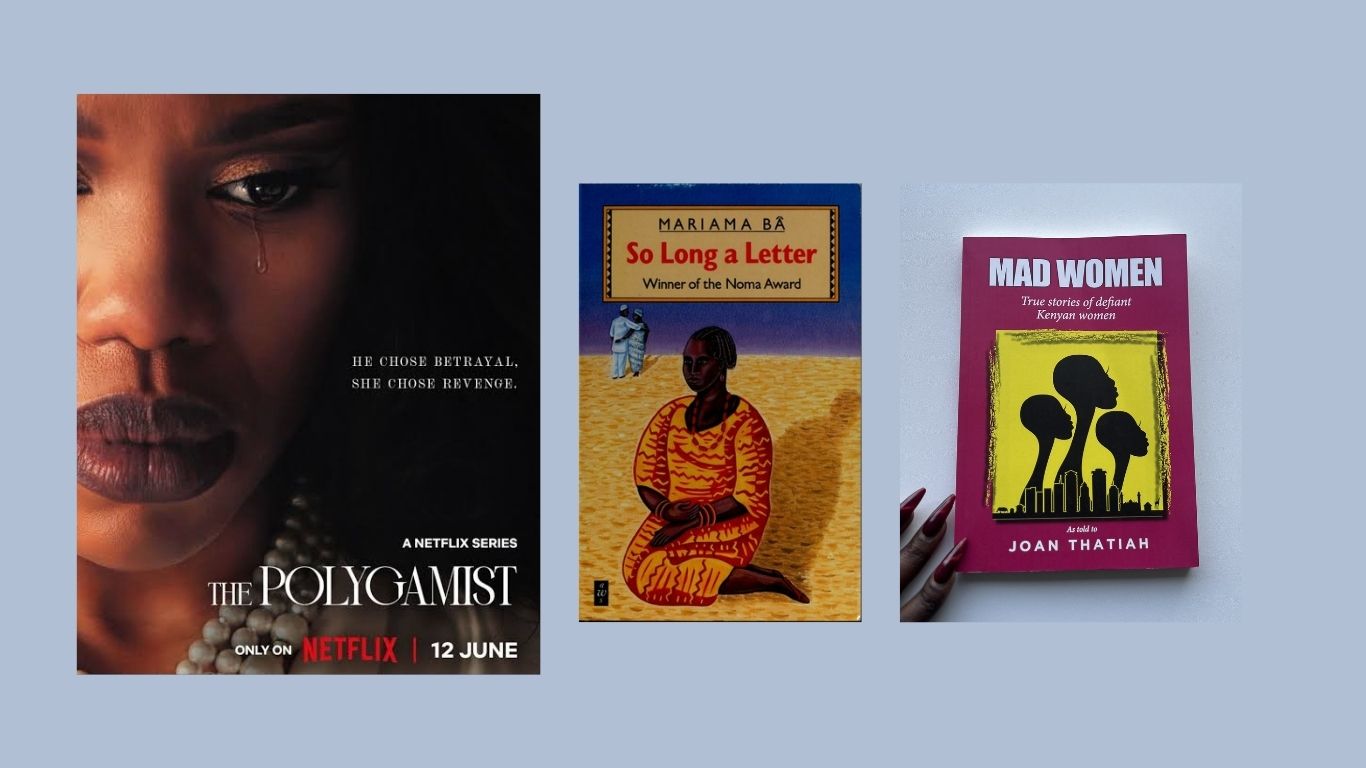
Flora Nwapa's Efuru is one of the books that complicates the idea that marriage and motherhood are the only legitimate destinations for an African woman. Efuru is economically independent and successful as a trader, and her story does not end simply because her marriages fail. Scholarship on the novel has particularly noted her economic agency and the way her success challenges assumptions about men as the natural providers.
What makes Nwapa's work valuable here is that it does not require us to conclude that marriage is bad. Instead, it makes room for the possibility that a woman can have a meaningful life beyond it.
Decades later, Nana Darkoa Sekyiamah's The Sex Lives of African Women continues that disruption in a very different form. Sekyiamah documented the intimate experiences of more than 30 African and African-descendant women, bringing together women of different ages, identities and sexualities. Her work challenges the narrow representations of African women as passive victims and instead foregrounds their agency, desire and capacity to define their own intimate lives.
The point is not that Nwapa or Sekyiamah are telling African women to reject marriage. They are doing something more useful and that is: making space for plurality.
Some women want or will want husbands while some do not. Some want children while some do not. Some women want marriage and careers and children and a life that is entirely their own while others find that the life they want does not include a husband at all.
The question should not be which woman has made the correct choice but why we are so invested in deciding for her.
Before she was Mrs
Before a woman becomes a ‘Mrs Somebody’, she has already lived a life. She has a name, a childhood, friendships, ambitions, failures, a body, a mind and a creative life that existed before a husband entered the picture.
Marriage does not create her nor does motherhood. A husband does not give her an identity.
Yet we have built a social script in which marriage can appear to be the moment a woman becomes fully legitimate or better a full contributing member of the society. The single woman is incomplete, the married woman is settled, the childless woman is selfish, the divorced woman is suspect and the woman who leaves is often expected to defend herself.
Even the language can reinforce the hierarchy.
Mr does not require us to know whether a man is married. Mrs, in its modern usage, announces that a woman is.
Perhaps that is why “Ms” has become meaningful to some women because It is not necessarily a rejection of marriage but simply a refusal to make marital status the most important thing we know about a woman.
And I think this is where my acquaintance’s question returns to me.
“How are you going to protect yourself?”
Perhaps there is no universal answer.
Some women will protect themselves through marriage to good men. Some through financial independence. Some through community. Some through leaving when a marriage becomes unsafe or unbearable. Some through remaining single. Some through refusing motherhood. Some through building lives so full that a husband becomes a choice rather than a requirement.
Maybe that is the change we are witnessing. Not the death of marriage, but the death of the idea that marriage is the only respectable way for a woman to become whole.
Tracy Ochieng is a staff writer with Books in Africa. Email: tracy.ochieng@ekitabu.com
Featured Book

Related Book
Get to know more about the mentioned books
Related Article
The conundrum that marriage poses for women as they alternate from such titles as Miss, Mrs or even Miss
By
He who finds a wife, finds a good thing…
I think about how women move through high waters and deep seas to be called Mrs. I also think about what has to be endured just to remain married, or to get married in the first place. I think about the ways we teach women that marriage is both an achievement and a duty, something to aspire to and something to preserve, sometimes at considerable personal cost.
Last week, I bumped into a post on Facebook that made me think about all of this again. A Facebook user called Roberta Edu wrote about why she does not use “Mrs” to introduce herself. Her argument was simple: men have only one title, “Mr”, whether they are married or unmarried, while women have historically been divided into “Miss” and “Mrs”, making marital status part of how they are formally addressed. Then came a response from a man who joked that the title “Mrs” had quietly disappeared everywhere and that, apparently, “the women have a consensus and we weren’t informed”.
I found it amusing, but I also wondered whether perhaps there really has been a consensus, only not the sort that requires a rally. Maybe women have simply been making small decisions about how they want to be addressed, how much of their private lives they want to disclose and whether marriage should be the first piece of information anyone receives about them.
The history of these titles is, admittedly, more complicated than the Facebook post suggests. According to historian Amy Louise Erickson, “Mrs” and “Miss” both developed from “mistress”, which originally did not necessarily indicate whether a woman was married. The meaning shifted over centuries, and “Mrs” did not definitively become associated with married women until around 1900. “Ms”, meanwhile, offers a marriage-neutral alternative, allowing a woman to be addressed without announcing whether she has a husband.
Still, the modern distinction is familiar enough: Mr does not tell us whether a man is married, while Mrs can, and maybe that is why the conversation caught me at precisely the right time.
After I wrote Till Death of the Marriage Do Us Part, I sat with an acquaintance and found myself trying to explain why I think some women are increasingly questioning marriage and motherhood. He listened and then asked me a question that I have continued to turn over in my mind.
“So how are you going to protect yourself?”
My answer was that perhaps some women are beginning to protect themselves by refusing the things we were told would protect us. Perhaps some will not have children with men, perhaps some will not marry men. Some will remain single, not because they have failed to find love or because nobody wanted them, but because singleness can sometimes look less like a deficiency and more like a deliberate way of protecting one's peace, wounds, time and creative life.
I was not suggesting that marriage is inherently dangerous or that singlehood is inherently liberating. I was thinking about choice, and about what happens when women begin asking whether the traditional sequence of marriage, motherhood and endurance is actually the life they want.
The price of being Mrs
We spend a great deal of time talking about how, when and why women should get married. We talk about dating, beauty, femininity, fertility, compromise, being a “good woman” and finding a man who is ready to settle down. We rarely spend the same amount of time asking what a woman is expected to surrender once she has acquired the title she was encouraged to desire.
Women are told to be patient, forgiving and understanding. We are told to submit, to keep the family together, to think about the children and to pray through difficult seasons. Sometimes these are reasonable principles for sustaining a relationship. But sometimes they become a vocabulary for teaching women to endure almost anything in order to remain married.
That is where Deborah Auko Tendo's Rough Silk becomes particularly useful to this conversation. The memoir, which tells the story of Tendo's family and her relationship with her father, is also an account of the women whose lives were shaped by the consequences of marriage, separation, infidelity, parenthood and the social expectations surrounding them. Mvua Press describes the book as a deeply personal account that also documents aspects of post-independence Kenyan life, including alcoholism, HIV/AIDS, family relationships and social change.
There is Mama Mpenzi, a woman who refused to fit quietly into the respectable boundaries expected of her. As I wrote in my review of Rough Silk for Books in Africa, she was unapologetically herself, smoking cigarettes in public and standing beside women she loved even when doing so meant getting into public confrontations.
When her husband decided he wanted another wife, she did not simply accept that this was the price of remaining married. She charted another path for herself, including building a life around her hairdressing business.
Then there is Tendo's mother, whose story is harder to categorise. After finding her husband in a compromising situation following a night of partying, she left the marriage. She eventually built a successful life in Kisumu, but her departure also meant leaving children behind, and her life later ended with AIDS. I find her story particularly uncomfortable because it refuses the neat ending we often want from stories about women choosing themselves. What are we supposed to call a woman who leaves her marriage but succeeds afterwards? What happens when the woman who walks away is also a mother whose children carry the wound of her absence? Is she selfish, brave, irresponsible, liberated, or simply human? Maybe she can be all of those things at once.
That is one of the things I appreciate about memoir: it does not always allow us to turn a woman's life into a lesson with a tidy moral. Tendo's women are not feminist mascots. They are people who made decisions, lived with the consequences and were shaped by circumstances larger than themselves. And that is precisely the complexity we often deny women in real life.
Marriage is more than romance
I once sat with a man who told me, quite matter-of-factly, that marriage was about status for him. Being married, he believed, opened doors that were not as easily available to him as a single man. I remember being struck by his honesty. At the time, he was hardly what anyone would describe as a natural ambassador for monogamy, a serial Casanova, unless he has since reformed. Yet he understood something we do not always say aloud: marriage can be social currency. It can signal stability, adulthood, respectability and belonging. It can change how a person is perceived by families, communities and institutions. It can provide social and economic advantages that have nothing to do with romance.
This is important because we often talk about women wanting marriage as though they are pursuing a husband simply because they are desperate to be loved. But marriage has historically served social, economic and familial functions alongside romantic ones. The reasons people marry are rarely as simple as the wedding photographs suggest. That is why opting out can provoke such a strong reaction. The single woman is rarely allowed simply to be single. There must be a reason attached to her singleness: she is too independent, too career-focused, too picky, too selfish, too wounded, too sexually liberated or somehow not desirable enough. If she says she does not want children, the judgement can become even harsher.
We can tolerate a woman being single while she is “waiting”. What becomes uncomfortable is a woman who says she is not waiting at all.
African women have been asking this for decades
Long before social media gave us daily debates about marriage, African women writers were already imagining women whose lives could not be reduced to whether they had successfully acquired or retained a husband.
Flora Nwapa's Efuru is one of the books that complicates the idea that marriage and motherhood are the only legitimate destinations for an African woman. Efuru is economically independent and successful as a trader, and her story does not end simply because her marriages fail. Scholarship on the novel has particularly noted her economic agency and the way her success challenges assumptions about men as the natural providers.
What makes Nwapa's work valuable here is that it does not require us to conclude that marriage is bad. Instead, it makes room for the possibility that a woman can have a meaningful life beyond it.
Decades later, Nana Darkoa Sekyiamah's The Sex Lives of African Women continues that disruption in a very different form. Sekyiamah documented the intimate experiences of more than 30 African and African-descendant women, bringing together women of different ages, identities and sexualities. Her work challenges the narrow representations of African women as passive victims and instead foregrounds their agency, desire and capacity to define their own intimate lives.
The point is not that Nwapa or Sekyiamah are telling African women to reject marriage. They are doing something more useful and that is: making space for plurality.
Some women want or will want husbands while some do not. Some want children while some do not. Some women want marriage and careers and children and a life that is entirely their own while others find that the life they want does not include a husband at all.
The question should not be which woman has made the correct choice but why we are so invested in deciding for her.
Before she was Mrs
Before a woman becomes a ‘Mrs Somebody’, she has already lived a life. She has a name, a childhood, friendships, ambitions, failures, a body, a mind and a creative life that existed before a husband entered the picture.
Marriage does not create her nor does motherhood. A husband does not give her an identity.
Yet we have built a social script in which marriage can appear to be the moment a woman becomes fully legitimate or better a full contributing member of the society. The single woman is incomplete, the married woman is settled, the childless woman is selfish, the divorced woman is suspect and the woman who leaves is often expected to defend herself.
Even the language can reinforce the hierarchy.
Mr does not require us to know whether a man is married. Mrs, in its modern usage, announces that a woman is.
Perhaps that is why “Ms” has become meaningful to some women because It is not necessarily a rejection of marriage but simply a refusal to make marital status the most important thing we know about a woman.
And I think this is where my acquaintance’s question returns to me.
“How are you going to protect yourself?”
Perhaps there is no universal answer.
Some women will protect themselves through marriage to good men. Some through financial independence. Some through community. Some through leaving when a marriage becomes unsafe or unbearable. Some through remaining single. Some through refusing motherhood. Some through building lives so full that a husband becomes a choice rather than a requirement.
Maybe that is the change we are witnessing. Not the death of marriage, but the death of the idea that marriage is the only respectable way for a woman to become whole.
Tracy Ochieng is a staff writer with Books in Africa. Email: tracy.ochieng@ekitabu.com
Share :


Lorem ipsum dolor sit amet, consectetur adipiscing elit. Suspendisse varius enim in eros elementum tristique. Duis cursus, mi quis viverra ornare, eros dolor interdum nulla, ut commodo diam libero vitae erat. Aenean faucibus nibh et justo cursus id rutrum lorem imperdiet. Nunc ut sem vitae risus tristique posuere.
Lorem ipsum dolor sit amet, consectetur adipiscing elit. Suspendisse varius enim in eros elementum tristique. Duis cursus, mi quis viverra ornare, eros dolor interdum nulla, ut commodo diam libero vitae erat. Aenean faucibus nibh et justo cursus id rutrum lorem imperdiet. Nunc ut sem vitae risus tristique posuere.