
Latest Article

Women are the ones doing the work, so why are they not involved in determining who gets to lead?
Writing in My Life on the Road, Gloria Steinem reflected on the cost of this uneven distribution of opportunity, saying she was “angry about the human talent that was lost just because it was born into a female body, and the mediocrity that was rewarded because it was born into a male one.” It is a particularly useful way of thinking about the leadership gap because what is lost is not simply a woman's promotion or a seat at a table. It is the talent an institution may never discover because it did not give that person the opportunity to exercise authority in the first place.
Filter

We spend a great deal of time talking about how, when and why women should get married. We talk about dating, beauty, femininity, fertility, compromise, being a “good woman” and finding a man who is ready to settle down. We rarely spend the same amount of time asking what a woman is expected to surrender once she has acquired the title she was encouraged to desire.
.jpg)
The problem is not that young people have forgotten. It is that too few of us have been taught what came before. History and Government is treated as an elective in our schools, even though understanding a nation's past is as essential to citizenship as reading or writing. A society that leaves its history to choice should not be surprised when collective memory begins to fade.

But the Creator instinctively knew that would be a waste of time. As time would demonstrate, corporal punishment, or the rod if you may – and counselling – are ineffectual when certain children mysteriously develop a trouble-causing worm in their brains. They will swallow intoxicants, stick syringes into the veins, bum, fight and drop out of school, wander into crime and seek death, sex and its diseases with a vengeance. You will cry, curse, whip them, call the police, take them to the witchdoctor, and it will do you and them no good.
.png)
"The Art Deco Buildings of Nairobi" is the latest work by South African writer Barbara Adair. More than a study of architecture, the book documents the memories and histories of Nairobi's African Asian communities, particularly Indian Kenyan families who transformed Art Deco designs into spaces that reflected their own traditions, aspirations and ways of life.

Anthropologists and historians have long distinguished between polygyny—the practice of one man having multiple wives—and infidelity or promiscuity. Across many African societies, polygyny operated within communal structures. Wives generally knew one another. Senior wives held authority. Children belonged not only to parents but to extended families. Marriage itself was understood as a union between lineages rather than merely two individuals.
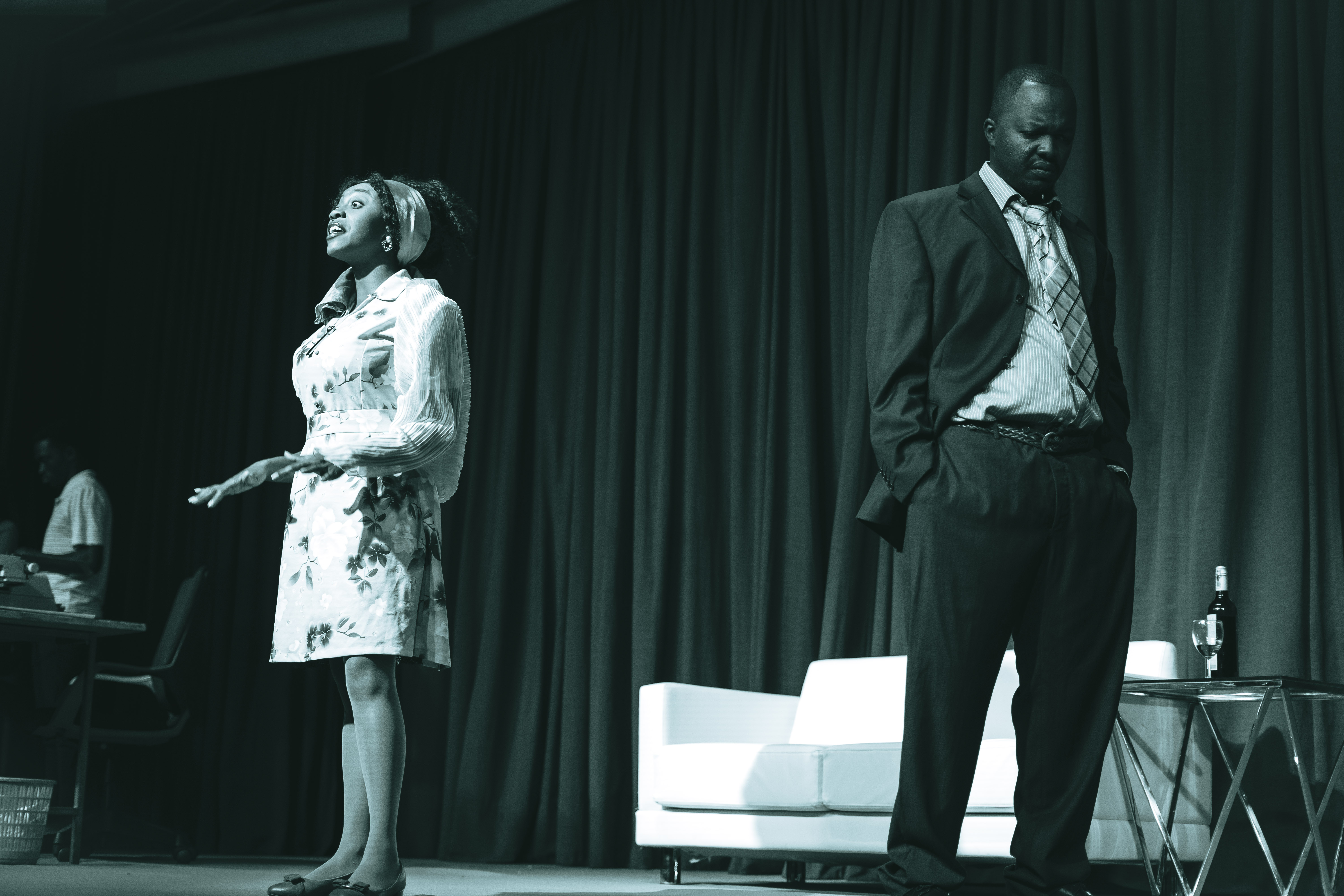
Theatre is like juggling multiple balls at once. You’re in character, but you’re also aware of the audience, your scene partners, and the technical aspects of the show. Occasionally, there’s a moment—maybe fifteen minutes in a two-hour performance—when everything aligns, and you’re fully inside the character. Those moments are magical.
