
Latest Article

Women are the ones doing the work, so why are they not involved in determining who gets to lead?
Writing in My Life on the Road, Gloria Steinem reflected on the cost of this uneven distribution of opportunity, saying she was “angry about the human talent that was lost just because it was born into a female body, and the mediocrity that was rewarded because it was born into a male one.” It is a particularly useful way of thinking about the leadership gap because what is lost is not simply a woman's promotion or a seat at a table. It is the talent an institution may never discover because it did not give that person the opportunity to exercise authority in the first place.
Filter
.png)
In Thegio Location of Nyeri, where the resistance burned hottest, Senior Chief Waithaje met a brutal death beneath a Mukuyu tree—fifty men against one, his loyalty to the colonial authorities sealing his fate. To the government, he was a hero. To the Mau Mau, a traitor.
.jpg)
The artists talked about issues facing Kenya, from the economy, to the taxes, to the capitation funds, the debts, the abductions, and the violence.
That evening, when he returned, their home felt different—both warmer and heavier. And in the quiet of that small room, as the winds stirred the grass outside and the fire crackled its last, Ekeno clung to her like a man holding onto the last piece of a beautiful dream. He knew his days as a passive observer were ending. Soon, he would join the movement—quietly at first, then fully, body and soul. And if fate demanded it, he would give everything for her, for their unborn children, for the land that had raised him.
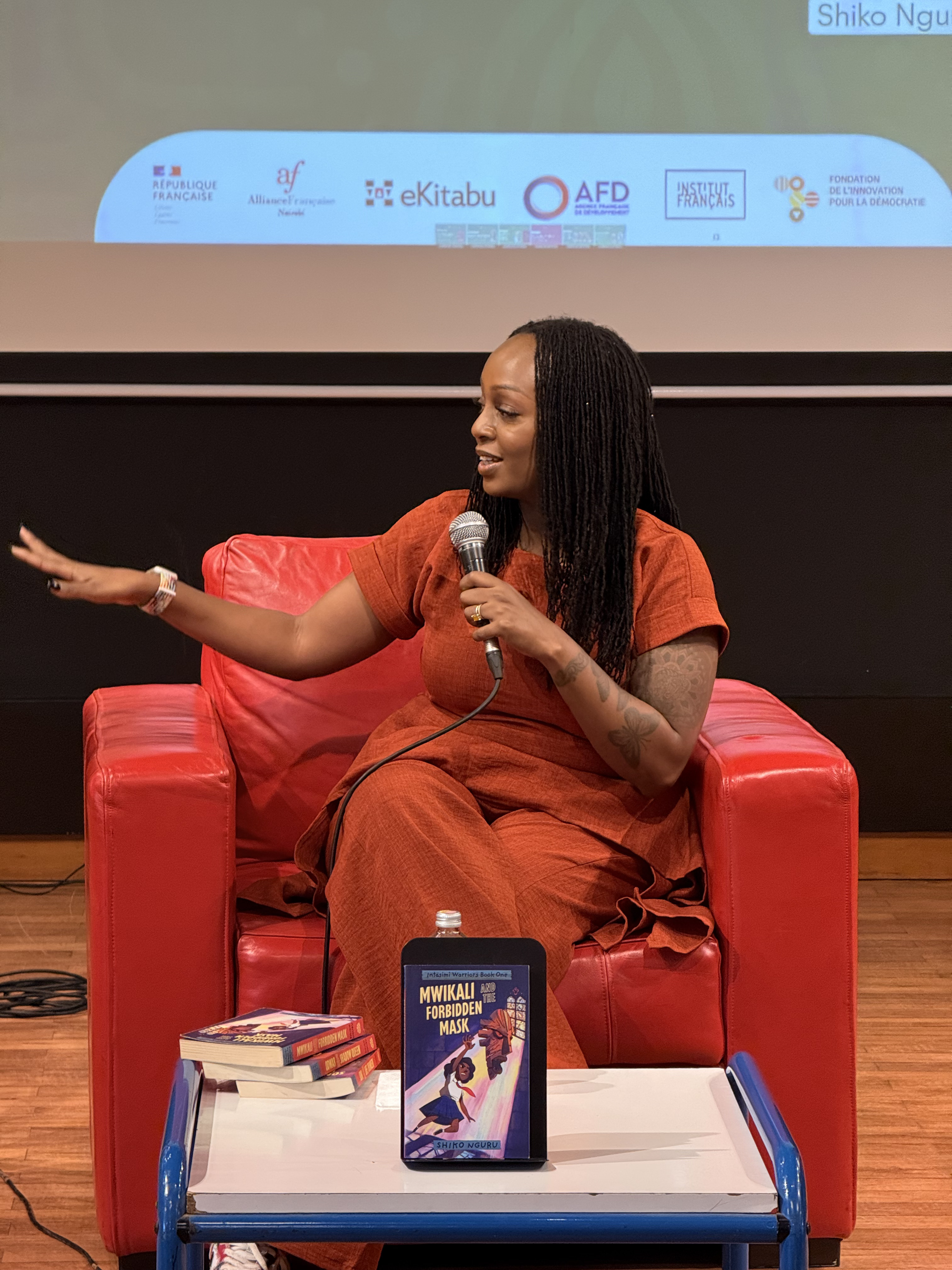
Shiko’s passion for books began in childhood. As a child, she would sometimes fake being unwell at school just so she could sit in the secretary’s office and read the books kept there.
.png)
Kavuki earned a new name—Queen of the Village; this was because they felt she had become the model of the village. She was consulted on various issues, but the conservative village church remained undecided on whether to declare her a woman of God or something else. Her single way of living symbolised great temptation. They would rather hear she was under MuthengI's care. But religious or not, Kavuki had many people who defended her. More voices were coming up to say, "Kavuki is a modern woman."

We also need more emotionally mature romance, stories that do not rush to resolution, or reduce love to chemistry alone. Love can be tender and still be complicated. It can be beautiful and still require difficult decisions.
